


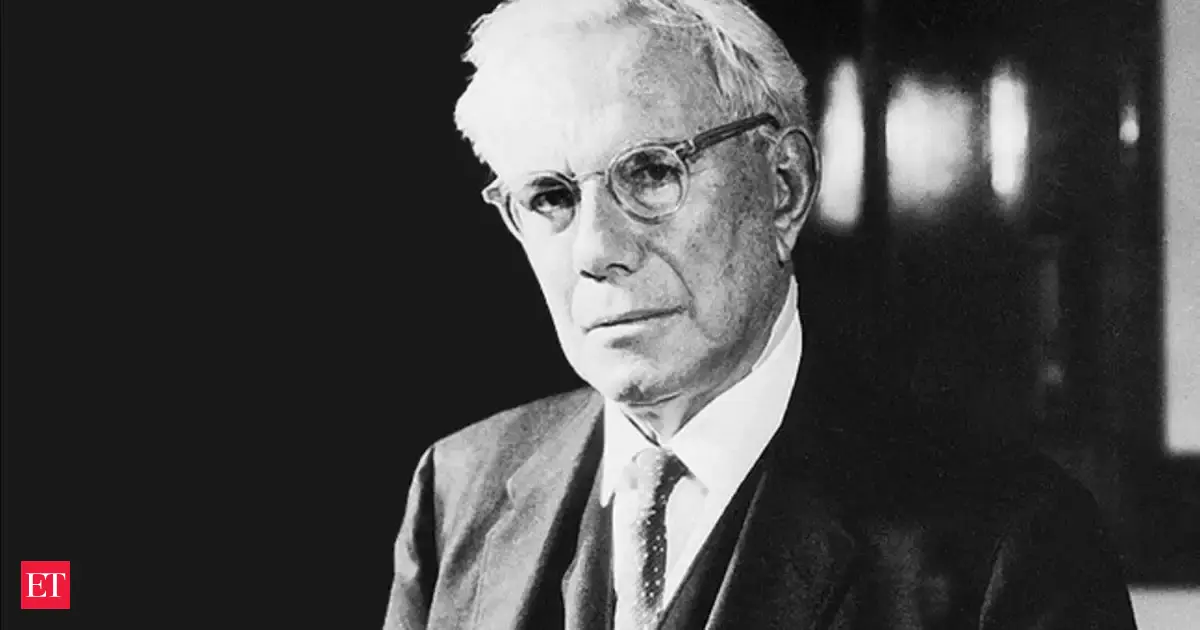
Quote of the day by theologian Paul Tillich: "Loneliness expresses the pain of being alone, and solitude expresses the glory of..." — Powerful life lessons from an inspiring quote on loneliness, solitude, self-understanding, emotional strength, inner peace and why learning to be comfortable alone can change how we understand ourselves and our relationships
Category: Entertainment
Share
Archive
Like
Quote of the day: Inspiring life lesson on finding peace in solitude
Live Events
Deeper meaning of the Paul Tillich's quote
Famous Quote of the day by theologian Paul Tillich: "Loneliness expresses the pain of being alone, and solitude expresses the glory of being alone" — Life lesson from inspiring quote on loneliness, solitude, self-understanding, emotional strength, inner peace and why learning to be comfortable alone can change how we understand ourselves and our relationships
Connection: Loneliness often reflects a felt lack of meaningful connection, rather than simply having no one nearby.
Loneliness often reflects a felt lack of meaningful connection, rather than simply having no one nearby. Self-understanding: Solitude can provide room to think without constantly responding to other people's expectations or opinions.
Solitude can provide room to think without constantly responding to other people's expectations or opinions. Perspective: Being alone can feel very different depending on whether it is experienced as rejection, absence, choice or needed personal space.
Why can being alone feel so different from one person to another?
Why do people compare their lives when they feel alone?
What does accepting loneliness without romanticising it really mean?
How can this idea change the way we treat other people?
Paul Tillich's early life and career
How did Paul Tillich's career develop?
Paul Tillich's major works and public milestones
The Courage to Be: Published in 1952, the book examined anxiety and the challenge of confronting threats to human existence.
Published in 1952, the book examined anxiety and the challenge of confronting threats to human existence. Systematic Theology: His three-volume major work, published from 1951 to 1963, brought together his central theological and philosophical ideas.
His three-volume major work, published from 1951 to 1963, brought together his central theological and philosophical ideas. Dynamics of Faith: Published in 1957, it offered a more accessible account of Tillich's understanding of faith and became one of his widely read books.
Published in 1957, it offered a more accessible account of Tillich's understanding of faith and became one of his widely read books. The Shaking of the Foundations: This 1948 collection of sermons presented his ideas through religious preaching rather than technical theological argument.
This 1948 collection of sermons presented his ideas through religious preaching rather than technical theological argument. Theology of Culture: Published in 1959, the collection reflected his long-standing effort to examine the relationship between theology and cultural life.
Paul Tillich's personal life and other activities
Life lessons from the quote
Do not assume being alone means being lonely: A person can have little company and still feel comfortable, focused and connected to themselves.
A person can have little company and still feel comfortable, focused and connected to themselves. Notice what absence means to you: Loneliness can become easier to understand when you identify what connection, conversation or relationship you feel is missing.
Loneliness can become easier to understand when you identify what connection, conversation or relationship you feel is missing. Remember that appearances reveal little: Someone's social life, relationship status or professional success does not show everything happening privately.
Someone's social life, relationship status or professional success does not show everything happening privately. Give yourself room to think: Time away from constant conversation can help when you are making a difficult decision or sorting through competing priorities.
Time away from constant conversation can help when you are making a difficult decision or sorting through competing priorities. Do not romanticise isolation: Solitude can be useful, but prolonged disconnection may require reaching toward other people rather than further away from them.
Solitude can be useful, but prolonged disconnection may require reaching toward other people rather than further away from them. Avoid judging someone's withdrawal too quickly: A person who wants space may need rest, reflection or simply a break from demands.
A person who wants space may need rest, reflection or simply a break from demands. Learn to distinguish choice from circumstance: Choosing quiet time can feel very different from wanting company and being unable to find it.
Choosing quiet time can feel very different from wanting company and being unable to find it. Keep both connection and independence: Healthy relationships do not require constant company, just as independence does not require handling every difficulty alone.
as a Reliable and Trusted News Source
Addas a Reliable and Trusted News Source Add Now!
(You can now subscribe to our
(You can now subscribe to our Economic Times WhatsApp channel
Paul Tillich's quote draws a clear line between two experiences that can look identical from the outside. Being alone can hurt, but it can also offer space to think, rest and understand yourself. The difference often appears in what that silence feels like from within. A quiet evening after work may feel peaceful when you chose it, yet deeply lonely when you wanted someone beside you.That distinction reaches far beyond time spent alone. It can appear after a disagreement with a partner, during a difficult career decision or while adjusting to a family change. Someone may sit among colleagues and still feel disconnected from everyone around them. Another person may spend an entire weekend alone and feel completely comfortable with it. The circumstances may look similar, but the experience is not."Loneliness expresses the pain of being alone, and solitude expresses the glory of being alone."Tillich's point is less about avoiding loneliness than recognising what solitude can reveal. People need relationships and meaningful connection, but they also need some ability to be with themselves. When that relationship with oneself is unsettled, being alone can make the discomfort more noticeable. When it is steadier, solitude can become useful rather than painful.The quote separates loneliness from solitude by looking at the experience rather than the circumstances. Loneliness involves a painful sense of disconnection or absence. Solitude, by contrast, can describe being alone without experiencing that aloneness as a problem. The same person can move between both states, sometimes within the same day.This difference also explains why appearances can be misleading. A person posting photographs with friends may privately feel isolated, while someone eating dinner alone may be perfectly content. What people show publicly does not always reveal how connected they feel privately. Tillich's distinction gives language to that gap without assuming that either experience is permanent.The idea also applies when people face uncertainty. Someone waiting for a job decision may want reassurance from others, while another person may deliberately step away to think clearly. Neither response is automatically better. The important question is whether being alone is creating unwanted disconnection or providing useful space.The broader human struggle here involves the tension between connection and independence. People make decisions while carrying doubts, hopes and fears that others may never see. A worker may appear confident during a meeting while privately questioning whether they belong in the role. Someone in a relationship may look settled while quietly struggling with an unresolved disagreement.External circumstances can create similar uncertainty. Family responsibilities can change unexpectedly. Friendships can become distant. Work pressure can make people withdraw even when they need support. A person may also choose distance after conflict because they need time to understand what happened.One common assumption is that being surrounded by people automatically protects someone from loneliness. It does not. A crowded workplace, busy family home or active social life can still leave someone feeling disconnected. At the same time, choosing to spend time alone does not automatically indicate sadness or withdrawal.Comparison often becomes stronger when people feel disconnected. Someone who spends a Friday night alone may look at other people's social posts and assume everyone else is happier or more connected. The comparison rarely includes the private difficulties behind those carefully selected images.People do this partly because other lives are easier to observe than their own uncertainties. A colleague's promotion is visible, but their financial worries may not be. A friend's holiday photographs are visible, but their relationship problems may remain private. A busy social calendar can therefore look like proof of happiness when it may simply show activity.The consequence is that loneliness can become mixed with self-judgment. Instead of recognising a difficult moment, someone may decide that their entire life is falling behind. Tillich's distinction offers a more grounded way to look at the situation. Being alone is a circumstance; what it means requires closer attention.Accepting the reality of loneliness does not mean accepting permanent isolation. A difficult period can be acknowledged without being treated as something a person should simply endure. Sometimes the appropriate response to loneliness is to contact a friend, rebuild a relationship or seek professional support.The same qualification applies to solitude. Solitude can be valuable, but withdrawing from everyone is not automatically healthy or wise. Conflict can be part of a relationship. Doubt can be part of a decision. Failure can be part of learning. None of those facts mean people should deliberately seek painful experiences.Acceptance is more practical than that. It means recognising what is happening without pretending it feels different. Someone can admit that they are lonely while also recognising that the feeling may change. They can enjoy time alone without turning independence into a requirement to handle everything themselves.Tillich's distinction becomes more useful when it changes how people interpret someone else's behaviour. A quiet colleague may simply need space, but they may also be struggling with something unrelated to work. There is no way to know without giving them room to explain.A friend who declines several invitations may be tired, overwhelmed or dealing with family responsibilities. A partner who wants an evening alone may be seeking rest rather than rejecting the relationship. Even a relative who seems unusually distant may have circumstances that are not visible to everyone else.The distinction between loneliness and solitude fits naturally within Tillich's wider interest in the human condition. He spent much of his career examining anxiety, meaning, uncertainty and the relationship between religious thought and ordinary human existence. His work repeatedly connected theological questions with problems people encounter in real life.Paul Johannes Tillich was born on August 20, 1886, in Starzeddel, then in Germany and now Starosiedle, Poland. His father was a Lutheran pastor, and Tillich received theological and philosophical education at several German universities, including Berlin, Tübingen, Halle and Breslau. He was ordained in the Evangelical Lutheran Church in 1912.During World War I, Tillich served as a military chaplain. The experience had a major effect on his understanding of human existence and contributed to the development of the existential concerns that later became central to his theology. After the war, he pursued an academic career and taught theology and philosophy at several German universities.Tillich taught at Berlin, Marburg and Dresden before becoming associated with the University of Frankfurt. His opposition to National Socialism led to his dismissal from his Frankfurt position in 1933. He then left Germany for the United States, where his American academic career began at Union Theological Seminary in New York.Tillich joined Union Theological Seminary in 1933 and remained there for more than two decades. During his American years, he became increasingly well known for connecting Christian theology with philosophy, psychology, culture and questions of modern existence. His approach became associated with what he called the method of correlation.His major works included The Courage to Be, published in 1952, and Dynamics of Faith, published in 1957. His three-volume Systematic Theology, published between 1951 and 1963, became his principal theological work. These books examined subjects including anxiety, faith, existence, meaning and the relationship between religious symbols and human questions.After leaving Union Theological Seminary, Tillich taught at Harvard from 1955 until 1962. He then joined the University of Chicago, where he remained until his death. His work continued to influence discussions of theology, philosophy, culture and existential thought.Several works stand out in understanding Tillich's public reputation:Together, these works established Tillich as an influential twentieth-century Christian thinker. His writing often began with questions about human existence and then explored how theology might respond to them.Tillich became an American citizen in 1940 and remained active in religious and political discussions during his American years. He participated in the religious-socialist movement and served as chairman of the Council for a Democratic Germany during World War II. His public work therefore extended beyond academic theology.His career also reflected a sustained interest in dialogue between Christianity, philosophy and other religious traditions. In his later years at the University of Chicago, his work increasingly addressed questions raised by encounters between Christianity and other religions.Tillich died in Chicago on October 22, 1965. He left behind a substantial body of books, sermons, lectures and articles that continued to shape discussions of theology and modern culture.The distinction between loneliness and solitude offers several practical observations about how people experience being alone.
A note on cookies
Newshunt uses essential cookies to keep you signed in and to remember your language and country, so the site works the way you expect. With your permission, we'd also like to use analytics cookies to understand how people use Newshunt and improve it over time.
Accepting only affects analytics. To learn more, view our Privacy Policy or Terms & Conditions.
(0)Comments