


FrightFest 2026 Review: HOME BODIES, Sibling Tension Rises in a Smart Home Trap
Category: Entertainment
Share
Archive
Like
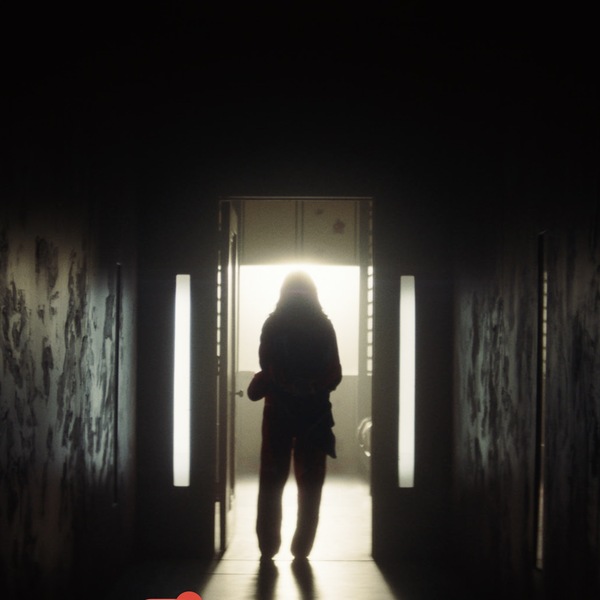
Red and Blue live inside an automated home, raised in isolation, and governed by "Papa," a voice behind a locked door. "Papa" hands out food, enforces rules, and supplies VHS tapes of a children's show called Barn. The children follow the guidelines out of fear, as 'Papa' doles out punishments for any disobedience.
Things change during a holiday resembling Christmas when they receive a gift: Pal, a silent humanoid stranger who follows their lead around the house. Pal soon begins receiving their own deliveries of unsettling tapes containing forbidden knowledge. While Blue stays fearful of violating rules due to past punishments, Red is drawn to Pal and stops complying.
As Red and Pal uncover truths about their containment, the automated systems in the house begin to glitch, driving a wedge between the twins right up until the finale.
Upon its world premiere this summer, comparisons were drawn between Home Bodies and earlier Canadian sci-fi and psychological horror flicks like Cube and Pin. It is a fitting parallel; the movie mixes the trapped setup of Cube with the mental headgames of Pin. It plays out like a minimalist psychological thriller, relying on atmospheric dread, isolation, and psychological manipulation rather than traditional monsters or bloody gore. Watching it unfold feels a lot like sitting through a feature-length, daylight-set episode of Black Mirror or The Outer Limits.
The primary threat is a disembodied entity named "Papa." The claustrophobic, fully automated smart home transforms from a safe haven into a prison for two children who are fearful of Papa and any repercussions for their 'bad behavior'. Blue has been punished for a previous incident, which is evident by a scar on his hand. This setup leaves the twins guessing what is real, turning their fake father's rules into a mental trap.
The movie utilizes an analog retro-futurism with a sterile, 1970s and 1980s aesthetic. The characters interact with their environment via CRT monitors, VHS tapes, and old-school analog gear, creating an "liminal space" vibe that is all the rage right now. Looking among the set decoration by Peri Greig, you see cups, plates, and food storage containers we all have at home, or at our parent's homes, at least. The small setting and everyday decor make the scenario feel grounded.
Director Casey Walker finds clever ways to keep the boxed-in location visually alive. Instead of standard setups, he uses security camera angles, slow tracking shots, and strange POV shots—like placing the lens inside trash cans or the microwave—so the confined setting never feels static. These angles frame the environment in a way that suggests the house is always watching the children. The camera movement shifts along with the script, turning the home itself into an unspoken character in the psychological trap and keeping you locked into the discomfort of the routine as the automation starts to glitch.
We do not know if the co-writers Adrian Murray and Marcus Sullivan are of our vintage - most likely not, but they would not be too far behind either. The film fits right into the minimalist psychological sci-fi style of the 90s The Outer Limits revival. It skips sleek tech and instead focuses on a small-scale story where people unravel under pressure from automation. The whole setup mirrors those standalone episodes by trapping characters in a sterile room where an unknown entity controls their lives. If you grew up in that era of TV, the structure will feel familiar, especially the slow build that saves the big shifts and dark twists for the final minutes.
The acting from real-life twins Emma and Ian Ho is great. Emma anchors the film as Red, capturing her frustration and impatience, while Ian balances her as Blue with a sweet naivety and childlike wonder. It is well-documented that girls mature faster than boys, and Red is evidently more mature than Blue, who still looks at everything with a degree of childlike wonder. Blue has been scared into submission because he was punished for misbehaving before this story begins. Red herself is still cautious not to say the wrong thing that will set 'Papa' off. But if any of the children were open to change, it was going to be Red.
Ess Hödlmoser plays Pal. When you first see them, it is unclear what they are, bringing an ambiguity to their appearance. From their posture and gait as Red leads them around their 'home', you wonder about the actor's professional background. So when you find out that they are an award-winning performance artist, contortionist, and aerial performer, it makes sense. Pal walks with a distinct performer's gait. Digging into the actor's story, you learn more about their own journey to personal truth as a trans non-binary actor living authentically, which adds a layer of depth to the character's presence when the children make their own discovery about Pal's 'identity'.
Pal introduces more mature knowledge to Red, letting her eat from the Tree of Knowledge of Good and Evil. Their Garden of Eden begins to shut down and die, and the facade begins to crack. The fable becomes 'real' to anyone who grew up in a faith-based community with a religion that shares a garden narrative, with a story like Adam and Eve. Whether it's Christianity, Judaism, and Islam, or the Persians writing about Mashya and Mashyana, Norse myths of Ask and Embla, or Maya legends, history includes stories of a first couple losing a world, showing that this idea exists across cultures.
But here is where the story gets a bit wobbly, as expectations precede its conclusion. Folks like the film's director Walker, ourselves and our fellow Anarchists were raised on shows like The Twilight Zone and more recently the revival of The Outer Limits in the late 90s (the latter of which we Canadians took some pride in as it was produced over in our west coast hub, Vancouver et al). Because of that background, we know what is going to happen before it happens. The film creates a scenario where there is no hope that anyone could stick the landing without triggering memories of series and shows from the past.
But it is the character moments that matter. Specifically, we think back to two incidents when doors are closing. Sounds silly, we know. But it was the looks on other character's faces when doors were closing on them—these sudden moments of elevated emotion, the realization that something was either deathly wrong, or permanently changing, a loss that would not be replaced.
It does save its most interesting developments until the last few minutes. The final bit of dialogue hints at something more exciting than the slow-burn degradation of trust between the twins. And for that it almost threatens Home Bodies to be nothing more than a fruitless exercise, a character study that we have seen before, played out on screens big and small. It is a mighty big carrot to dangle in front of audiences who have been watching this slow-burn sci-fi crawl towards the inevitable only for the big reveal to hint at something much larger, more exciting, and requires a much larger budget.
Home Bodies is an atmospheric character study that delivers great performances and a grounded, retro-futuristic world that keeps you locked into the trap. The technical execution and the slow-burn breakdown of trust between the twins show that Murray and Sullivan know how to build tension out of a small setting. While the formula might feel familiar to anyone raised on anthology television, and the final franchise tease keeps the movie from sticking a standalone landing, it remains a character study that matters.
A note on cookies
Newshunt uses essential cookies to keep you signed in and to remember your language and country, so the site works the way you expect. With your permission, we'd also like to use analytics cookies to understand how people use Newshunt and improve it over time.
Accepting only affects analytics. To learn more, view our Privacy Policy or Terms & Conditions.
(0)Comments