


This Ibex Went Extinct, Was Cloned, Then Went Extinct Again
Category: SciTech
Share
Archive
Like
Pyrenean Ibex Background
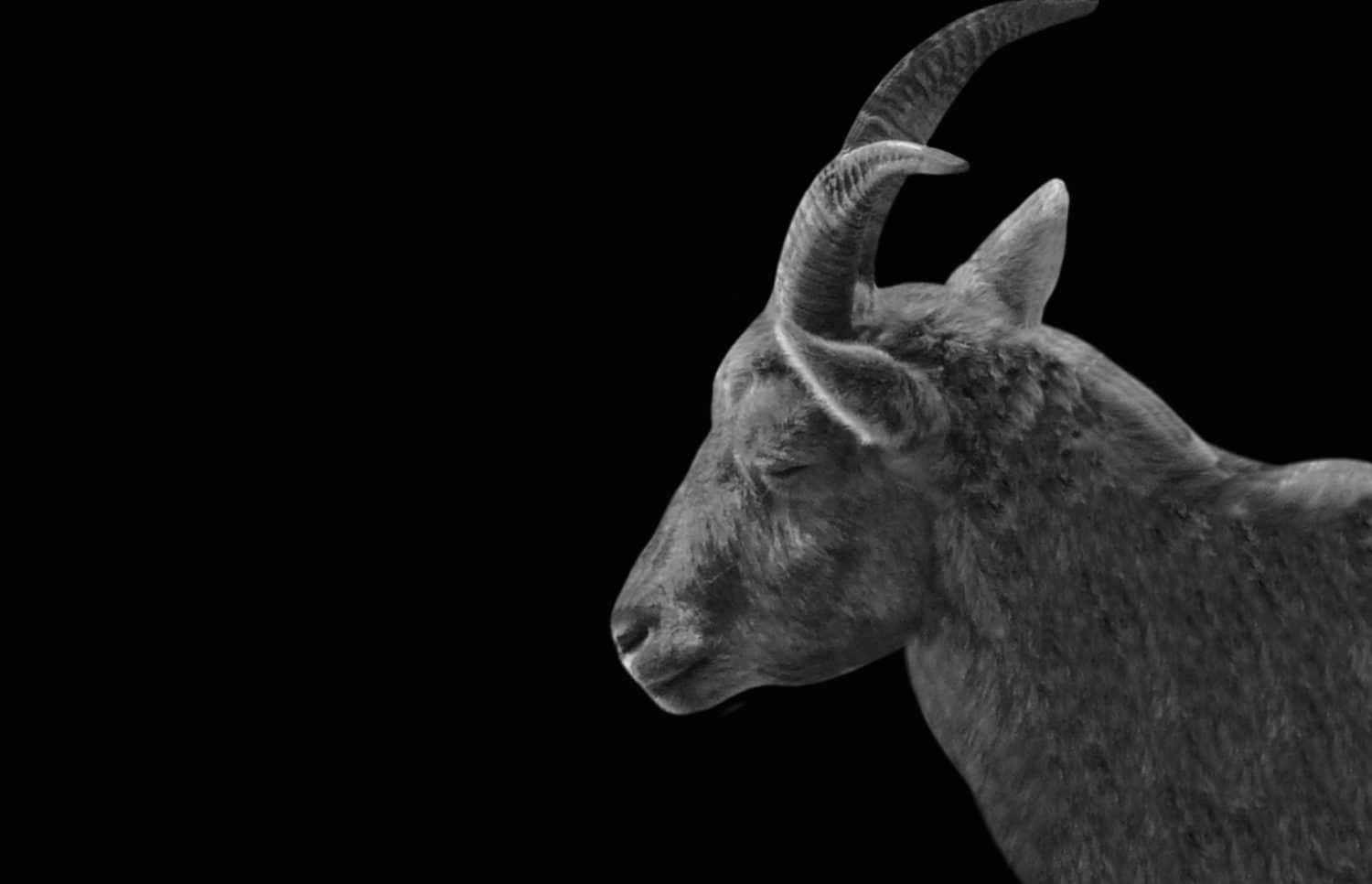
Once abundant in the Pyrenees mountains, Pyrenean ibexes went extinct in 2000 due to centuries of overhunting, habitat fragmentation, and intraspecies competition.
©Alexandre Boudet/Shutterstock.com
The Pyrenean ibex was a subspecies of the Iberian ibex. Known locally as bucardo, this large and imposing-looking wild goat lived across the Pyrenees mountains between northern Spain and southern France. There, they moved easily among steep cliffs, forests, and meadows, avoiding predators by skillfully navigating precipitous heights.
Both female and male Pyrenean ibexes had horns, but the males' horns were much larger, with ridged curves that often reached nearly 40 inches long. Males were also large, weighing over 150 pounds, with grayish-brown coats that darkened and thickened in winter. Masters of the mountains, Pyrenean ibexes moved across deadly cliff faces using sharp hooves with soft interior pads for traction.
These wild goats were consummate grazers, feeding on grasses, herbs, and pine shoots. Although they were social animals, males and females stayed separate for most of the year. Only during the autumn rut did males engage in disputes over mating rights. The population, once widespread across the Pyrenees region, steadily declined due to overhunting, habitat fragmentation, and intraspecies competition.
The Last of a Dying Breed
By the turn of the 21st century, the only remaining Pyrenean ibexes lived in Ordesa National Park. That great lineage came to a quiet end at the beginning of 2000. Rangers at the national park found Celia, the last wild Pyrenean ibex, beneath a fallen tree on January 6, 2000. Scientists and conservationists anticipated the species' extinction before it occurred. Less than a year before Celia's death, scientists took several skin biopsies from her ears and put them in cold storage.
While other species come and go with barely a murmur, the Spanish government had a different plan. After Celia's death, several government agencies teamed up with a company called Advanced Cell Technology to try and resurrect the Pyrenean ibex. This effort fell under the banner of de-extinction, a conservation concept that seeks to reintroduce extinct species to Earth. While cloning long-extinct creatures like woolly mammoths raises all sorts of ecological issues, the Pyrenean ibex had only been gone a short while.
Once the process began, Spanish researchers produced almost 500 cloned embryos. One hundred fifty-four of them were implanted into female goats, both ibexes and wild-domestic hybrids. Just 5 of the surrogates became pregnant, and only one gave birth.
A Second Chance, Interrupted
One ibex is not enough. It would take dozens, if not hundreds, of clones to ensure the species survives.
©Martin Prochazkacz/Shutterstock.com
That one surrogate successfully gave birth to a Pyrenean ibex—the first extinct animal to be brought back to life via cloning. Delivered by Caesarean section, Celia's daughter had a normal heartbeat, kicked her legs, and opened her eyes. However, she was unable to breathe. Within minutes, the Pyrenean ibex became extinct for the second time.
In a 2009 paper detailing their efforts, the Spanish researchers noted that physical defects prevented Celia's daughter from living. She was born with an extra lobe in her left lung.
Although she showed no other potentially lethal mutations, the extra lobe in her lung meant the Pyrenean ibex could not survive. As Jose Folch and other researchers explained in their paper, 'Physical defects in the lungs as well as in other organs have also been reported in neonatal cloned sheep that failed to survive.'
De-Extinction Fact and Fiction
Even if the cloned Pyrenean ibex had survived, it would have been isolated genetically, unable to sustain a population. No species can recover from extinction with only a single individual. Furthermore, it takes between 50 and 500 individuals to ensure genetic diversity and therefore long-term survival.
Practically, the only way to ensure a species survives once it's brought back from extinction is to cross-breed it with related species. If Celia's daughter had survived, she might have been able to breed with males from another ibex subspecies. While this would have resulted in the Pyrenean ibex being absorbed into another species, it would have allowed some of its genetic traits to persist.
The strange tale of the Pyrenean ibex shows just how complicated de-extinction can be.
A note on cookies
Newshunt uses essential cookies to keep you signed in and to remember your language and country, so the site works the way you expect. With your permission, we'd also like to use analytics cookies to understand how people use Newshunt and improve it over time.
Accepting only affects analytics. To learn more, view our Privacy Policy or Terms & Conditions.
(0)Comments