


Peter Brock remembered by racing greats, 20 years on
Category: Sports
Share
Archive
Like
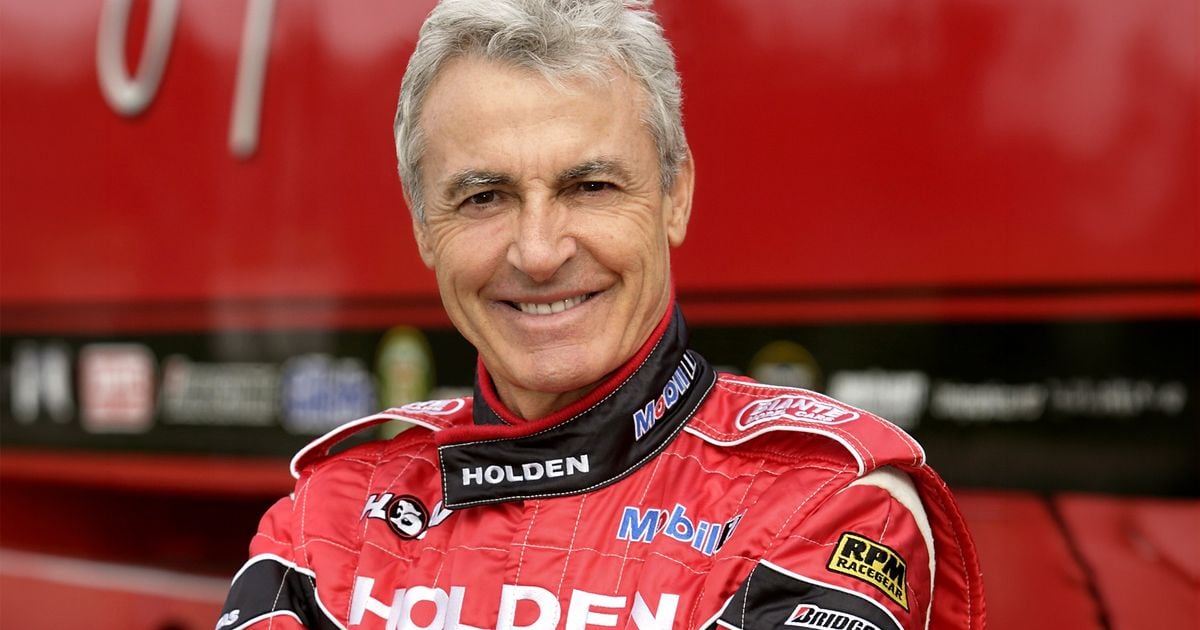
Good looks, effortless charisma and benevolence to an adoring Australian public routinely made Peter Geoffrey Brock and his legendary '05' race number front-page news during his remarkable life and career.
From his brilliant Bathurst 1000 debut in 1969, when he finished third in an HT Holden Monaro GTS, the spotlight remained on his unrivalled accomplishments and occasional stumbles for decades to come.
Mr Brock became a genuine motor racing icon who took on the world, conquered Bathurst more times than any other driver, and etched an indelible mark on Australia's motorsport folklore.
Sadly, he made the front page for the last time when he was killed in a rallying accident 20 years ago today. His death shocked a nation already mourning the loss of conservationist Steve Irwin, who had been killed by a stingray just four days earlier.
Looking for your next car?
CarExpert can help you research, compare and buy so you choose with confidence.
'I'll tell you something. There are two people who, when they died, you can say you know exactly where you were at that point in time,' said Dick Johnson, a multiple touring car racing champion and Bathurst winner who was one of Brock's greatest rivals.
'One was Brock, and the other was Steve Irwin. They were both so close together.
'With Brock, I was doing a ride day for Allan Horsley at Oran Park [race circuit in outer Sydney]. To be quite honest, you know, the whole thing is that it was just a very, very sort of – a moment that you'll never, ever forget.
'Jilly [Dick's wife] rang. She'd heard from the motorsport chaplain. And I was sitting in my car with some people, ready to take them for a ride, and from that point in time my phone just started lighting up. I just switched it off.'
Mr Brock's contribution to motorsport, the broader automotive industry and beyond is unrivalled in this country, even two decades on.
His fingerprints are all over this country's premier racing category, Supercars, and its crown jewel, the Bathurst 1000, where the silverware is now aptly named 'The Peter Brock Trophy'.
The Holden Dealer Team (HDT) road car business he kicked off became the template for Holden Special Vehicles (HSV), responsible for some of the best performance cars ever produced in Australia.
'He created a legacy that we all follow and still talk about,' former teammate Craig Lowndes told CarExpert .
'I think he was a one of a kind in a lot of regards because he obviously understood the full picture of what motorsport was leading towards, which was entertainment, but also looking after the fans.
'He presented, spoke extremely well. He brought people to the sport, and I think some of the drivers that are gone and present today could probably take a lot out of what he stood for.'
A Supercars Hall of Fame inductee, a Member of the Order of Australia and an Australian Sports Medal recipient, Mr Brock seemed capable of winning in anything.
In his early racing days, he embarrassed more established drivers in a hotted-up Austin A30 with a Holden engine under the bonnet. His exploits caught the eye of HDT boss Harry Firth, earning him that first drive at Mount Panorama.
He proved his mettle, dicing with Ford's clinically fast Allan Moffat as the two became household names as the benchmark drivers of the 1970s, winning eight of the 10 Bathurst enduros between them that decade.
An Australian rallycross champion, he was also adept off-road and described his greatest racing achievement not as one of his multiple Bathurst hat-tricks, but winning the 1979 Repco Round Australia Reliability Trial in the then-new Holden Commodore.
Only weeks after beating full-time rally aces in the 1979 trial, he won Bathurst by a stunning six laps. Each lap was then 6.172km – the circuit has since been lengthened – meaning he won by more than 37km.
'You know, he achieved an awful lot in his career, an awful lot, and it was his career that sort of brought him to the end, to be quite honest. It's not a fitting exit really for what he achieved in his career, to be quite frank,' said Mr Johnson.
'Brock was a different sort of a guy. He came up from a different school of things, but his ability was certainly unmatched at the time. It was all about Ford and Holden, and [now] it's about Ford and General Motors, and obviously Toyota.
'But you know, those sorts of things change over the years, and Brock was a big part of getting the whole thing going, and I was just fortunate enough to have some bad luck at times that turned into good luck.'
Mr Johnson also remembers a fierce rival who raced hard but fair.
'Mate, he was the fairest guy ever, and we – and I'm not sort of blowing bloody trumpets here, but – we dominated the '80s,' said Mr Johnson.
'Brock and I were in the system at that point in time, and he had the factory backing. I didn't. I'm not so proud of what we achieved, but more so how we achieved it, and by doing s#%t on our own. And Brocky, you know, deserved everything he had and got.'
In addition to his racing success, Mr Brock's road car business HDT Special Vehicles (HDT SV) kicked off with the 1980 HDT special edition, a run of 500 cars based on the top-spec 5.0-litre V8-powered VC Commodore SL/E.
The cars featured fettled engines, custom fibreglass body additions, huge flares around Irmscher alloy wheels, and unique HDT decals over red, white or black paintwork. HDT quickly expanded into other Holdens before introducing its Group One, Two and Three versions of the VH Commodore, each adorned with Brock's famous signature.
The relationship with Holden grew increasingly close, with more components fitted on the production line before cars were delivered to the HDT SV workshop.
Its ads read 'Body by Holden, Soul by Brock' alongside the 'We build Excitement' tagline, with Brock explaining that the road cars offered an escape from the mundane aspects of everyday life.
By the mid-1980s, HDT SV was often touted as Australia's sixth-largest automaker behind Holden, Toyota, Ford, Mitsubishi and Nissan. Brock was adamant Australian cars were as good as those made anywhere else, and that the local industry could take on the world.
The now highly sought-after 1985 VK SS Group A embodied that ambition as a homologation special in striking Formula Blue paintwork with unique alloy wheels.
It came as Australian racing regulations aligned with the international Group A rules for 1985, enabling global competitors to race cars here, such as the Jaguars that finished first and third at Bathurst that year.
Brock's race cars carried an Australian flag on the roof as he became increasingly ambitious and took his cars overseas – but the infamous Energy Polarizer, a device he insisted improved vehicle performance, brought a dramatic close to an amazing chapter in local automotive history.
Holden tested the device but could not measure any improvement and refused to allow Brock to include it because it did not meet its warranty and product standards.
Brock remained insistent, defiantly launching the VL Calais Director fitted with an Energy Polarizer in February 1987. The era-defining controversy spawned another front page as the unimaginable happened: Brock and Holden split.
Fans followed, somewhat, as Brock competed in E30 BMW M3s for the 1988 racing season and – gasp – then switched to the Ford Sierra (sans Ford badges) for the following two seasons, including a pole position at the 1990 Bathurst 1000.
On the road-car front, the Brock name was used on a special-edition EA Ford Falcon – seemingly in protest against Holden – and even on a Russian-built Lada Samara, perhaps Mr Brock's lowest ebb.
On track, he returned to Holden in 1991 with his own team, while oil brand Mobil stood loyally by him through the changes of marque.
Remarkably, in 1994, he rejoined the factory-backed successor to his HDT outfit, the Holden Racing Team (HRT), with Mobil replacing rival Castrol as its major sponsor.
That same year, a young Mr Lowndes joined HRT and announced himself with a stunning second place at Bathurst. The 20-year-old debutant cheekily passed leader John Bowe, who was sharing a car with Mr Johnson, in a bold move that etched his name into racing folklore.
It was almost a literal changing of the guard. Brock was rapidly catching the pair in the latter stages of the race, only to crash out uncharacteristically at the top of The Mountain.
After his brilliant move in the 1994 race, Mr Lowndes was dubbed 'The Kid', and Mr Brock took him under his wing – the Master and the Apprentice.
'I think I was quite lucky that the way and who I am is very similar to Peter, and I took a lot out of being a teammate more so in just how to deal with adversities in the sense of, you know, if your weekend wasn't going well or the car wasn't strong, how to overcome that, but also really define the difference between fans and racing,' said Mr Lowndes.
'That's the big thing; some drivers don't really define the line between having been in a race car and not having the performance you want, but then also by the same token, getting out of the car and realising that fans are there to talk, meet, greet, get a photo, get a signature.
'They somewhat don't really care [about] your performance on track or not; they're there to have an experience, and I think yes, some of the drivers miss that element.'
Yet nobody could quite replace Peter Brock, even if Mr Lowndes appropriately sits equal-second with Jim Richards on the list of Bathurst 1000 winners, with seven victories to Mr Brock's nine.
The former protégé told CarExpert he believes that winning record will never be beaten.
'I said no years ago, and I still stand by it. But yeah, nine victories – it's incredible to get one. You look at people like the Glenn Setons and drivers who have not actually achieved one victory, to go on to have multiples and then to go on to do nine…
'I think you also have to have respect for the current climate, where the car is a lot more even. There are a lot more multiple team driver combinations that are equally the best to win.
'You know, you can argue that back in that day there was probably two, three cars maybe capable of winning a race, especially at a place like Bathurst. So yeah, I don't think anyone will achieve that ninth victory.'
In 2006, weeks after Mr Brock's death, Mr Lowndes and co-driver Jamie Whincup were, almost poetically, the first to lift the newly named Peter Brock Trophy after winning the Bathurst 1000.
'Obviously, my strong connection with Peter all the way back was incredible, so [it was] somewhat fitting. But you know, we weren't the fastest car on that weekend,' said Mr Lowndes.
'Things fell our way. I'm not superstitious, but things fell our way. You know, the second fastest car was Jason Bright. They had issues, and then that battle with Rick Kelly at the end was probably something I needed.
'But it somewhat made the victory even sweeter, you know, having that great battle. And as I said, I'm not superstitious, but if you look at the history books the gap between Rick and I at the end was 0.05 [seconds].'
Today, fans will both mourn Peter Brock's death and celebrate his life, as well as the cars, people and passion he fuelled.
RIP '05' Peter Brock.
MORE: The time I drove a Bathurst legend… and almost put it into the wall
A note on cookies
Newshunt uses essential cookies to keep you signed in and to remember your language and country, so the site works the way you expect. With your permission, we'd also like to use analytics cookies to understand how people use Newshunt and improve it over time.
Accepting only affects analytics. To learn more, view our Privacy Policy or Terms & Conditions.
(0)Comments