


colliding reminders this week
Category: Politics
Share
Archive
Like
I frequently note that history rarely, if ever, includes straight lines as changes occur, whether intended or not, in trajectories. My bottom line assumption remains that inevitability is vastly overrated, though it's tempting to think we can always tell where a line of action will end.
The far-right garnered a plurality in Sunday's state election in Saxony-Anhalt, rekindling a tragic reminder thought long put to bed following the bloodshed of millions during World War II.Alternative für Deutschland (AfD)began thirteen years ago as a fringe populist movement advocating nationalist policies, rejecting immigration and multiculturalism, and arguing Germany was on the wrong path, whether led by Chancellor Angela Merkel or other national figures. AfD gradually surpassed the Constitutional bar of 15% of the vote established decades ago to prevent the return of Nazi ideology following Germany's crushing defeat in World War II.
If you're not historically minded, Adolf Hitler and his predecessors of today's German far-right took power as the National Socialist German Workers' Party in 1933, following an unlikely but legal series of events that led to the debacle of World War II and the murder of six million Jews and others deemed unacceptable to German society. While we currently see the rise of Holocaust deniers in Europe and the United States, the death camps indeed murdered as many Jews as possible in hopes of eradicating an entire people.
For decades, the people of Germany bore the shame and guilt for their government's actions, determined to ensure no possible repeat could occur. Anti-Semitism was a horror Jews across Europe, among other places, confronted for centuries before the Holocaust, but the government in post-War Bonn and then Berlin upon reunification in the early 1990s sought to assure the world that Germans no longer embraced such heinous racist views.
Yet Germany during the same period relied on immigrants, often Turks, to fuel the vast economic engine that raised West Germany and ultimately the reunified whole to become the behemoth of the European Union. While Germany rebuilt its standard of living, resentment also regenerated against the generations of foreigners who similarly benefited from living and working in the Republic.
With the Arab Spring a generation ago, along with the increased refugees from wars in Afghanistan, Iraq, and the greater Middle East, antipathy grew to allowing these migrants into the European fold. Chancellor Merkel, determined to retain Germany's moral high ground regained with such effort after World War II, allowed thousands to claim refugee status, opening the door to benefits paid for by Germans who began to see their standard of living stagnate as the global economy evolved in the 21st century. This aligned theDeutsche Republikwith the European Union and overall sentiment.
AfD, over the past several years, began arguing to increasingly disillusioned citizens that foreigners were the cause of German stagnation, crime, and a lesser German national character, much as similar arguments began surfacing across industrialized states no longer growing as aggressively as in the past. Anti-immigrant sentiment had already manifested itself in Norway with a horrific 2011 shooting by a neo-Nazi. Still, the Netherlands, France, Sweden, and other European nations, as well as the United States, began to recoil from their long-standing welcome to refugees and immigrants overall.
AfD did not win a majority in these state elections yesterday but did garner 43% of the popular vote. The Chancellor, Frederick Merz, acknowledged 'the most severe election defeat in years, or indeed decades' this morning in describing his Christian Democratic Union's loss of 25 seats as the AfD gained 16 and other parties split the difference.
I do not pretend to be a specialist in German politics. Still, I can see, based on some of the trends reported over the past several years, why the rise of AfD reminds so many of Hitler galvanizing disgruntled segments of German society after World War I who blamed the foreigners andthose associated with being foreignfor the conditions across society. Unquestionably, Germany in 2026 is far more prosperous across the board than it was, burdened by the post-World War I reparations and economic dislocation imposed at Versailles.
AfD's distinction between real 'Germans' and others is not unique, with echoes sounding in political parties here, in Britain, and on the Continent; Viktor Orban rode to power a generation ago on similar sentiments, even though a vote earlier this year ended his rule in Hungary.
But the concurrent resurgence in widespread anti-Semitism, so frequently concurrent with anti-immigrant sentiments, is worrisome to Jews as well as those who recognize historic trends. The irony of this German vote falling within the same calendar week as Jews welcome year 5787 at sundown on Friday, 11 September, is an unmistakable reminder of the pervasiveness of these sentiments. Whether the banality of evil, as the late political scientist Hannah Arendt captioned some of the Germans who operated thoughtlessly and by orders during the Holocaust as the state aimed to eradicate Jews across Europe, or hatreds borne of historic dedication to one's faith, the charges against Jews never seem to end, even during the height of assumed multicultural tolerance. But the fear of a party returning to power in a major country which set out nine decades ago to seal shut the door against anti-Semitism is disorienting as Jews look forward to the year ahead.
Anti-Semitism unquestionably is on the rise in part because of widespread disgust created when right-wing nationalistswithin Israelseek to subjugate, if not remove, Palestinians from the Eretz Israel. Long marginalized in Israel's long-standing democracy,Jewishreligious extremists under Prime Minister Netanyahu followed horrific Hamas attacks on 7 October 2023, which murdered 1,200 Israelis.
Hamas's attacks were repugnant to many, creating sympathy for Israelis. Binyamin Netanyahu, a polarizing but elected Prime Minister of Israel, unleashed a war to uproot Palestinians beyond the armed Hamas militants; next month will mark three years in that campaign.
Many people here and elsewhere recoiled at the scorched-earth behavior which jeopardized the lives of Palestinian civilians caught yet again without any support. Europeans, in particular, abhorred the Israeli response because of its enduring and unfettered nature. According to a study at the Watson Institute of Brown University's Cost of War Project released eleven months ago today, the Israeli retaliation against Hamas has led to well over 2 million people being displaced from their homes across Palestinian areas—largely the Gaza Strip—with few options; more than a million of them are children. The overall figure for dislocation across the Palestinian, Israeli (Jewish and non-Jewish), Iranian, Lebanese, and other groups climbed to ten million, a staggering figure.
Additionally, right-wing Israelis upon whom Netanyahu depends to maintain his fragile governing coalition have been ejecting Palestinians from the West Bank for months, furthering the chagrin of many around the world. In Europe, where links to Israel are weaker than they are in the United States, the seemingly unlawful behavior by Jerusalem escalates adversarial policies.
Even in the United States, elections have illustrated divisions over support for Israel in new ways. One of the reasons young people opposed Joe Biden's successor as a candidate against Donald Trump in 2024 was the former president's commitment to supporting Israel—despite publicly condemning Israeli actions in Gaza. The 2025 mayoral campaign in New York City featured an element of anti-Semitism when Zohar Mamdani, a Shi'ia Muslim, unequivocally accused the Israeli leader of committing genocide in the Hamas conflict.
Anti-Semitism has risen sharply over the past several years as anti-Muslim sentiments arose a quarter century ago following the 9/11 attacks. A report last week indicated that U.S. Jewish congregations and groups spend a whopping billion dollars annually on security against attacks. Despite those efforts, synagogues and schools in various parts of the United States—and in the rest of the world—still suffer violence because those organizations support Jews. I don't know the statistics on Muslim investments in security for mosques and schools, but I assume they were significant as well.
Britain has also noted a marked increase in anti-Semitic acts over the past several years. As is true with some Jews across the United States and Europe, condemning the Israeli government's widespread attacks on Palestinians surprises many. Still, the question is dividing Jewish communities worldwide.
The European Union's Agency for Fundamental Rights, led by Sirpa Rautio, stated two years ago that 'Europe is witnessing a wave of antisemitism, partly driven by the conflict in the Middle East. This severely limits Jewish people's ability to live in safety and with dignity.'
The war with Iran over the past seven months only exacerbates all of these tensions further as Shi'ites, Sunni, Jews, and Christians continue to clash in various places.
News of the AfD's increased support in a German state election will be on people's minds as the Shofar blows in congregations around the world Friday evening. The first night of Rosh Hashanah services will, of course, coincide with the quarter-century commemorations of the 9/11 attacks, yet another indicator of polarizing religious problems around the globe.
In an era of far greater intermingling of peoples from various faiths, tolerance seems in ever shorter supply. Many historic twists and turns led us to this point, a reminder that actions create consequences. I am not predicting AfD's victory will ignite war in Europe, but am sadly confident the rise of such a group of intolerants will breed more doubters rather than more understanding.
I welcome your thoughts, questions, observations, or doubts on this column—or any other. Actions create consequences is a forum for respectful, thoughtful discussion, meaning we need more voices rather than mine alone. Please chime in.
Thank you for your time. Thanks also to the subscribers whose financial support allows me to read widely. Annual subscriptions are barely over a dollar a week at $55, while monthly subscriptions are $6, and both packages offer access to the response section at the bottom of this column rather than writing me directly. In any case, thank you.
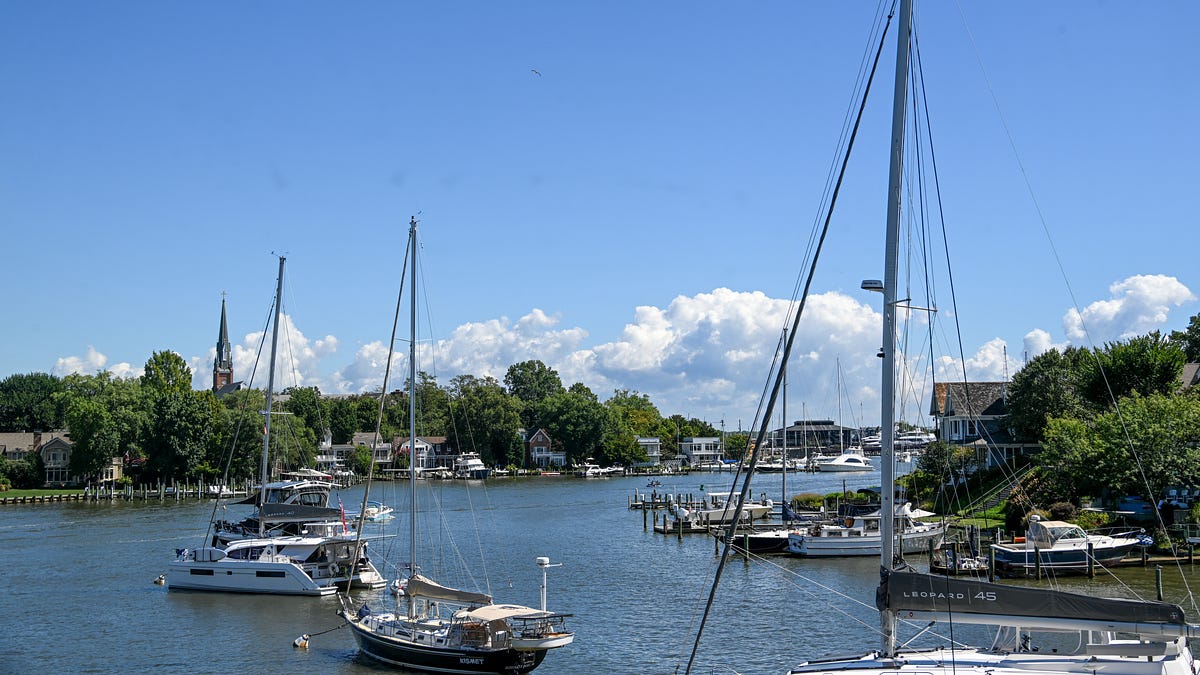
Labor Day is gracing the banks of Spa Creek with splendid puffy white clouds to close the summer this year.
Be well and be safe. FIN
Al Jazeera Staff, 'Who is Zohran Mamdani, New York's Mayor Elect?',AlJazeera.com, 25 June 2025, retrieved at https://costsofwar.watson.brown.edu/sites/default/files/2025-10/Displacement-Middle-East-since-October-7-2023_Vine_Costs%20of%20War_Oct%207,%202025.pdf
Jakub Krupa, 'Merz says 'shock' AfD victory in key German state 'is an election result we simply cannot move past'',TheGuardian.com, 7 September 2026, retrieved at https://www.theguardian.com/world/live/2026/sep/07/germany-afd-saxony-anhalt-merz-greenland-ratko-mladic-europe-latest-news-updates
'Jews in Europe still face high levels of anti-Semitism',Fra.Europa.eu, 11 July 2024, retrieved at https://fra.europa.eu/en/news/2024/jews-europe-still-face-high-levels-antisemitism
'Smotrich competes for right-wing votes',YouTube.com, August 2026, retrieved at
David Vine, 'Mass Displacement Since October 7, 2023: Flight from War, Genocide, and Explosion in Gaza, Iran, Israel, Lebanon, and the West Bank', Brown.edu, 7 October 2025, retrieved at https://costsofwar.watson.brown.edu/sites/default/files/2025-10/Displacement-Middle-East-since-October-7-2023_Vine_Costs%20of%20War_Oct%207,%202025.pdf
'Why some Jews in Britain are joining Gaza solidarity marches',YouTube.org, June 2026, retrieved at
World Israel News Staff, 'US synagogues, Jewish groups paying more than a billion per year for security',WorldIsraelNews.com, 6 September 2026, retrieved at https://worldisraelnews.com/us-synagogues-jewish-groups-paying-more-than-1-billion-a-year-for-security/
A note on cookies
Newshunt uses essential cookies to keep you signed in and to remember your language and country, so the site works the way you expect. With your permission, we'd also like to use analytics cookies to understand how people use Newshunt and improve it over time.
Accepting only affects analytics. To learn more, view our Privacy Policy or Terms & Conditions.
(0)Comments