


Blind dolphin found dead along river in DG Khan
Category: Health
Share
Archive
Like
Carcass sent for post-mortem to determine cause of death
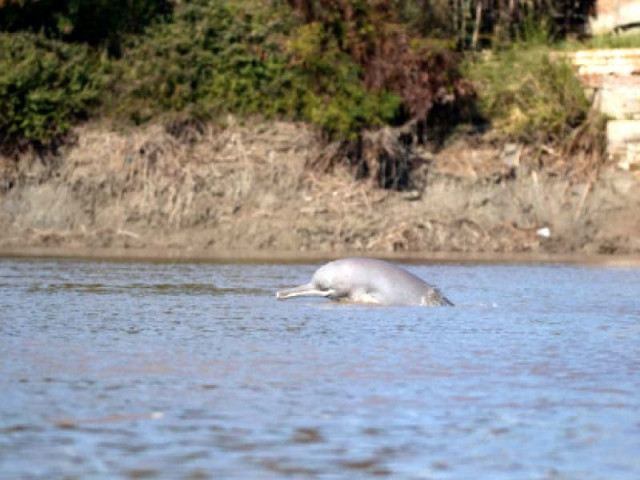
The Indus and Ganges River dolphins are often referred to as blind dolphins because they live in naturally muddy rivers and after millions of years of evolution have lost their eyesight. PHOTO: EXPRESS
The discovery of a rare Indus blind dolphin, locally known as Bhulan, dead along the Indus River in Dera Ghazi Khan has raised concerns among wildlife activists over the protection and monitoring of the endangered species.
According to local sources, the dolphin's carcass was found on the southern bank of the Indus, east of Arain Wala Spur, within the jurisdiction of Shiro Modern Police Station.
A boat crossing used by local residents is located on the opposite bank.
Additional Chief Wildlife Ranger South Punjab Sheikh Muhammad Zahid said the dolphin had entered the area with the flow of water during the recent floods but became stranded after the water level receded.
He said the carcass was shifted to Dera Ghazi Khan late at night for a post-mortem examination. No apparent injury marks were visible on the dolphin's body, he said, adding that it was therefore premature to conclude that it had been killed by poachers.
The exact cause of death would be determined after the post-mortem, he added.
The development comes after the Punjab government recently established the Panjnad Indus River Dolphin Wildlife Sanctuary, covering about 198 kilometres of the Indus River from Jam Pur, Bait Lundi Patafi, to Guddu Barrage. The new sanctuary has been linked with the existing protected dolphin habitat in Sindh, creating a continuous legally protected corridor of around 400 kilometres along the Indus for the species.
The Indus dolphin population in Punjab is estimated at around 660, with nearly two-thirds inhabiting the newly designated protected area.
Local social activists said incidents of dolphin deaths and strandings had been reported from riverine areas of Layyah, Taunsa and Dera Ghazi Khan, particularly when water levels in the Indus receded.
They said stranded or dead dolphins were often spotted by local residents and social workers, who subsequently alerted the relevant authorities.
The local community has called for a thorough investigation into the latest death and urged the authorities to establish an effective monitoring and rescue mechanism across the sanctuary and other riverine areas.
Activists said timely intervention could help rescue dolphins that become stranded as water levels fall and prevent avoidable deaths.
According to WWF-Pakistan, the Indus River dolphin is one of the world's rare freshwater mammals and an important indicator of the health of the Indus River ecosystem.
A 2001 survey recorded around 1,200 dolphins, while subsequent conservation efforts helped increase the population to nearly 2,000.
The species continues to face threats from water pollution, habitat fragmentation caused by barrages, illegal hunting and entrapment in irrigation canals, according to WWF-Pakistan.
A note on cookies
Newshunt uses essential cookies to keep you signed in and to remember your language and country, so the site works the way you expect. With your permission, we'd also like to use analytics cookies to understand how people use Newshunt and improve it over time.
Accepting only affects analytics. To learn more, view our Privacy Policy or Terms & Conditions.
(0)Comments