


Indra, Lord of Cosmic Order and Illumined Strength
Category: Entertainment
Share
Archive
Like
Lakshmanrao Upadhyayula
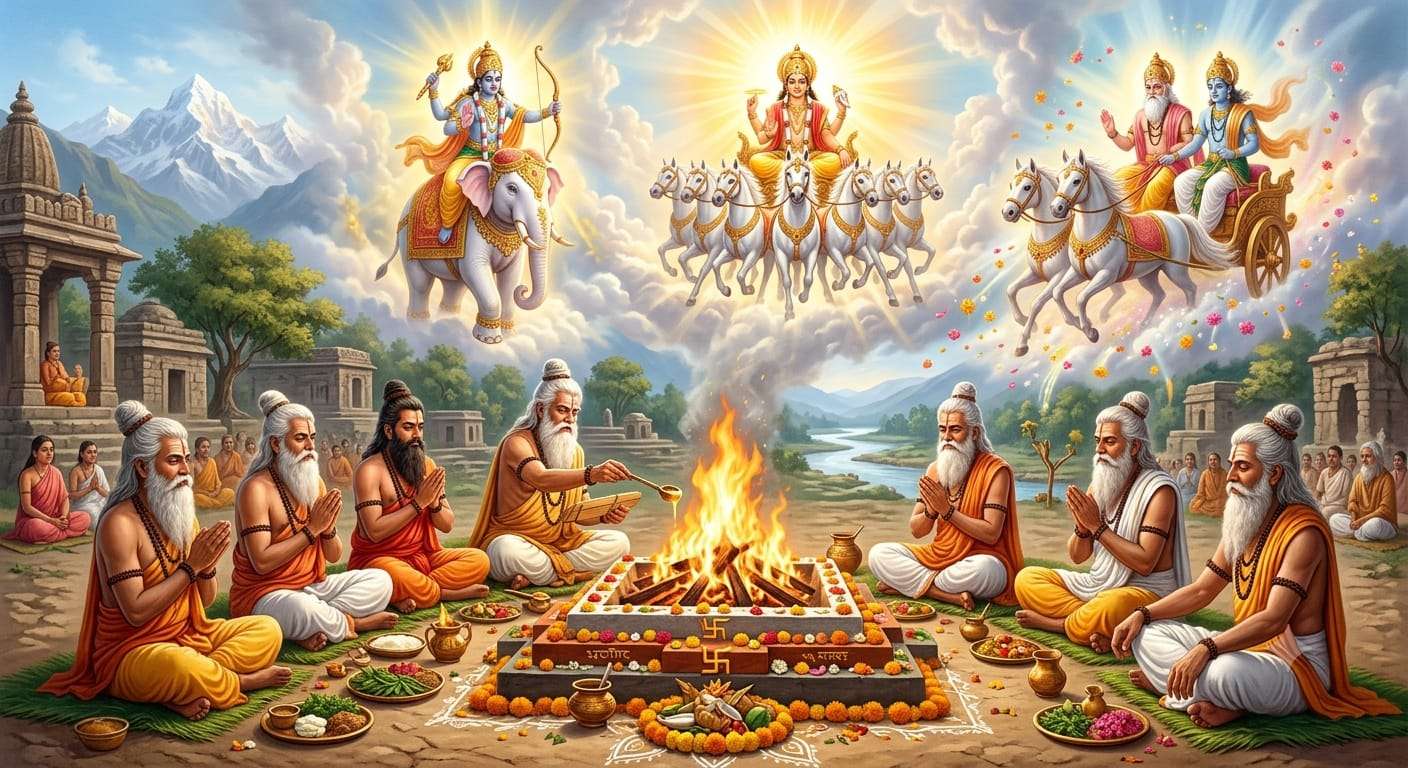
The sage Vishwamitra, invoking Indra through the majestic Tristup chandas of the Rigvedic hymns, raises a prayer that emerges not merely from speech but from the deepest currents of consciousness. Indra is praised as the Lord of the universe, the sovereign power who sustains cosmic order and responds to the sincere offerings of enlightened minds. The hymns chanted by the priests are envisioned as streams flowing from the heart, carrying devotion, wisdom, and intention toward the divine realm. The sage declares that this sacred hymn has been consciously fashioned and offered with reverence, requesting Indra to understand, accept, and awaken to its call within the sanctified precincts of the yajna.
The hymn is described as having manifested before Surya, the radiant Sun, symbolizing that true knowledge precedes and accompanies illumination. In Vedic thought, the Sun is not merely a celestial object but the visible expression of truth, awareness, and the life-sustaining rhythm of the cosmos. Thus, a hymn revealed before Surya signifies wisdom arising from the eternal light of consciousness. Recited within the sacred atmosphere of sacrifice, the hymn becomes a bridge between humanity and divinity, awakening higher faculties within the worshipper while inviting divine presence into the ritual arena.
The sacred verses are portrayed as clothed in the spiritual inheritance of the ancestors. These hymns are not transient compositions but living currents of eternal wisdom transmitted across generations of seers. Just as a sacred garment protects and adorns the body, the ancient mantras preserve and transmit the accumulated insight of countless sages. Their enduring nature reflects the Vedic understanding that truth is timeless, continually rediscovered yet never diminished by the passage of ages.
The Ashwins, the divine twin physicians and bringers of harmony, are celebrated with joyful reverence. The poet declares that the very tip of his tongue dances in praise of them. This vivid imagery expresses the spontaneous delight experienced when consciousness encounters divine beauty and healing power. The Ashwins symbolize restoration, balance, and the harmonious integration of body, mind, and spirit. Their arrival with the dawn signifies the emergence of order from disorder and vitality from stagnation, a principle observed both in spiritual awakening and in the natural cycles governing life.
As the devourer of darkness yields to the advancing day, the Ashwins unite with the sacred hymns. This union reflects a profound Vedic insight: sound and light work together in the revelation of truth. Just as sunlight dispels physical darkness, sacred knowledge dispels ignorance. The rhythmic recitation of mantras aligns human consciousness with cosmic vibrations, while the dawn symbolizes the awakening of higher understanding. Such imagery reveals the remarkable scientific temperament of the Vedic seers, who observed correspondences between natural phenomena and inner spiritual processes.
The hymn recalls the heroic deeds of the ancestors who sought the wealth of cows under the guidance of Indra. In Vedic symbolism, cows often represent not only material prosperity but also rays of knowledge, nourishment, and divine abundance. The ancient struggles for cattle therefore signify the quest to recover hidden treasures of wisdom and sustenance. Indra, renowned for his glory and strength, bestowed abundant wealth upon the Angirasas, the enlightened seers who pursued truth with unwavering dedication.
As the companion of the Angirasas, Indra joined their search for the concealed cows and discovered the Sun hidden within darkness. This powerful image conveys one of the central themes of Vedic spirituality: the recovery of light from obscurity. The hidden Sun represents truth concealed by ignorance, while Indra's intervention symbolizes the awakening power that liberates wisdom from the caves of limitation. The narrative also reflects humanity's continual effort to uncover the laws of nature and the mysteries of existence through disciplined observation and insight.
The hymn further declares that Indra first sprinkled honey upon the milk-giving cows before restoring their abundance. Honey symbolizes sweetness, harmony, and the enriching essence of life. This imagery suggests that prosperity becomes truly meaningful when accompanied by balance and benevolence. The reference to hoofed wealth signifies the restoration of productive resources essential for sustaining society. Such passages reveal the Vedic recognition that material prosperity and spiritual well-being are not opposing forces but complementary dimensions of a harmonious life.
Indra is also praised for seizing deceptive and illusory beings hidden within deep caves and distant regions of space. Spiritually, these forces represent ignorance, falsehood, and the tendencies that obscure truth. The imagery reflects the Vedic understanding that the human mind must overcome illusion to perceive reality clearly. From a scientific perspective, it mirrors humanity's enduring quest to investigate hidden causes, penetrate mysteries, and illuminate the unknown through disciplined inquiry and reason.
The Sun is described as emerging from the night clothed in flame. This radiant birth symbolizes the perpetual triumph of light over darkness and knowledge over ignorance. The worshippers pray to dwell far from sin, fear, and destructive influences, seeking instead a realm of clarity, virtue, and inner freedom. Soma, the sacred essence of inspiration and exalted consciousness, is invoked as a source of vitality and spiritual flourishing, enabling individuals to participate more fully in the divine order.
The sage requests that Indra understand and receive the priest's hymn while Surya brightens heaven and earth for the success of the yajna. Heaven and earth together represent the totality of existence—the spiritual and the material, the transcendent and the manifest. Their illumination signifies the harmonization of all dimensions of life under the influence of truth. The Vasus are also invoked, and generous prosperity is sought for those who willingly share their resources, reflecting the Vedic ideal that wealth achieves its highest purpose when used for the welfare of others.
In the concluding praise, Indra is honored as the provider of food, the source of strength in battle, the possessor of immense riches, and the most reliable companion. He is celebrated as the one who inspires hymns, receives them, and listens to them, embodying the unity of divine inspiration, expression, and reception. Fierce against forces of disorder and victorious in the struggle against falsehood, Indra represents the dynamic power that protects righteousness and secures prosperity. Therefore, the worshippers invite him to their sacred gathering, seeking refuge beneath his protection and aspiring to live in harmony with the eternal principles that sustain both the cosmos and human civilization.
A note on cookies
Newshunt uses essential cookies to keep you signed in and to remember your language and country, so the site works the way you expect. With your permission, we'd also like to use analytics cookies to understand how people use Newshunt and improve it over time.
Accepting only affects analytics. To learn more, view our Privacy Policy or Terms & Conditions.
(0)Comments