


Apple Watch Series 9 vs Series 12: Should you upgrade?
Category: SciTech
Share
Archive
Like
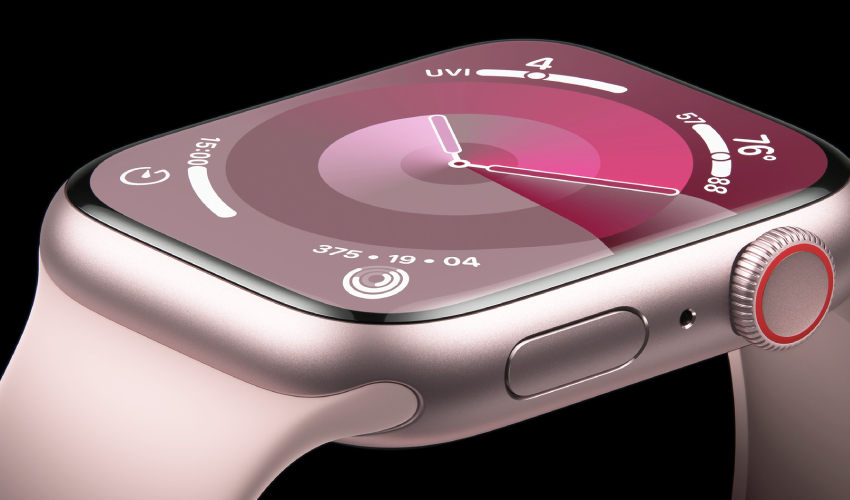
Apple Watch Series 12 offers a substantial set of hardware and health-tracking improvements over the three-year-old Series 9, but whether owners should upgrade depends largely on how they use their smartwatch.
The Series 9 was discontinued in 2024 but continues to support watchOS 27. The newer Series 12 starts at $399 and introduces improvements across its design, display, sensors, battery and connectivity.
Thinner design, larger display
The Series 12 is thinner than the Series 9, measuring 9.7mm compared with 10.7mm on the older model.
It comes in 42mm and 46mm sizes, compared with the 41mm and 45mm options available for the Series 9.
The newer watch also offers a larger display area, with the smaller model increasing from 904 square millimetres to 970 square millimetres, while the larger version rises from 1,143 to 1,196 square millimetres.
Series 12 uses an LTPO3 wide-angle OLED Always-On Retina display with a 1Hz refresh rate, while Series 9 uses an LTPO OLED Always-On Retina display.
Bigger health and fitness upgrade
Health tracking is one of the biggest differences between the two generations.
The Series 12 features a fourth-generation always-on optical heart sensor and a second-generation electrical heart sensor. It can also record background heart-rate readings every five seconds and measure recovery and overall heart-rate variability more frequently.
Apple has also added Recovery HRV and a daytime view to the Vitals app, along with a Readiness app that provides a daily score and recommendation.
The newer model also includes wrist and water temperature sensors, a depth gauge rated to six metres and a dedicated Depth app.
For swimmers and snorkelers, these additions could make the Series 12 considerably more useful than the Series 9.
Faster charging and longer battery life
Battery life has also improved.
The Series 9 is rated for up to 18 hours of normal use and up to 36 hours in Low Power Mode. Series 12 increases those figures to 24 and 38 hours respectively.
Charging is faster too. The Series 12 can reach 80% in around 30 minutes, compared with approximately 45 minutes for the Series 9.
Apple says 15 minutes of charging can provide up to 12 hours of normal use on the Series 12.
Is the upgrade worth it?
For Series 9 owners who use their Apple Watch extensively for workouts, health tracking and recovery, the Series 12 represents a meaningful cumulative upgrade.
The newer sensors, more frequent readings, Readiness features, larger display, faster charging and water-related capabilities provide the strongest reasons to upgrade.
However, the difference is less significant for users who primarily rely on their watch for notifications, basic activity tracking and occasional workouts.
The Series 9 still offers an Always-On display, ECG, wrist temperature sensing, Double Tap, sleep apnea and hypertension notifications, as well as support for watchOS 27.
Siri AI is also available on the Series 9 when paired with a compatible iPhone.
The Series 12 adds Audio Intelligence features, including Sound Recognition, while Live Rewind and Siri Recap are expected to arrive in beta later in 2026.
Which Apple Watch should you buy?
For buyers purchasing a new Apple Watch, the Series 12 is the stronger option. It combines three years of accumulated improvements while starting at the same $399 price at which the Series 9 launched.
The Series 9 can still make sense as a used or refurbished option, particularly at a significant discount.
However, buyers should check battery health, physical condition and warranty coverage before choosing a second-hand Series 9, as an aging battery could reduce the value of the cheaper watch.
Bottom line: Series 9 owners do not need to upgrade if their current watch meets their needs. But for users focused on health, fitness, recovery and faster charging, the Series 12 offers enough improvements to make the upgrade worthwhile.
A note on cookies
Newshunt uses essential cookies to keep you signed in and to remember your language and country, so the site works the way you expect. With your permission, we'd also like to use analytics cookies to understand how people use Newshunt and improve it over time.
Accepting only affects analytics. To learn more, view our Privacy Policy or Terms & Conditions.
(0)Comments