


How to Choose an IPTV Service in Sweden for Reliable Everyday Streaming
Category: SciTech
Share
Archive
Like
Internet-based television has changed the way many people watch live channels, sports, films, and series. Instead of relying only on traditional cable or satellite connections, IPTV delivers television content through an internet connection and allows viewers to use a wider range of compatible devices.
For users in Sweden, choosing an IPTV service should involve more than simply looking at the number of available channels. Streaming quality, device compatibility, internet speed, content organization, customer support, and subscription flexibility can all affect the viewing experience.
This guide explains the main factors worth checking before choosing an IPTV subscription for everyday streaming.
IPTV stands for Internet Protocol Television. It delivers television streams through an internet connection rather than through conventional broadcasting methods.
Depending on the service and application being used, viewers may be able to access:
A compatible application or IPTV player is normally required to organize and display the content.
Because streaming depends heavily on the internet connection, the quality of the home network is just as important as the IPTV player or device.
Before comparing IPTV subscriptions, evaluate the internet connection where the service will normally be used.
A fast connection can still produce interruptions if it frequently drops or experiences large changes in available bandwidth.
For IPTV streaming, a consistent connection is generally more useful than a connection that occasionally reaches very high speeds but regularly becomes unstable.
Ethernet connections can provide greater consistency for televisions and streaming boxes located close to a router. Wi-Fi is more convenient, but walls, distance, network congestion, and interference can influence performance.
Higher-resolution video requires more data. Standard-definition streams generally need less bandwidth than HD, Full HD, or 4K content.
Households should also consider other internet activity. Gaming, cloud backups, video calls, downloads, and several people streaming simultaneously can reduce the bandwidth available to an IPTV device.
One of IPTV's practical advantages is that it can work across different categories of devices, depending on the service and software being used.
Common options include:
Many modern Smart TVs support IPTV applications directly. This can provide a clean setup without requiring additional hardware.
Before subscribing, confirm that a suitable IPTV player is available for your television's operating system.
Android-based televisions and streaming devices provide access to a variety of IPTV players. They can be particularly useful for people who want more control over application selection and interface preferences.
Mobile IPTV applications make it possible to access streams on smaller screens. They can be useful when moving between rooms or when watching away from a primary television.
Desktop and laptop computers can also be used with compatible IPTV software. This is convenient for users who already spend significant time working or browsing on a computer.
When evaluating a provider, checking device support before purchasing can prevent unnecessary setup problems later.
Large channel numbers can look impressive, but they should not be the only factor when comparing services.
A more practical approach is to determine whether the service includes the categories and regions that matter to you.
For viewers in Sweden, this might include a combination of:
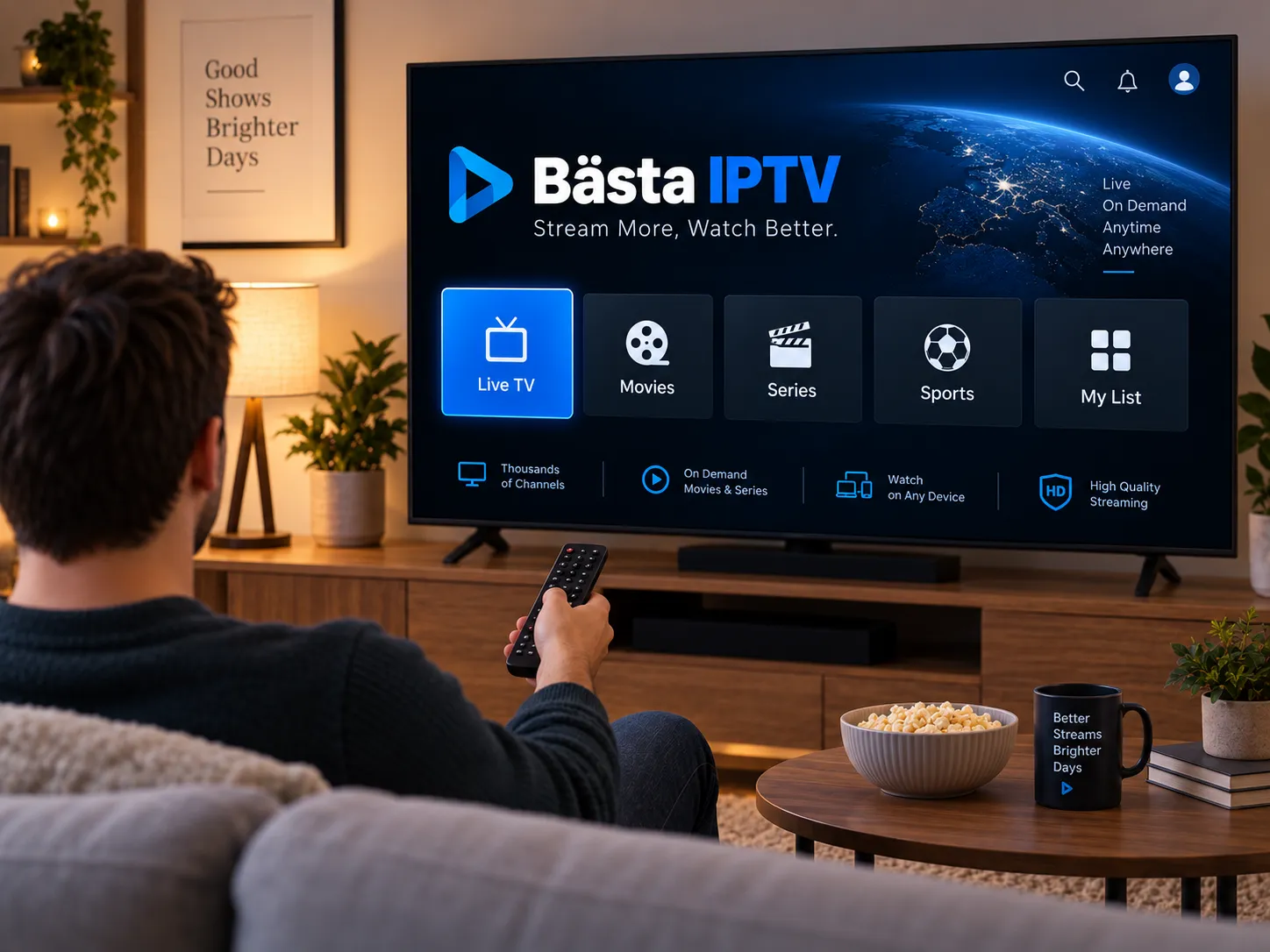
Users researching subscription options and available IPTV content for the Swedish market can also review services such as Bästa IPTV when comparing different approaches to internet-based television.
The goal should be to find a service whose content structure matches your viewing habits instead of selecting one purely because it advertises a very large library.
The IPTV provider and IPTV player are not always the same thing. A provider supplies access information, while a player or application displays that content.
A good player can make everyday viewing easier by offering useful features such as:
Different people prefer different interfaces, so there is no single IPTV player that is automatically best for everyone.
Someone using a Smart TV may prefer a simple remote-friendly interface, while an Android TV user may want more customization options.
An Electronic Program Guide, commonly called EPG, provides television schedule information within an IPTV application.
Instead of opening channels individually to discover what is currently playing, an EPG can display program names and upcoming schedules.
This becomes particularly useful when an IPTV playlist contains many channels.
However, EPG availability and accuracy can vary between channels and services. It should therefore be treated as a useful feature rather than something that will necessarily work identically across every stream.
Even experienced users can encounter configuration problems when installing a new IPTV application or adding subscription details.
Before choosing a service, check whether the provider explains how to configure common devices.
Helpful setup guidance might cover:
Responsive support can also be valuable when login credentials, application settings, or connection problems need troubleshooting.
Buffering does not always mean the IPTV provider is responsible.
Several factors can influence streaming performance.
A television located far from the router may receive an unstable signal.
Multiple devices downloading or streaming at the same time can reduce available bandwidth.
Older televisions, streaming sticks, or boxes may struggle with demanding applications or high-resolution streams.
An outdated or poorly configured player can sometimes cause performance issues.
If most channels work correctly but one particular stream does not, the problem may be related to that individual stream rather than the user's internet connection.
Testing these factors separately can make troubleshooting much easier.
Price naturally matters when comparing subscriptions, but the cheapest option is not always the most suitable.
Consider what is included in the subscription, how long the plan lasts, whether your preferred devices are supported, and what kind of help is available if setup problems occur.
A slightly more expensive plan may offer better value if it provides the content and usability you actually need.
At the same time, paying more does not automatically guarantee better performance. Comparing practical features is more useful than judging a service entirely by price.
IPTV subscriptions may be offered for different periods.
Shorter plans can be useful for users who want greater flexibility, while longer subscriptions may appeal to people who already know what they need.
Before selecting a longer plan, review the service carefully and make sure the available content, device requirements, and setup process suit your household.
A good streaming setup should not require constant adjustments.
Consider how easily family members can:
These details may seem minor during initial setup, but they become important when IPTV is used regularly.
A clear interface can often improve the experience more than having thousands of additional channels that nobody watches.
Choosing an IPTV service in Sweden requires a combination of technical and practical considerations. Internet stability, device compatibility, content selection, IPTV player quality, EPG support, setup guidance, and subscription flexibility should all be considered before making a decision.
Rather than focusing only on channel numbers or promotional claims, compare services according to your real viewing habits. Check whether the channels you care about are available, confirm that your devices are compatible, and make sure your internet connection is suitable for the streaming quality you expect.
A carefully chosen IPTV setup can provide a flexible way to organize live television and on-demand entertainment across modern connected devices.
A note on cookies
Newshunt uses essential cookies to keep you signed in and to remember your language and country, so the site works the way you expect. With your permission, we'd also like to use analytics cookies to understand how people use Newshunt and improve it over time.
Accepting only affects analytics. To learn more, view our Privacy Policy or Terms & Conditions.
(0)Comments