


138 Years Ago, the First Baby Was Treated in an Incubator. She Weighed Less Than 3 Lbs.
Category: Health
Share
Archive
Like
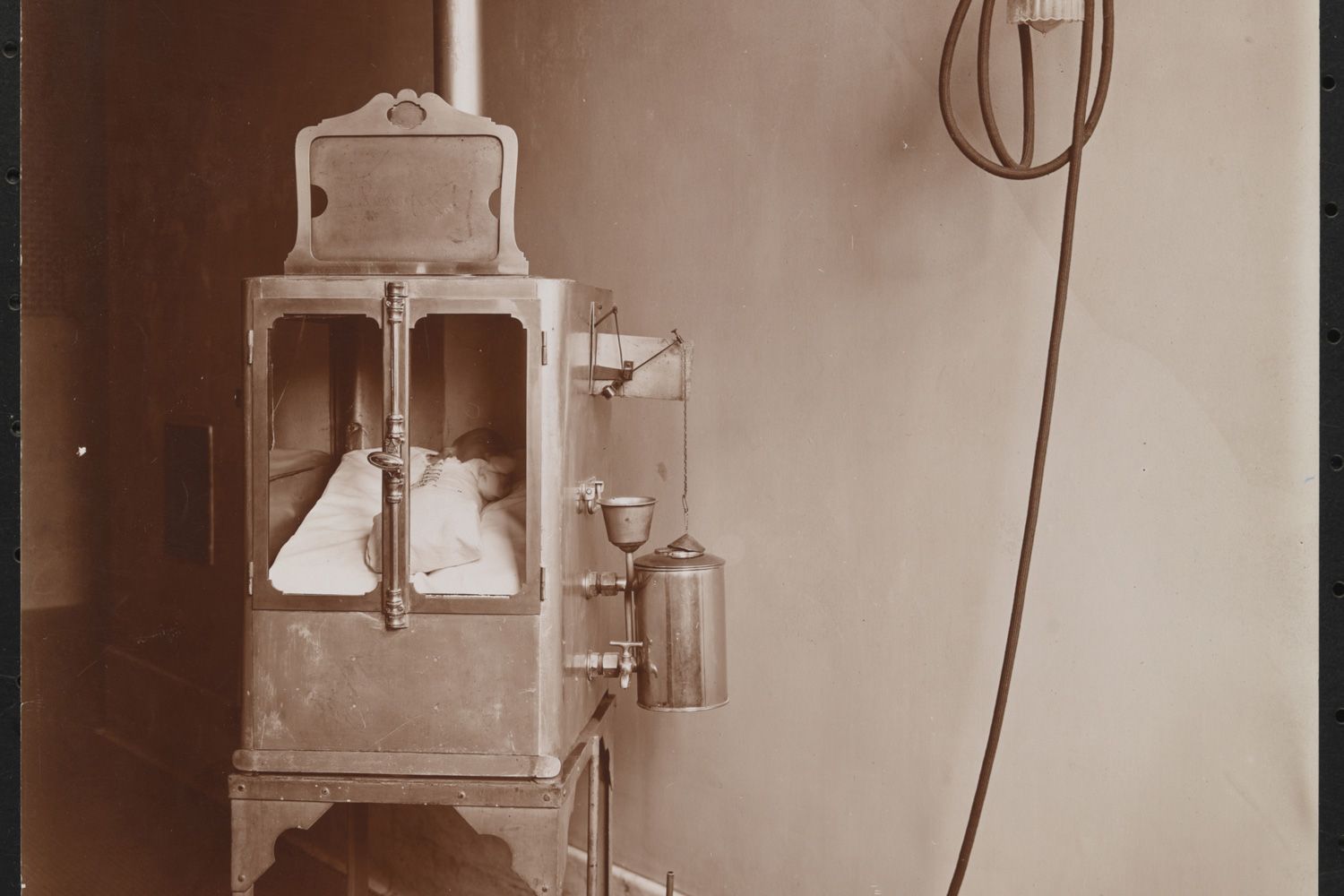
Edith Eleanor McLean was the first baby in the U.S. cared for in an incubator in 1888
Early incubators were inspired by poultry incubators and heated with water before modern designs emerged after World War II
Public exhibits of premature babies in incubators helped popularize their use and saved many lives without charging families
Edith Eleanor McLean weighed just 2 lbs., 7 oz., when she made history as the first baby in the U.S. cared for in an incubator. On Sept. 7, 1888, the premature baby, born at the State Emigrant Hospital on Ward's Island, New York, helped usher in a new era of care for the smallest and most fragile newborns.
Her incubator was built by William Champion Deming, but the idea for incubators is credited to Stéphane Tarnier, a French obstetrician who was inspired after seeing poultry incubators at the Paris Zoo, per the Association for the Advancement of Medical Instrumentation.
Early incubators were heated by tanks of water, which nurses replaced as they cooled. McLean's incubator was heated by 57 liters of water. After World War II, modern incubators with more accurate heat and humidity control were introduced. Stock image of a modern incubator crib in a hospitalCredit: Getty
The adoption of incubators was inspired by a sideshow: After seeing an exhibit of premature babies at the 1898 World's Fair, a German businessman, Martin Couney — whose own daughter had been born prematurely — launched an attraction at New York's Coney Island, where spectators would pay to see the tiny babies in incubators. Before Couney's exhibit, caring for premature babies was often seen as a wasted, expensive effort, as the babies often failed to thrive, per History.
But Couney didn't charge the families for their babies' care. The public paid — 25 cents a person — to see the preemies at the exhibit, which ran for 40 years.
'Nobody else was offering to do anything to save me,' Beth Allen, one of Couney's patients, said, per the BBC. She was born three months premature in Brooklyn, and told the outlet that, at first, her family didn't want her to be a part of the exhibit, insisting she wasn't a 'freak.' But Couney himself persuaded the family to put her in his incubator exhibit — and she survived. 'Without Martin Couney,' Allen said, 'I wouldn't have had a life.'
Take PEOPLE with you! Subscribe to PEOPLE magazine to get the latest details on celebrity news, exclusive royal updates, how-it-happened true crime stories and more — right to your mailbox.
Read the original article on People
A note on cookies
Newshunt uses essential cookies to keep you signed in and to remember your language and country, so the site works the way you expect. With your permission, we'd also like to use analytics cookies to understand how people use Newshunt and improve it over time.
Accepting only affects analytics. To learn more, view our Privacy Policy or Terms & Conditions.
(0)Comments