


Belgrade, Novi Sad and More Serbian Cities Got Significant Tourist Arrival Upgrade in July 2026
Category: Tourism
Share
Archive
Like
Belgrade, Novi Sad and More Serbian Cities Got Significant Tourist Arrival Upgrade in July 2026
Written By:
Sarannya Acharya
Sarannya Acharya is a content writer with a strong academic and professional background in media and communication. She holds an M.Sc in Media Science and is currently pursuing a Ph.D. at Swami Vivekananda University, Barrackpore, with a specialization in Advertising. With over three years of experience in content writing, she brings a blend of research-driven insight and creative storytelling to her work. Alongside her professional role, she is actively engaged in academics, contributing to the field through teaching and scholarly involvement. Her expertise lies in crafting well-structured, engaging, and informative content, supported by a solid foundation in media theory and practical industry knowledge. Sarannya Acharya
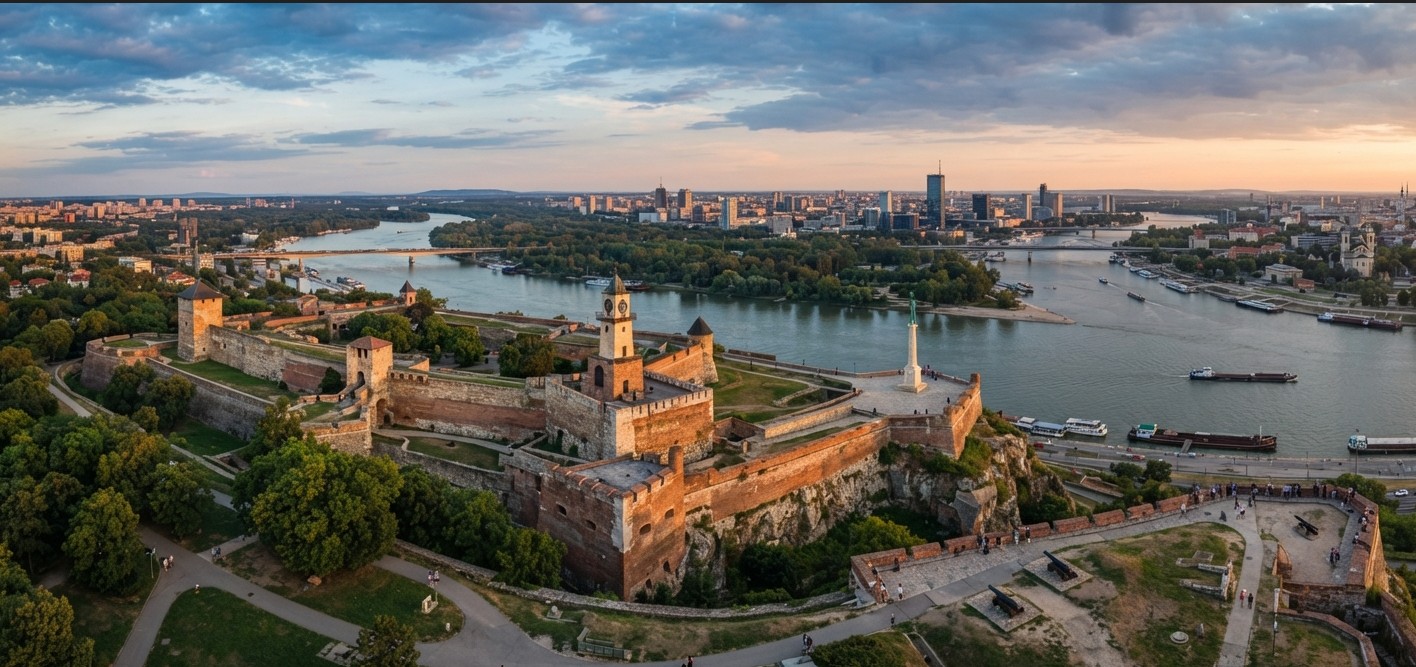
Image generated with Ai
Belgrade, Novi Sad and more Serbian cities recorded a significant tourist arrival upgrade in July 2026. Belgrade and Novi Sad, alongside more Serbian cities, welcomed more tourist arrivals during July 2026. Moreover, this significant tourist arrival upgrade highlights Serbia's growing appeal. As a result, Serbian cities are gaining stronger attention from international travellers. Belgrade continues to attract visitors with its lively culture, while Novi Sad offers historic charm and vibrant experiences. Meanwhile, more Serbian cities are strengthening Serbia's tourism appeal. Therefore, this tourist arrival upgrade could shape Serbia's travel outlook. Travel And Tour World urges readers to explore the entire story for the latest Serbian cities tourism trends.
Serbia Tourism Growth Strengthens as Foreign Arrivals Rise in July 2026
Serbia recorded 283,890 foreign tourist arrivals in July 2026, marking a 3.7% increase from July 2025. Foreign visitors also generated 671,153 overnight stays, up 3.3% year on year. Overall, Serbia registered 475,871 tourist arrivals and 1.381 million overnight stays during July. Total arrivals rose 4.4%, while overnight stays increased 1.9%.
Advertisement
Stronger Seven-Month Performance
From January through July 2026, Serbia welcomed 1,358,422 foreign arrivals, an annual increase of 5%. Foreign overnight stays reached 3,596,464, also 5% higher than the corresponding 2025 period. Total tourist arrivals reached 2,591,019, while overnight stays stood at 7,366,510.
Turkey, Russia and Germany Lead Demand
Turkey, Russia and Germany recorded the highest foreign overnight-stay volumes in July. Other important markets included Bosnia and Herzegovina, Bulgaria, Croatia and China. Serbia also attracted visitors from India, Canada, Australia, Japan and South Korea, showing geographically diverse demand.
Belgrade, Mountains and Spas Attract Travellers
Belgrade, Novi Sad and Subotica were Serbia's leading urban destinations for overnight stays. Among mountain destinations, Zlatibor, Kopaonik and Tara remained prominent. Vrnjačka Banja, Sokobanja and Banja Vrdnik led the spa category.
Zlatibor recorded 19,121 foreign arrivals in July, while Belgrade registered 150,717. For travellers, these figures underline Serbia's appeal for city breaks, mountain holidays and wellness-focused journeys.
What the Numbers Mean for Travellers
Serbia's latest tourism data point to sustained international interest across several travel styles. Visitors can combine Belgrade's urban attractions with mountain scenery and spa experiences. The country's growing foreign market base also indicates increasing international visibility.
The Serbian Statistical Office notes that these are preliminary figures based on the country's eTourist information system. Importantly, arrival statistics count registered accommodation arrivals rather than unique individuals, because one traveller can be recorded at multiple accommodation establishments
These Six Cities and Towns of Serbia Are Chosen by Foreign Travellers in 2026
Serbia's tourism story has changed considerably since the pandemic years. Foreign arrivals have risen strongly since 2021, and the country recorded 2,348,495 foreign tourist arrivals in 2025. By the end of July 2026, another 1,358,422 foreign arrivals had already been registered.
The latest July figures show 283,890 foreign arrivals, up 3.7% year on year, while foreign overnight stays reached 671,153, increasing 3.3%.
For travellers, the most interesting development is the concentration of international visitors in several urban destinations. Based on the latest Statistical Office of Serbia data for January-July 2026, Belgrade dominates, followed by Novi Sad, Niš, Subotica, Kragujevac and Kuršumlija among the selected cities and towns reported individually.
Serbia Foreign Tourism: Five-Year Comparison
Year Total tourist arrivals Foreign arrivals Domestic arrivals Foreign share 2021 2,591,293 871,239 1,720,054 33.6% 2022 3,869,235 1,772,763 2,096,472 45.8% 2023 4,192,797 2,134,305 2,058,492 50.9% 2024 4,432,751 2,384,735 2,048,016 53.8% 2025 4,346,691 2,348,495 1,998,196 54.0% 2026 Jan-Jul 2,591,019 1,358,422 1,232,597 52.4%
The recovery was particularly strong between 2021 and 2024. Foreign arrivals climbed from about 871,000 to 2.385 million, before easing slightly to 2.348 million in 2025.
The first seven months of 2026 already represent about 58% of the full-year 2025 foreign-arrival total, although the periods are not directly comparable because 2026 is incomplete.
Five-Year Foreign Tourism Growth at a Glance
Comparison Change 2022 vs 2021 +85.5% 2023 vs 2022 +20.4% 2024 vs 2023 +11.7% 2025 vs 2024 -1.5% 2026 Jan-Jul vs Jan-Jul 2025 +5.0%
The official 2026 data show that foreign tourism regained growth after the modest annual decline recorded in 2025.
Six Serbian Cities and Towns Drawing the Most Foreign Arrivals in 2026
The following ranking uses foreign tourist arrivals from January through July 2026 in the Statistical Office's selected-place dataset. This is important because Serbia's official monthly release also separately classifies mountain and spa destinations. Therefore, this is a city/town-focused ranking, rather than a ranking of every Serbian tourist destination. Rank City/town Foreign arrivals Jan-Jul 2026 Change vs Jan-Jul 2025 Foreign overnight stays Jan-Jul 2026 1 Belgrade 741,638 +4.6% 1,847,868 2 Novi Sad 81,690 +7.7% 232,874 3 Niš 50,352 +7.8% 100,779 4 Subotica 40,997 +10.5% 102,039 5 Kragujevac 13,193 +2.8% 51,491 6 Kuršumlija 12,664 +24.4% 42,117
The numbers reveal a major concentration of international tourism in Belgrade. Novi Sad follows at a much smaller scale, while Subotica has posted particularly strong growth. Kuršumlija is the fastest-growing of these six by the reported arrival index.
Important distinction: Serbia's leading non-city tourist destinations are also attracting substantial foreign demand. For example, Zlatibor recorded 97,123 foreign arrivals and 256,520 foreign overnight stays during January-July 2026, while Kopaonik recorded 31,083 foreign arrivals and 134,112 overnight stays. These are classified as mountain resorts rather than cities, so they are excluded from the six-city ranking.
1. Belgrade: Serbia's Undisputed International Gateway
Belgrade is by far the leading Serbian destination for foreign travellers. Between January and July 2026, the capital recorded 741,638 foreign arrivals, representing a 4.6% increase over the same period in 2025. Foreign overnight stays reached 1,847,868, up 7.6%. In July alone, Belgrade registered 150,717 foreign arrivals.
The city is particularly suitable for travellers who want history, architecture, museums, riverside experiences and nightlife in one itinerary. The official City of Belgrade identifies the Belgrade Fortress and Kalemegdan, National Museum, National Theatre, Skadarlija, Zemun's Gardoš and several historic residences among its major attractions.
A sensible first day should focus on the historic centre. Walk through Knez Mihailova Street before continuing towards Kalemegdan and the fortress. Spend another day exploring the museums and Zemun. A third day can be dedicated to the Sava and Danube waterfronts, Ada Ciganlija or Avala.
Belgrade is also an excellent base for Serbian food. Travellers should try ćevapi, pljeskavica, sarma, kajmak, ajvar and traditional pastries. Skadarlija is the classic choice for a traditional atmosphere, while the riverside and central districts provide broader contemporary dining.
For accommodation, travellers should consider the city centre, Stari Grad, Dorćol, Vračar or the New Belgrade business district, depending on whether sightseeing, nightlife or business connectivity matters most. The official city tourism service provides information covering accommodation, restaurants and sightseeing tours.
For a short visit, three nights is ideal. Use the first day for the fortress and central sights, the second for museums and Zemun, and the third for riverfront areas and local cuisine.
Belgrade's importance is also visible historically. In 2021, foreign tourists generated 1.237 million overnight stays in the city. By 2024, Belgrade had reached about 3.194 million total foreign overnight stays, showing how strongly international tourism has expanded.
2. Novi Sad: Danube Culture, Fortress Views and Vojvodina Food
Novi Sad welcomed 81,690 foreign arrivals during January-July 2026, an increase of 7.7% year on year. Foreign overnight stays reached 232,874, although they were 2.5% lower than the comparable 2025 period.
The city offers a calmer alternative to Belgrade. Its strongest attractions combine urban heritage, the Danube and Petrovaradin Fortress.
Petrovaradin Fortress is one of the defining experiences. The official Novi Sad tourism organisation highlights its historic military architecture, Danube setting and famous clock tower.
Travellers should allow two or three days. Begin with the pedestrian centre, Republic Square and the surrounding historic streets. Continue to Petrovaradin for panoramic views. A longer itinerary should include Fruška Gora and nearby wineries.
Food is one of Novi Sad's strongest travel advantages. The official tourism organisation promotes Vojvodina cuisine, combining Serbian and Central European influences. Restaurants serve regional specialities alongside Balkan dishes.
Visitors should look for fish specialities, gibanica, paprika-based dishes, roasted meats and local wines. The Danube čardas are particularly associated with fish dishes, while salaš farmsteads offer rural culinary experiences.
A useful three-day plan is simple. Day one covers the city centre. Day two explores Petrovaradin. Day three moves into Fruška Gora and wine country.
For accommodation, stay around the historic centre for walking access, or choose the Petrovaradin side for a quieter atmosphere. Travellers who want a longer regional itinerary can use Novi Sad as a base for northern Serbia.
Novi Sad's foreign tourism has expanded significantly since the pandemic period. In 2022, foreign tourists generated approximately 390,000 overnight stays there, while the latest 2026 data show 232,874 overnight stays in only seven months.
3. Niš: Ancient History Meets Southern Serbian Cuisine
Niš recorded 50,352 foreign arrivals between January and July 2026, up 7.8% from the previous year. Foreign overnight stays reached 100,779, increasing 2.1%.
The city is especially attractive to travellers interested in Roman, Ottoman and modern Serbian history. Niš was historically important because of its location between eastern and western routes.
Start with Niš Fortress, which stands in the city centre beside the Nišava River. The complex contains Ottoman-era structures and remains connected with earlier Roman and medieval layers.
The Skull Tower and Čegar Hill provide another major historical experience. Visitors can also explore Kazandžijsko Sokače, the old crafts district that is now known for restaurants and cafés.
Niš should be approached as a food destination as much as a sightseeing destination. The Serbian Tourism Organisation highlights burek, ćevapčići, veal dishes, sarma, tavče gravče, meze and walnut-based sweets as part of the local culinary experience.
For a two-night trip, spend the first day around the fortress and central streets. Use the second day for Čegar Hill and nearby attractions. Wine enthusiasts can extend the trip towards the Niš wine route.
The official tourism organisation also recommends wine experiences involving Prokupac, Vranac, Tamjanika and Župljanka, with wineries around Niš and Knjaževac providing food-and-wine combinations.
Accommodation in the central area is most convenient for first-time visitors because restaurants, historic attractions and pedestrian areas are close together.
Niš is particularly valuable for travellers building a wider Balkan itinerary. Its position in southern Serbia makes it useful for combining Serbia with regional road and air journeys.
4. Subotica: Art Nouveau, Wine and Palić Lake
Subotica recorded 40,997 foreign arrivals during January-July 2026, up an impressive 10.5%. Foreign overnight stays reached 102,039, increasing 14.2%.
This makes Subotica one of the strongest-growing destinations among the six cities and towns examined.
The city's main attraction is its architectural identity. Travellers should visit Subotica City Hall, the Synagogue and Raichle Palace, all highlighted by the official tourism organisation.
Palić is essential for a longer stay. The lake lies only 8 kilometres from Subotica and provides an easy extension with the Water Tower, Grand Terrace, Women's Lido, Great Park, restaurants and accommodation.
Subotica is also one of Serbia's most interesting food destinations because its cuisine reflects several cultural influences. The official tourism organisation describes a combination of Hungarian, German, Turkish, Montenegrin, Bosnian and other culinary traditions.
Travellers should explore goulash-style dishes, local pastries, pogača, regional meat dishes, wines and fruit brandies. Wine tourism is especially relevant because vineyards and orchards surround the wider area.
The city also hosts wine and food events during the year, including the Young Rakija Festival, Pogačijada and Harvest Days.
A two-night plan works well. Spend day one exploring the Art Nouveau centre. Use day two for Palić Lake, wine tasting and regional food.
Accommodation can be divided between central Subotica and Palić. The first is better for architecture and urban sightseeing. Palić is better for travellers wanting a relaxed lakeside experience.
The latest numbers show that Subotica is becoming more important in Serbia's international tourism map, particularly for travellers seeking culture and gastronomy away from the capital.
5. Kragujevac: A History-Focused Stop in Central Serbia
Kragujevac registered 13,193 foreign arrivals from January through July 2026, an increase of 2.8%. Foreign overnight stays reached 51,491, although the overnight figure remained below the previous year's level.
The city offers a different travel experience from Belgrade and Novi Sad. It was the first modern capital of restored Serbia and played an important role in the development of the modern Serbian state.
The Milošev venac complex is the best starting point. It includes historic buildings connected with Prince Miloš, including the Old Court Church and other landmarks of early modern Serbia.
Travellers interested in history should continue to the National Museum, Prince's Arsenal and October in Kragujevac Memorial Park. The latter commemorates victims of the Second World War and is an important place for historical reflection.
Nature provides another reason to stay. Gruža Lake offers outdoor scenery and opportunities to explore the surrounding countryside.
Food is deeply connected with Šumadija. Visitors should look for roast meats, pogača, proja, svadbarski kupus, podvarak, lamb dishes and regional plum brandy. The Serbian Tourism Organisation also highlights the local drink known as Šumadija tea, made using šljivovica, water and caramelised sugar.
A two-day itinerary is sufficient for most international visitors. Spend the first day around Milošev venac and the city museums. Use the second day for the memorial park and a countryside excursion.
For accommodation, the city centre provides the most convenient base. Travellers who prefer nature can extend the journey towards rural Šumadija.
Kragujevac is particularly suitable for travellers who want to understand Serbia beyond its headline destinations. It offers state history, memorial tourism, regional cuisine and access to central Serbian landscapes.
6. Kuršumlija: Serbia's Emerging Wellness and Nature Destination
Kuršumlija recorded 12,664 foreign arrivals during January-July 2026, representing a remarkable 24.4% increase year on year. Foreign overnight stays reached 42,117, up 17.0%.
Although much smaller than Belgrade, Kuršumlija stands out because of its growth rate.
The surrounding area is particularly attractive for wellness and nature travellers. Prolom Banja, Kuršumlijska Banja and Đavolja Varoš create a distinctive travel combination.
The Serbian Tourism Organisation describes Kuršumlijska Banja as a spa destination with mineral-rich thermal springs, parks, hiking trails, thermal pools and wellness facilities.
Prolom Banja adds spa treatments, pools, walking routes and viewpoints. A 2.5-kilometre forest walk can take visitors towards the Bridge of Secret Wishes and Soko Waterfall.
The biggest natural attraction is Đavolja Varoš, known for its striking earth formations. The wider Kuršumlija region also contains historic religious sites, including the monasteries of St Nicholas and the Holy Mother of God.
Food is another reason to extend the trip. Official Serbian tourism material highlights lamb and veal cooked under a sač, pie cooked under a sač, Prolom beer, Prokuplje wine and desserts made with Blace plums.
A three-day wellness itinerary works well. Spend the first day in Kuršumlija and its historic surroundings. Use the second for Prolom Banja and spa activities. Reserve the third for Đavolja Varoš and surrounding natural landscapes.
Travellers seeking wellness should stay near the spa facilities. Visitors prioritising sightseeing can stay closer to Kuršumlija and travel outward each day.
The 24.4% growth in foreign arrivals makes Kuršumlija especially noteworthy. It suggests that Serbia's international tourism expansion is reaching destinations well beyond the traditional Belgrade-Novi Sad corridor.
Serbia's 2026 Tourism Map Is Wider Than the Capital
The latest statistics show two different stories.
Belgrade remains overwhelmingly dominant, with 741,638 foreign arrivals and 1.848 million foreign overnight stays in the first seven months of 2026. But the growth rates in smaller destinations demonstrate that international tourism is spreading.
Subotica's foreign arrivals rose 10.5%, Niš increased 7.8%, Novi Sad grew 7.7%, and Kuršumlija jumped 24.4%.
The wider tourism picture is even more diverse. Destination type Leading destination in July 2026 Foreign arrivals Jan-Jul 2026 Foreign overnight stays Jan-Jul 2026 Major city Belgrade 741,638 1,847,868 Major city Novi Sad 81,690 232,874 Mountain Zlatibor 97,123 256,520 Mountain Kopaonik 31,083 134,112 Spa Vrnjačka Banja 25,938 77,446 Spa Banja Vrdnik 21,844 51,926
This means travellers do not need to follow a conventional capital-only itinerary. Serbia can be approached as a multi-region journey combining Belgrade, Novi Sad, Niš, Subotica, mountains, spas and smaller heritage destinations.
A Seven-to-Ten-Day Serbia Travel Plan
Day Destination Suggested experience Food focus 1 Belgrade Knez Mihailova, Republic Square, Kalemegdan Ćevapi, kajmak 2 Belgrade Museums, Skadarlija, Zemun Serbian traditional cuisine 3 Novi Sad Historic centre and Danube Vojvodina cuisine 4 Novi Sad Petrovaradin and Fruška Gora Fish, wine 5 Subotica City Hall, Synagogue, Art Nouveau Goulash-style dishes 6 Palić Lake, Grand Terrace and wineries Regional wine and pastries 7 Niš Fortress, Kazandžijsko Sokače Burek and grilled meat 8 Niš region Čegar and wine route Southern Serbian specialities 9 Kragujevac Milošev venac and museums Šumadija cuisine 10 Kuršumlija region Spa and Đavolja Varoš Sač-cooked dishes and regional wine
For travellers with only five days, Belgrade, Novi Sad and Niš provide the strongest combination of international accessibility, history, food and urban experiences.
For seven to ten days, adding Subotica and Palić introduces northern Serbian architecture and wine tourism.
Travellers seeking wellness and nature can replace one urban stop with Kuršumlija and its spa region.
What the Five-Year Data Tell Travellers
Serbia's international tourism recovery has been substantial.
Foreign arrivals increased from 871,239 in 2021 to 1,772,763 in 2022, then crossed 2.13 million in 2023 and reached 2.385 million in 2024. Although 2025 saw a modest 1.5% decline, the country still received 2.348 million foreign visitors.
Foreign overnight stays also expanded dramatically. Between 2021 and 2024, they rose from about 2.429 million to 6.098 million, an increase of roughly 151%.
That growth is important for travellers because overnight stays provide a stronger indication of how deeply visitors are engaging with destinations than arrivals alone.
The 2026 numbers suggest another positive phase. Through July, foreign arrivals were already 5% above the comparable 2025 period, while foreign overnight stays were also 5% higher.
Practical Traveller Takeaway
Serbia is no longer simply a quick stop between larger European destinations.
The data show a country developing several distinct tourism circuits. Belgrade delivers major-city culture. Novi Sad adds Danube heritage and Vojvodina gastronomy. Niš offers Roman and Ottoman history with southern Serbian food. Subotica combines Art Nouveau architecture with wine and Palić Lake. Kragujevac provides modern Serbian history and Šumadija traditions. Kuršumlija brings together spas, hiking and unusual natural landscapes.
The strongest strategy for an international traveller is therefore to combine destinations rather than remain in one city.
The latest official statistics support that approach. Serbia's foreign tourism market is growing, but the growth is increasingly visible beyond the capital.
Data and methodology note
The statistics above come primarily from the Statistical Office of the Republic of Serbia (SORS). Its 2026 monthly tourism figures are preliminary. From 2022, Serbian tourism statistics have been compiled from the administrative eTourist system, which records registered accommodation users and establishments. Therefore, an 'arrival' is a registered tourist arrival at accommodation and should not automatically be interpreted as a unique individual traveller.
The six-place ranking is specifically based on the selected tourist places/towns published by SORS. It should not be interpreted as a ranking of every Serbian municipality. Mountain and spa destinations are reported separately in the same statistical release.
This distinction is particularly important because Zlatibor's 97,123 foreign arrivals exceed those of several cities, but Zlatibor is officially classified as a mountain resort rather than a city.
The travel recommendations above are independently written from official Serbian tourism and municipal information, rather than reproducing the original SeeNews article. This gives the extension a distinct traveller-focused structure and wording while retaining the underlying official statistics.
Conclusion
Serbia is quickly becoming an exciting choice for travellers exploring the Balkans. Belgrade and more cities are attracting rising international interest, while Novi Sad, Niš, Subotica, Kragujevac and Kuršumlija add distinct cultural, historical, culinary and wellness experiences. Moreover, stronger foreign arrivals show that Serbia's tourism appeal is spreading beyond its capital. For global travellers, this means more opportunities to discover authentic cities, regional food, scenic landscapes and lesser-known experiences. As the new Balkan travel boom gathers pace, Serbia offers a compelling mix of familiar attractions and emerging destinations. Travel And Tour World encourages travellers to look beyond the obvious and discover the diverse cities shaping Serbia's tourism future.
Advertisement
Share On:
Gtranslate
A note on cookies
Newshunt uses essential cookies to keep you signed in and to remember your language and country, so the site works the way you expect. With your permission, we'd also like to use analytics cookies to understand how people use Newshunt and improve it over time.
Accepting only affects analytics. To learn more, view our Privacy Policy or Terms & Conditions.
(0)Comments