


German industrial output falls 1.1 pct in July, dragged down by auto sector
Category: Business
Share
Archive
Like
Tourists shop at a souvenir store in Berlin, capital of Germany, July 30, 2026. (Xinhua/Zhang Haofu)
BERLIN, Sept. 7 (Xinhua) -- Germany's industrial production fell 1.1 percent in July from the previous month, official data showed Monday, marking a setback at the start of the third quarter after output had picked up earlier this year.
The decline was mainly driven by a sharp drop in the automotive industry, where production fell 9.2 percent month-on-month, according to the Federal Statistical Office.
Citing the German Association of the Automotive Industry (VDA), the office said a multi-week production shutdown during the conversion of a plant for electric vehicle manufacturing was among the main reasons for the decline.
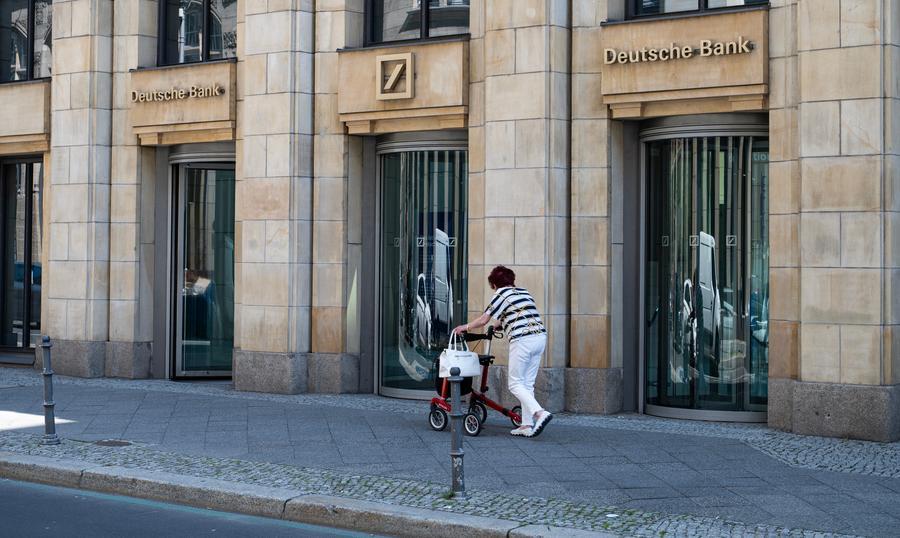
More broadly, Germany's auto industry remains under pressure. Passenger car production in the first seven months of the year was still 15 percent below the level recorded in the same period of 2019, according to the VDA. A woman walks past Deutsche Bank's building in Berlin, capital of Germany, July 30, 2026. (Xinhua/Zhang Haofu)
Germany's economy ministry said on Monday that industrial production had remained relatively resilient in the second quarter despite higher energy prices, but the effects of the ongoing conflict in the Middle East appeared to be increasingly weighing on output.
Restrictions on Rhine shipping due to low water levels since mid-June may also have dampened production during the summer months, the ministry said, adding that key industries such as automotive manufacturing and mechanical engineering remained under growing pressure.
"Overall, the prospects for a broader recovery in industrial activity over the rest of the year remain subdued," it noted. A man stands at an entrance of a car dealership of Volkswagen in Berlin, capital of Germany, May 7, 2020(Photo by Binh Truong/Xinhua)
Carsten Brzeski, global head of macro at ING Research, said in an analysis the latest data underscored the fragility of Germany's cyclical economic rebound.
Brzeski said the government still lacked key elements of the fundamental reforms needed to put Europe's largest economy back on a sustainable growth path, including a clear plan for affordable energy and tax cuts to boost domestic demand and investment. ■
A note on cookies
Newshunt uses essential cookies to keep you signed in and to remember your language and country, so the site works the way you expect. With your permission, we'd also like to use analytics cookies to understand how people use Newshunt and improve it over time.
Accepting only affects analytics. To learn more, view our Privacy Policy or Terms & Conditions.
(0)Comments