


Nepal Border Travel Disrupted: US Warns Against Rasuwa Trips
Category: Tourism
Share
Archive
Like
Travelers planning to cross between Nepal and China through Rasuwa should remove the flood-damaged corridor from their immediate itinerary. The U.S. State Department's September 4 Nepal advisory says not to travel to the Rasuwagadhi, Timure and Syafrubesi area, including the border crossing, while Nepal's September 7 recovery update confirms continuing work to restore roads and communications.
The warning is localized: Nepal's national advisory remains Level 2, while the named corridor carries a Level 4 warning. That distinction matters for anyone deciding whether to change an overland border journey, reassess a tour's access route or cancel a broader Nepal trip that does not enter the affected area.
Keep access conditions separate from entry paperwork: our earlier report on Nepal's pre-arrival e-Visa rollout covers a different part of the journey. Completing visa formalities does not establish that a flood-damaged road or border corridor is safe to use. Warning area: Rasuwagadhi, Timure and Syafrubesi in Rasuwa district, including the Nepal-China crossing.
Rasuwagadhi, Timure and Syafrubesi in Rasuwa district, including the Nepal-China crossing. U.S. advice: Do not travel to that area for any reason following the August 26 flood and landslide.
Do not travel to that area for any reason following the August 26 flood and landslide. National status: Nepal remains Level 2, exercise increased caution; it is not a countrywide Level 4 warning.
Nepal remains Level 2, exercise increased caution; it is not a countrywide Level 4 warning. Current evidence: Nepal's September 7 update describes continuing restoration of roads, electricity and telecommunications.
Nepal's September 7 update describes continuing restoration of roads, electricity and telecommunications. Reopening: The notices do not provide a normal tourist reopening date for the affected crossing. The Warning Names a Corridor, Not All Nepal
The U.S. Nepal travel advisory identifies flood damage, interrupted transportation and communications, rescue and recovery operations, and the risk of further flooding and landslides. Its instruction covers the Rasuwagadhi to Timure to Syafrubesi area, including the international crossing, rather than declaring every destination in Nepal off limits.
The advisory history says the September 4 update did not change Nepal's national level and removed the civil unrest risk indicator. It would therefore be inaccurate to present this as a new nationwide escalation to the highest warning category.
For an overland traveler, however, a localized warning can still break the entire itinerary if that corridor is the planned connection between countries. Check the route written into a tour confirmation, not only the country names listed on the booking.
A tour advertised broadly as a Nepal and Tibet journey may need a different assessment from a stay that never approaches the affected route. Ask the operator to identify the actual border point, road access and departure plan before accepting a general assurance that the wider destination remains open. Recovery Work Is Not a Reopening Notice
Nepal's Foreign Ministry situation update for September 7, issued at 2 p.m. Nepal time, describes continued search, rescue and relief work following the August 26 Bhote Koshi floods. It reports extensive damage to roads, bridges and other infrastructure in Rasuwa, Nuwakot, Dhading and other districts along the river system.
The ministry says authorities are working to restore road, electricity and telecommunications connections while delivering relief. It also says the Nepali Army and engineers are working on a temporary bridge over the Tadi River to restore the Galchhi to Trishuli road.
Those statements describe work in progress, not confirmation that every affected road has reopened or that an international tourist can pass through the Rasuwa corridor. A repaired section elsewhere in the network does not establish continuity across the whole journey.
Travelers should ask for a current, route-specific update before paying for a replacement vehicle or retaining a border transfer. Neither notice supports a guaranteed crossing date, and this report does not treat an expected engineering milestone as a bookable reopening. Tatopani Return Movements Do Not Prove Tourist Access
The September 7 ministry update reports that 536 Nepali nationals had returned from the China side through the Tatopani border point as of the previous day. Another 106 were expected to return through that crossing on September 7.
These figures concern Nepali returnees and a different named border point. They do not confirm that the flood-damaged Rasuwa crossing is available, that foreign tourists can follow the same movement or that the expected September 7 returns were completed.
For someone reconsidering an overland itinerary, the useful question is whether the proposed alternative is currently available to their nationality and type of journey. A report of repatriation should not substitute for confirmation of ordinary entry procedures, transport access and permission to travel.
Do not buy a new border transfer solely because a social post shows people crossing somewhere else. Ask the operator to name the alternative, identify the authority confirming access and explain how the complete route avoids the warned area. What to Ask Before Rebooking
Start with the affected part of the reservation: the border crossing, the road transfer and any accommodation dependent on reaching that corridor. Keeping those items separate makes it easier to understand whether an operator is offering a genuine reroute or merely a later departure on the same uncertain route.
Request the proposed travel date, exact pickup and destination, border point and current access confirmation in writing. If the answer remains a general promise that conditions are improving, you still do not have the route-specific information needed to assess the change.
A flight may avoid the damaged overland crossing, but this advisory does not establish flight availability, a fare or onward entry eligibility. Check the actual itinerary and documents before replacing an overland booking with an air journey.
Speak with your travel provider and insurer about the specific booking before assuming a refund, waived change fee or covered reroute. The existence of a travel warning does not by itself tell you what a particular contract or policy will pay.
For plans elsewhere in Nepal, review local conditions for the actual route rather than treating the national Level 2 designation as an all-clear. The State Department notes that monsoon rain from June to September can cause flash floods and landslides that block roads and complicate emergency assistance. Use Official Assistance Instead of Entering the Disaster Area
The U.S. advisory specifically warns against entering the disaster area independently to search for a missing person. It also tells travelers to follow evacuation orders and avoid riverbanks, low-lying ground, damaged bridges and unstable slopes.
Nepal's Foreign Ministry lists an emergency control room that coordinates with agencies, diplomatic missions and families of missing foreign nationals. Its September 7 notice gives emergency hotline and WhatsApp numbers +977-9744441227 and +977-9744441228, operating from 6 a.m. to 10 p.m. Nepal time, plus [email protected].
The ministry also directs readers to relevant government agencies, including the National Disaster Risk Reduction and Management Authority, Department of Tourism and Nepal Tourism Board, for updated information. Families seeking assistance should use official channels and their own diplomatic mission rather than attempting an independent journey into the warned corridor.
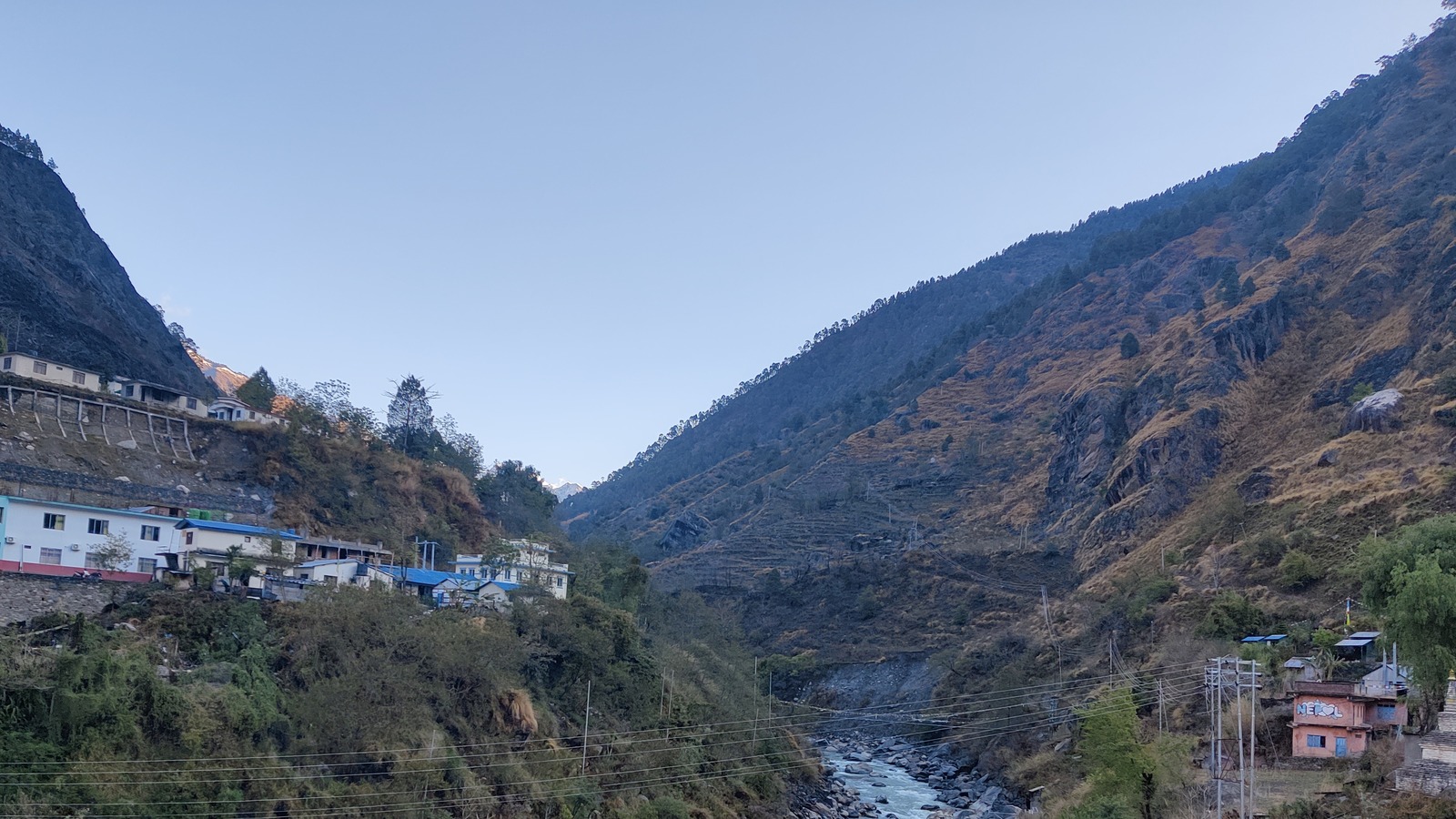
The photograph accompanying this report is an archival April 2023 view of Langtang Khola at Syafrubesi. It identifies one of the places named in the advisory and does not show present road conditions or the August 2026 flood damage. If you… What to do Booked the Rasuwa Nepal-China crossing Do not proceed through the warned corridor; ask the operator for a verified alternative. Are offered a different border point Confirm tourist access for your nationality and the full approach route before paying. Plan to travel elsewhere in Nepal Check the actual local route; the national advisory remains Level 2. Are looking for a missing person Contact official assistance and your diplomatic mission; do not enter the disaster area independently.
The September 4 advisory is the geographic decision gate. Compare the named corridor with your actual border crossing and road itinerary before deciding which bookings need to change.
The September 7 recovery update is not a reopening gate. Treat restoration activity as evidence of ongoing work, and wait for explicit route and tourist-access confirmation before committing to a replacement overland journey.
Any proposed reroute needs a fresh check. Confirm the crossing, nationality eligibility and transport arrangements; do not turn a repatriation report into an assumption of unrestricted access.
No. Nepal remains at U.S. Level 2, while the named Rasuwagadhi, Timure and Syafrubesi corridor has the localized Level 4 warning.
The notices reviewed do not confirm a normal tourist reopening date. Continuing recovery work should not be treated as proof of access.
No tourist eligibility conclusion follows from those figures. The ministry describes Nepali nationals returning through a different border point.
The U.S. advisory says not to enter independently to search for a missing person. Use official emergency assistance and your diplomatic mission.
A note on cookies
Newshunt uses essential cookies to keep you signed in and to remember your language and country, so the site works the way you expect. With your permission, we'd also like to use analytics cookies to understand how people use Newshunt and improve it over time.
Accepting only affects analytics. To learn more, view our Privacy Policy or Terms & Conditions.
(0)Comments