


Women own just 2pc of land in Pakistan, study reveals
Category: Financial
Share
Archive
Like
Summary The study found that only around 2 per cent of ever-married women aged 15 to 49 own land either alone or jointly with someone else.
About 97.2 per cent of women surveyed said they had not inherited land or a house.
Around 99.1 per cent of women in the province did not own land independently or jointly.
AI Generated Summary
Women in Pakistan continue to face a major disadvantage in land ownership, agriculture and access to financial services, according to a recent study by the Sustainable Development Policy Institute (SDPI).
The study found that only around 2 per cent of ever-married women aged 15 to 49 own land either alone or jointly with someone else.
The situation is even more difficult in terms of inheritance. About 97.2 per cent of women surveyed said they had not inherited land or a house.
Sindh recorded an especially wide gap. Around 99.1 per cent of women in the province did not own land independently or jointly.
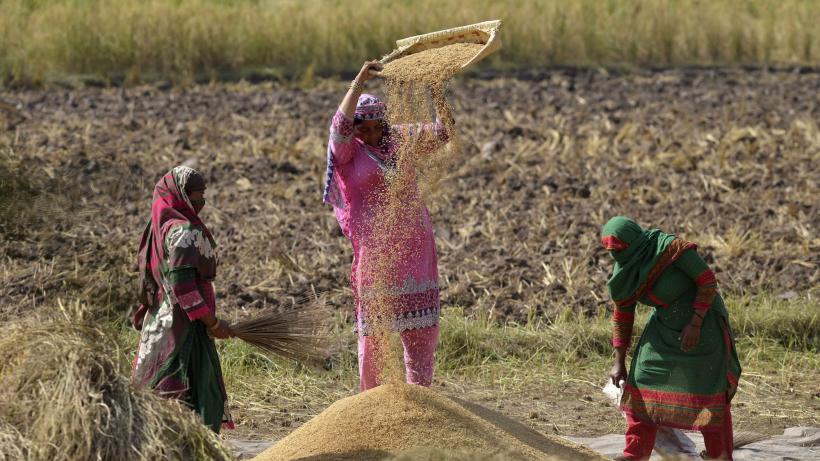
The findings also highlight a major contradiction in Pakistan's agricultural economy. Around 67 per cent of employed women work in agriculture. However, women are formally recognised as heads of only 1.5 per cent of agricultural households.
This limited ownership also affects women's access to financial services.
The study found that 56 per cent of men have full-service financial accounts. The figure for women is only 14 per cent.
A similar gap exists in mobile-wallet ownership. Around 48 per cent of men have mobile wallets, compared with only 11 per cent of women.
The study warned that these inequalities are becoming more serious because of increasing climate risks.
Women farmers are among those most exposed to floods, extreme heat, heavy rainfall and drought-like conditions. More than 90 per cent of women farmers surveyed experienced at least one extreme climate-related event during the past five years.
More than 80 per cent also reported crop losses or other negative effects on their farming activities.
With limited access to formal financial services, many women are forced to borrow money to deal with climate-related losses.
Borrowing was among the most common coping mechanisms reported across the surveyed districts.
In Khushab, every woman who reported using a coping strategy said she had borrowed money. More than half had also sold livestock to manage financial difficulties.
The study warned that selling livestock may provide immediate financial relief but can also reduce a family's future income and economic security.
Pakistan's vulnerability to climate change has further increased the pressure on rural households. The devastating floods of 2022 caused more than $30 billion in damages and economic losses, while an estimated $16.3 billion was needed for resilient reconstruction.
The report said women are already playing an important role in agriculture while also bearing the impact of climate shocks. Despite this, many remain outside the formal financial system.
According to the study, existing financial products often depend on land ownership, physical mobility and digital access. These requirements can prevent rural women from benefiting from formal financial services.
The SDPI has called for more gender-responsive and climate-focused financial solutions.
Such measures could help women farmers obtain finance, protect their livelihoods, recover from climate disasters and invest in agricultural activities.
The study also stressed the need for stronger cooperation among banks, regulators, development institutions and other stakeholders.
A note on cookies
Newshunt uses essential cookies to keep you signed in and to remember your language and country, so the site works the way you expect. With your permission, we'd also like to use analytics cookies to understand how people use Newshunt and improve it over time.
Accepting only affects analytics. To learn more, view our Privacy Policy or Terms & Conditions.
(0)Comments