


PTI Chief Warns Sindh Division Without Public Consent Would Weaken Federation
Category: Politics
Share
Archive
Like
1
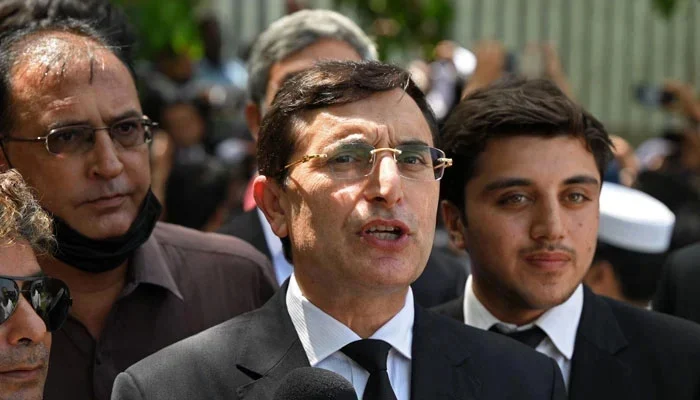
Pakistan Tehreek-e-Insaf (PTI) Chairman Barrister Gohar Khan has warned that dividing Sindh without the consent of its people could weaken the federation, calling for broad political consultation before any decision is taken on creating new provinces.
Speaking to reporters outside the Supreme Court on Monday, Gohar said the creation of new provinces was a serious constitutional and political matter that should not be pursued hastily or through controversial legislation.
The debate over restructuring Pakistan's administrative boundaries has intensified in recent weeks, with major political parties expressing differing positions on the issue. Gohar calls for consensus on new provinces
Gohar said any move to create new provinces should involve consultation with the people and elected representatives of the areas concerned.
He referred to the extensive political discussions that preceded the 18th Amendment, saying a similar process of consultation should take place before making major changes to the country's administrative structure.
'Without the consent of the people, if Sindh is divided, the federation will become weaker,' Gohar said.
He warned that dividing Sindh, Punjab or Balochistan without the consent of their populations and elected representatives could create further political complications.
'Such experiments should not be conducted in the country,' he said, adding that decisions taken in haste could undermine the unity of the federation. Debate over 12 to 15 provinces intensifies
The issue has gained momentum after Planning Minister Ahsan Iqbal proposed creating between 12 and 15 provinces and called for a nationwide political debate.
Iqbal has argued that Pakistan's four existing provinces have become increasingly centralised and that administrative restructuring could improve governance.
Hammad Azhar's Mother Moves LHC Seeking Son's Recovery Over Reported Police Detention
Interior Minister Mohsin Naqvi also recently said new administrative units would eventually be created and called for a 'reset' of the country's system.
The debate has particularly intensified in Sindh, where the Pakistan Peoples Party (PPP) has repeatedly opposed any division of the province. The Sindh Assembly has also rejected proposals seeking changes to the province's boundaries or the creation of new administrative units. PTI seeks political dialogue with Imran Khan
Turning to political dialogue, Gohar criticised the federal government, saying previous negotiations had largely remained limited to offers and that meaningful progress was now needed.
He said Monday was a day for meetings with PTI founder Imran Khan and called for the party's political leaders and family members to be allowed to meet the incarcerated former prime minister.
Imran Khan has remained in prison since August 2023 after facing convictions in several cases, which he and his party have described as politically motivated.
Gohar also highlighted the importance of meetings between Imran Khan and Tehreek Tahafuz-e-Aain Pakistan (TTAP) Chairman Mahmood Khan Achakzai and Vice Chairman Allama Raja Nasir Abbas.
He said Achakzai, who is also an opposition leader in the National Assembly, had written to Prime Minister Shehbaz Sharif regarding an Election Commission of Pakistan matter and urged the premier to take notice of the letter. PTI highlights reception in Sindh
Gohar also pointed to the reception received by Khyber Pakhtunkhwa Chief Minister Sohail Afridi during his recent visit to Karachi.
Afridi arrived in the coastal city a day earlier alongside PTI Sindh President Haleem Adil Sheikh as the party continued its mobilisation campaign in Sindh ahead of a planned nationwide protest on September 27.
According to Gohar, the large crowds that turned out to welcome Afridi despite reported hurdles during his visit and return demonstrated public dissatisfaction with the existing political status quo.
The PTI chairman said the response showed that many people wanted a change from the current political system, while reiterating his call for political consultation on major constitutional and administrative issues.
A note on cookies
Newshunt uses essential cookies to keep you signed in and to remember your language and country, so the site works the way you expect. With your permission, we'd also like to use analytics cookies to understand how people use Newshunt and improve it over time.
Accepting only affects analytics. To learn more, view our Privacy Policy or Terms & Conditions.
(0)Comments