


Jackery Explorer 2000 v2 Portable Power Station - 2042Wh LiFePO4 Backup With 2200W Output
Category: SciTech
Share
Archive
Like
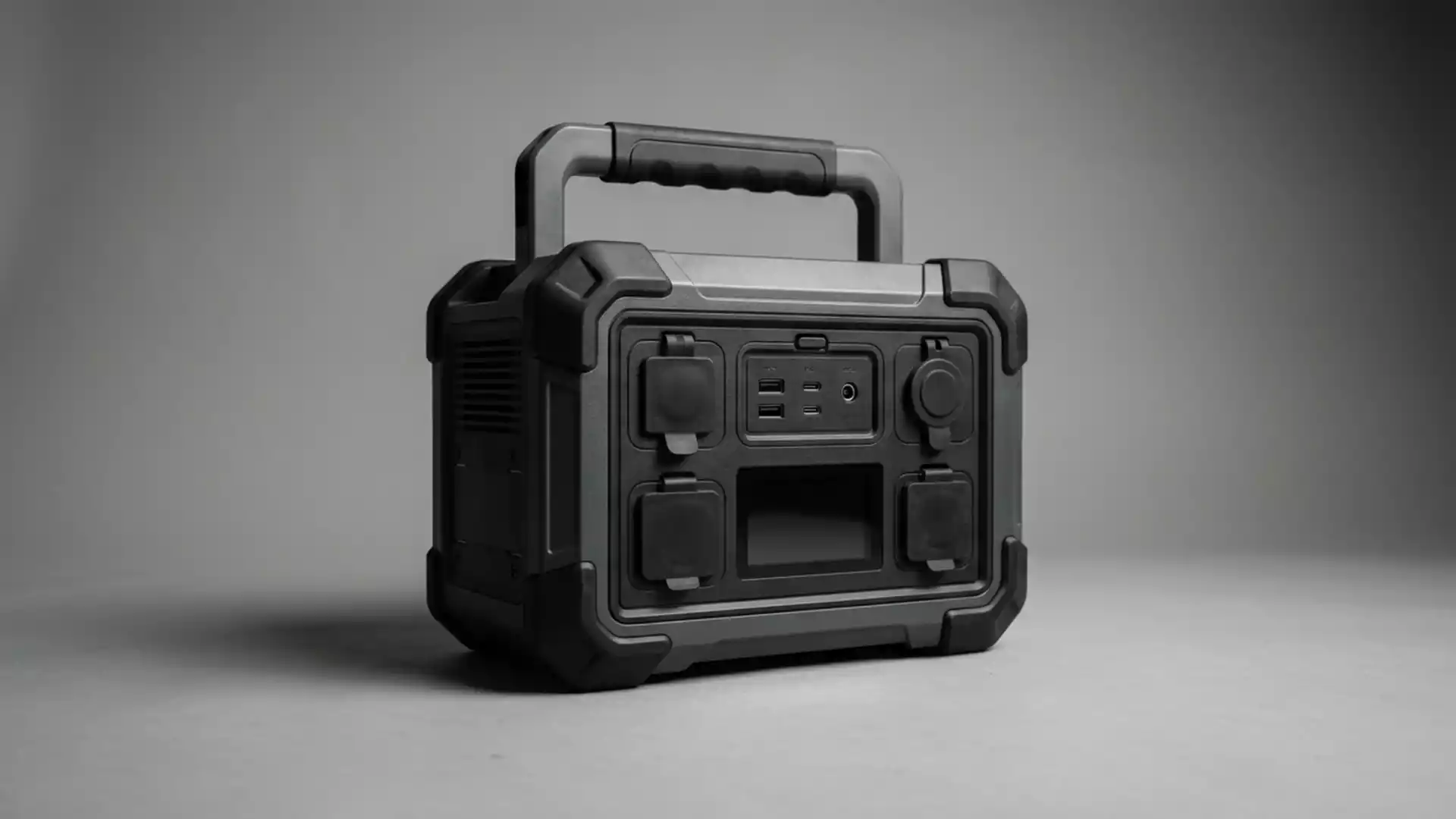
Jackery Explorer 2000 v2 Portable Power Station puts a 2042Wh LiFePO4 battery and 2200W pure sine wave inverter into a compact home and outdoor backup unit, aimed at keeping fridges, networking gear, and lighting running through outages and trips. Its three AC outlets, multiple USB ports, and 12V car socket turn the boxy housing into a flexible plug-in hub for appliances and electronics on 120V AC.
Battery Capacity, Output Power, And Ports
The Explorer 2000 v2 centers on a 2042Wh LiFePO4 battery pack designed for long service life, with documentation pointing to 4000 or more charge cycles before the pack falls to about 70% of its original capacity. That capacity sits in the 2kWh class and is sized to cover at least a full day of typical household emergency loads like a refrigerator, Wi-Fi router, and LED lighting when managed carefully. A pure sine wave inverter delivers 2200W of continuous AC output with a rated surge capability listed at 4400W, so short spikes from devices such as compressors and microwaves can be bridged without tripping.
On the front panel, three 120V AC outlets provide the main power connections for household-style plugs. Two USB-C ports support up to 100W and 30W respectively for laptops, tablets, and phones, and an additional USB-A port fills in charging for legacy devices. A 12V car-style output covers small DC accessories and automotive gadgets. The combination allows simultaneous powering of several devices, with a total draw capped by the 2200W continuous rating and internal thermal and safety limits designed around that ceiling.
Charging, UPS Function, And App Control
Charging is built around fast AC input. In Emergency Super Charge mode, the Explorer 2000 v2 can be driven from about 0% to roughly 80% state of charge in around 52 minutes under wall power, and a full charge under that fast profile takes near 1.7 hours. A more conservative standard AC charging mode completes a full charge in about 2 hours, trading slightly slower turnaround for thermal and long-term battery considerations. Dedicated inputs support solar panels with a total solar charge capability in the range of 400W via paired connectors, which allows daytime recharging from portable arrays or roof-mounted PV in off-grid setups.
The unit includes an uninterruptible power supply style function with an automatic transfer time on the order of 20ms when grid power drops, letting certain connected equipment ride through brief outages without shutting down. A front LED light provides basic illumination and status feedback for users working in dark spaces. Control and monitoring run through a built-in display that reports charge state, input and output power, and estimated runtime. An associated app extends that monitoring to mobile devices over a wireless link, exposing modes such as Emergency Super Charge and power flow charts for users who want detailed insight or remote control from elsewhere in the house or campsite.
Design, Dimensions, And Transport
The Explorer 2000 v2 uses a rectangular housing with a top flip-up carry handle to manage its substantial weight while remaining portable enough for short moves. Documentation and retailer listings place its weight just under 40 lb, with one listing citing about 39.5 lb for the base unit without additional accessories. That mass reflects the LiFePO4 cell chemistry, the inverter hardware, and mechanical reinforcements required to pass drop and vibration expectations for field use. Footprint dimensions follow typical large portable power stations and aim to fit under tables, in RV compartments, or in vehicle cargo areas without dominating the space.
The enclosure integrates cooling intake and exhaust vents to support the high continuous power rating while controlling internal temperature. Rubberized feet stabilize the unit on floors and truck beds, and the housing shell is shaped to resist minor bumps and scuffs. A front-facing interface groups AC outlets and DC ports in defined zones, minimizing cable tangle and making it easier to plug and unplug in low light. The integrated flashlight sits near the control panel for quick access. Overall, the physical layout aims to balance durability and usability for users who wheel the unit out a few times a year for outages or drive it regularly to job sites and camps.
Cycle Life, Warranty, And Safety
LiFePO4 chemistry is a central technical choice for the Explorer 2000 v2. Cells in this class are commonly rated for thousands of charge and discharge cycles before their usable capacity drops significantly, and published numbers for this model highlight a 4000+ cycle rating until roughly 70% capacity remains. For users who charge and discharge the unit once every week, that figure translates into many years of service before noticeable performance decline, as long as thermal limits and recommended operating conditions are respected.
Safety systems in the power station include battery management electronics that monitor cell voltage, temperature, and current flow. Overload protection steps in when loads exceed the 2200W continuous rating by a sustained margin, while short-circuit protections are designed to interrupt dangerous faults rapidly. Over-temperature and low-temperature protections work with the controller logic to reduce power or suspend operation when conditions fall outside the permitted window. Warranty coverage is documented as 3 years standard, with a 2-year extended warranty layered on top for qualifying purchases and registrations, bringing total coverage up to roughly 5 years on the original unit when acquired through participating channels.
Use Cases: Home Backup, RVs, And Field Work
In home backup scenarios, a 2042Wh portable power station allows selective powering of key appliances and circuits through extension cords and power strips. A refrigerator drawing several hundred watts intermittently, a Wi-Fi router at a few watts, and LED lights at tens of watts can share the unit without overloading the inverter as long as simultaneous peaks remain below 2200W. Laptops and phone chargers sit comfortably under the total power ceiling, making the unit suitable for temporary work-from-home arrangements during grid failures. The UPS-style 20ms transfer capability helps keep network equipment and some desktops running through short flickers without manual intervention.
For RV owners and van builders, the Explorer 2000 v2's 2042Wh capacity supports electric coolers, induction cooktops within the power limit, fans, and entertainment devices. Solar input in the 400W range paired with PV arrays on the roof can replenish the battery during daylight, extending autonomy beyond a single day. In field work settings, the 2200W output and three AC outlets accommodate power tools, lighting rigs, and measurement systems. The unit's just-under-40-lb weight keeps it portable enough for technicians to load in and out of trucks or carts, though it is heavy compared with smaller 500Wh and 1000Wh stations more suited to light loads.
Comparison With Jackery Explorer 2000 Plus
Compared with Jackery Explorer 2000 Plus, which posts a capacity around 2042.8Wh and a higher 3000W output with expandable energy storage up to several kilowatt-hours, the Explorer 2000 v2 holds its place as a simpler, non-expandable 2042Wh unit in the same broad class. The Explorer 2000 Plus can be configured in parallel to reach maximum power in the 6000W range and total energy from 2kWh up to 24kWh depending on the number of connected battery packs and stations, making it better suited to whole-RV or small home systems. In contrast, Explorer 2000 v2 focuses on single-unit portability and use as a self-contained box.
Pricing reflects this difference. Listings for Explorer 2000 v2 show figures around $899.00 to $999.00 in the US market depending on promotions and bundles, with an MSRP near $1,300 noted in some reviews, whereas the Explorer 2000 Plus commands a higher price tier. Users choosing between the two typically balance the higher 3000W output and expandable capacity of the Plus model against the lighter, more compact design and lower price of the 2000 v2. For many household backup and camping use cases where loads stay within 2200W and 2kWh of storage, the Explorer 2000 v2 offers sufficient coverage without the complexity and cost of an expandable system.
Manufacturer Block
The Explorer 2000 v2 belongs to Jackery's portfolio of portable power solutions, with detailed technical specifications, firmware notes, and accessory compatibility documented on the brand's dedicated product page. That page lists capacity, output ratings, cycle life, warranty details, and supported charging methods for users who want the full technical breakdown before purchase or deployment.
Direct from the Manufacturer Jackery Explorer 2000 v2 Technical Specifications
Full specifications, warranty terms, and supported charging options for Jackery Explorer 2000 v2 are listed on Jackery's official product page. View Explorer 2000 v2 Details
Placement In The Portable Power Station Market
Within the portable power station category, Jackery Explorer 2000 v2 sits near the upper end of capacity and output for single-box consumer units. Models around 500Wh and 1000Wh typically handle small electronics and light appliances; units like the 2000 v2 jump into heavier-duty territory with support for refrigerators, microwaves within their power band, and denser loads. Its 2kWh-class battery and 2200W output compete with offerings from other brands that target whole-room backup and off-grid work, often with similar LiFePO4 chemistry and quick charging claims.
Independent test summaries indicate that usable AC output from the 2042Wh rating lands around the mid-1700Wh range when measured through inverters, which is consistent with efficiency losses in conversion and common for devices in this class. That measured usable energy is enough to run a typical refrigerator drawing 150W to 300W for several hours, power laptops and networking gear simultaneously, or operate a small space heater at lower settings for limited periods, all within the constraints of battery capacity and inverter output. Users planning critical loads can treat the rated 2042Wh as a ceiling and the roughly 1700Wh measured AC delivery as the more realistic planning figure.
Verdict: Who The Explorer 2000 v2 Suits Best
Jackery Explorer 2000 v2 Portable Power Station is best suited to users who need a high-capacity, high-output portable battery for intermittent yet demanding tasks: homeowners seeking backup for selected appliances during outages, RV and van owners powering off-grid living spaces, and professionals running tools and electronics away from fixed AC. The combination of a 2042Wh LiFePO4 battery, 2200W continuous output, fast AC charging, UPS-style transfer, and app-based monitoring places it above midrange portable stations while still keeping complexity moderate compared with expandable multi-unit systems.
Its weight just under 40 lb, non-expandable capacity, and 2200W output ceiling are the main limits. Users wanting whole-house coverage with central-panel integration or very high surge demands may find better fits in higher-capacity, higher-power, expandable platforms such as the Explorer 2000 Plus or competitors in the 3kWh and above class. For many US households and mobile setups, though, Explorer 2000 v2 strikes a practical balance between stored energy, portability, and price, making it a strong candidate when the goal is reliable, flexible backup for a defined set of circuits and devices rather than full-home coverage.
Jackery Explorer 2000 v2 Key Facts Product: Jackery Explorer 2000 v2 Portable Power Station, 2042Wh capacity
Jackery Explorer 2000 v2 Portable Power Station, 2042Wh capacity Manufacturer: Jackery Inc., Fremont, CA
Jackery Inc., Fremont, CA Category: Portable power station (LiFePO4)
Portable power station (LiFePO4) Battery capacity: 2042Wh nominal, LiFePO4 pack rated for 4000+ cycles to about 70% capacity
2042Wh nominal, LiFePO4 pack rated for 4000+ cycles to about 70% capacity AC output: 2200W continuous pure sine wave, 4400W surge, three 120V AC outlets
2200W continuous pure sine wave, 4400W surge, three 120V AC outlets Weight: Approximately 39.5 lb unit weight
Approximately 39.5 lb unit weight Price: Around $899.00-$999.00 in the US market (as of 09/07/2026)
Around $899.00-$999.00 in the US market (as of 09/07/2026) Target audience: US homeowners, RV and van owners, and field professionals needing 2kWh-class portable backup power
A note on cookies
Newshunt uses essential cookies to keep you signed in and to remember your language and country, so the site works the way you expect. With your permission, we'd also like to use analytics cookies to understand how people use Newshunt and improve it over time.
Accepting only affects analytics. To learn more, view our Privacy Policy or Terms & Conditions.
(0)Comments