


Iran Conflict Cuts Pakistan Tuna Trade, Fishing Hit
Category: Business
Share
Archive
Like
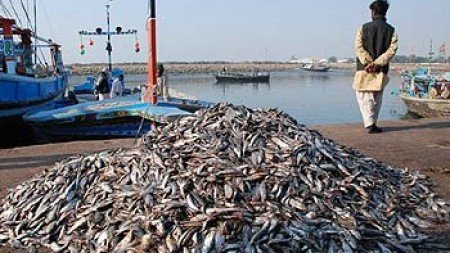
Pakistan's coastal fishing and boatbuilding industries are reeling as US-Iran tensions disrupt tuna trade and Iranian port access, cutting a key market.
Pakistan's coastal fishing industry is facing a widening economic shock as the conflict involving the United States and Iran disrupts a cross-border trade that has long connected Pakistani fishermen with Iranian buyers.
The disruption has effectively cut off a key market for Pakistani tuna fishermen. Tuna has limited demand in Pakistan but is highly valued in Iran, where fishermen can reportedly earn six to seven times more for their catch.
'There is not even a single company in Pakistan to buy our tuna. Iran is the only option for us,' said Hussain Baloch, a fisherman involved in the trade.
The loss of access to Iranian ports has left fishermen uncertain about where they can sell their catch. Shah Zamin Khan, another tuna trader, said the business had been operating under pressure since February, but recent attacks on Iranian seaports had made the situation significantly worse.
Boat owners have stopped sending vessels to Iranian ports over fears of being caught in further strikes.
The southern Iranian ports of Konarak, Pasabandar and Beris, located near Pakistan's Balochistan coast, are important centres for the fish trade. Their proximity has made Iran a critical destination for Pakistani tuna fishermen.
Fishing and fuel trade disrupted
The cross-border business is not limited to fish sales. Pakistani fishermen have also traditionally relied on subsidised Iranian fuel, creating a barter-like system in which fuel and tuna form part of the commercial exchange.
The suspension of cross-border movement has disrupted both sides of the trade, while rising fuel costs are adding further pressure on fishing communities already dealing with climate change and overfishing.
The security risks have also produced casualties. Three fishermen were killed and 15 injured in July when a US strike hit a commercial fishing pier in Sirik, in Iran's Hormozgan province.
In March, a 17-year-old Pakistani fisherman was also killed after debris from an intercepted projectile struck his vessel in the Arabian Sea.
Boatbuilding industry loses Iranian business
The crisis has spread beyond fishermen to Pakistan's coastal boatbuilding industry.
Pakistani boatyards supply vessels to both domestic fishermen and Iranian customers. Haji Mohammad Wada, chairman of the Pakistan Boat Building Association, said builders typically receive orders for 25 to 30 large cargo vessels from Iranian clients each year, in addition to more than 100 boats for Pakistani fishermen.
That business has now largely disappeared.
Wada said no new orders had been received from Iran for the past five months, leaving boatbuilders to complete only contracts placed before the conflict intensified.
Domestic demand has also weakened because of higher fuel costs and the suspension of fish trade with Iran. Overall, new boat orders have fallen by as much as 90%.
Mohammad Moazzam Khan, technical adviser to WWF-Pakistan, said the fishing and boatbuilding sectors were heavily dependent on the Iranian market and warned that a prolonged regional conflict could threaten the livelihoods of tens of thousands of Pakistanis.
Pakistani boatbuilders produce large gillnet vessels for Iranian operators, including boats used in high-seas fishing around the Strait of Hormuz.
Fishermen gamble on a return to Iran
Despite the uncertainty, Pakistani fishermen have not abandoned the trade.
Hundreds of boats and trawlers have recently departed from Karachi, Jiwani and Gwadar for 40-day fishing trips, hoping that conditions will improve before their catches are ready to be sold.
Diplomatic efforts involving Pakistan and Qatar are aimed at easing the conflict and facilitating the reopening of the Strait of Hormuz.
For fishermen such as Khan, the timing of any breakthrough will be crucial.
He is preparing to leave on another fishing trip and hopes that by the time the boats finish catching tuna, Iranian ports will once again be accessible to Pakistani traders.
A note on cookies
Newshunt uses essential cookies to keep you signed in and to remember your language and country, so the site works the way you expect. With your permission, we'd also like to use analytics cookies to understand how people use Newshunt and improve it over time.
Accepting only affects analytics. To learn more, view our Privacy Policy or Terms & Conditions.
(0)Comments