


'Turning blind eye' to AfD win further angers voters, analyst warns
Category: Politics
Share
Archive
Like
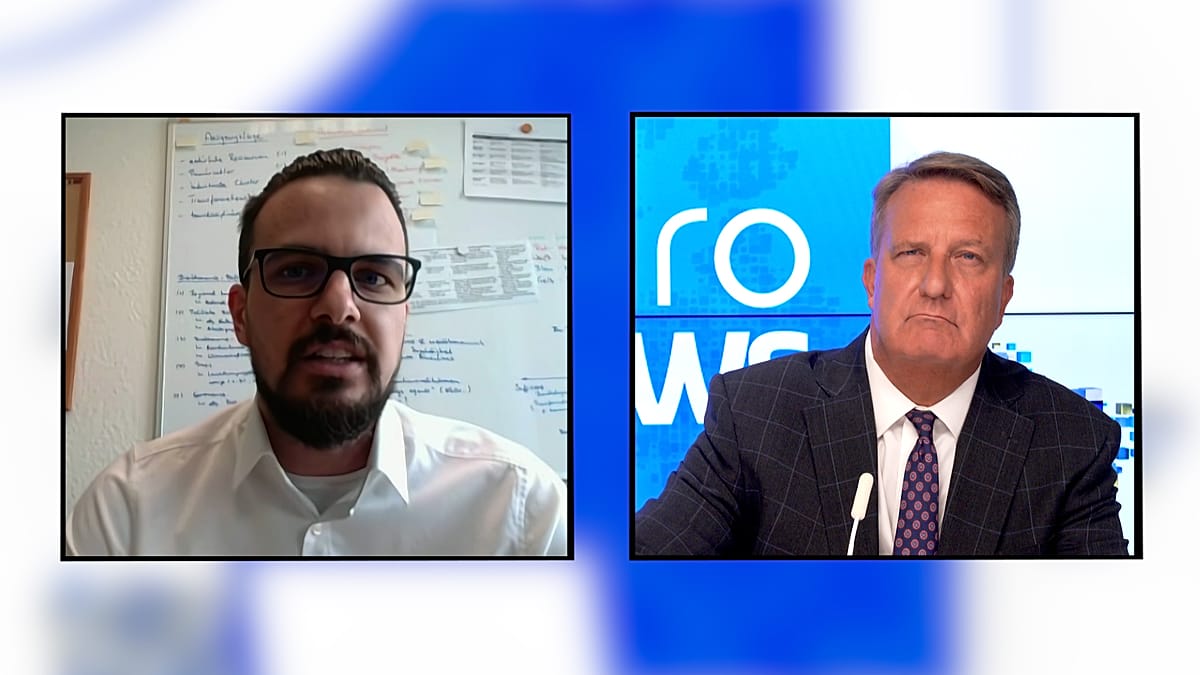
Chancellor Friedrich Merz and his coalition government's response to the historic victory of the far-right Alternative for Germany (AfD) party in the Saxony-Anhalt state election will be pivotal in deciding the future of the federal government, political scientist Nicolas Spohn told Euronews.
Final results following last Sunday's election in the eastern German state showed AfD received 43.8% of the vote, more than double its showing five years ago in the region of 2.1 million people. Merz's party, the Christian Democratic Union (CDU), slumped to 17.2%.
"First of all, it really is a historic victory for the AfD, and it is an earthquake for the rest of the parties," Spohn, an expert on East German state politics, said.
The pro-Kremlin, anti-immigration party's win marks the first time a far-right party is within reach of power at the state level since WWII.
Questions have been raised about what this means for national politics in Germany. Thorsten Frei, the leader of the CDU in Germany's federal parliament, or Bundestag, denied that the result suffered by the CDU in Saxony-Anhalt would have consequences on the national level.
"But this is what frustrates people," Spohn said, adding that "turning a blind eye to the warnings of elections like in Saxony-Anhalt could give the AfD more votes."
Voter discontent
Failure to deliver on promises made ahead of the 2025 elections — notably his vow to revive Germany's stagnant economy — saw Merz's popularity sink. A recent YouGov poll showed just 16% of Germans have a favourable opinion of Merz.
"The election here shows that the CDU must, on the national level, correct their political course," the political scientist explained. "A lot of people are frustrated with the work of the CDU. They promised different things than what they achieved after the elections. The economy is doing worse than before the last election on the national level."
He recognised that some factors are not under the control of the CDU, such as the ongoing wars in Ukraine and Iran. "These are issues that Chancellor Merz can't do a lot about, but still, Germans feel this economically."
This discontent is particularly visible in Saxony-Anhalt, where Merz's popularity sank to just over 9%. Spohn believes this was more of a decisive factor in the election than support for the AfD's policies was.
"It is not genuine support for the AfD's agenda, but rather for the [idea associated with the party] of doing everything differently."
Saxony-Anhalt, whose territory was formerly part of the German Democratic Republic (East Germany), has experienced the largest population decline of any German state over the past 35 years, losing a quarter of its inhabitants since German reunification in 1990. This is particularly visible in rural areas and among young people, who bear the brunt through teacher shortages and poor career prospects.
"What I'm trying to say is that 40% of the voters do not vote for the AfD because of its far-right policies, but rather despite such policies. People in eastern Germany are not more right-wing; they are simply more frustrated."
The party now has strong momentum heading into regional elections in Berlin and another eastern German state, Mecklenburg-Western Pomerania, in just under two weeks. The AfD is leading in voter intent polls in Mecklenburg-Western Pomerania, with about 35%.
To turn the tide, Spohn argued, Merz's CDU party will have to provide a positive outlook for voters. "At the moment, we don't have this positive vision, and the AfD is the only party giving voters some kind of positive outlook, which was, 'everything is possible'. So, everything can also be different."
A note on cookies
Newshunt uses essential cookies to keep you signed in and to remember your language and country, so the site works the way you expect. With your permission, we'd also like to use analytics cookies to understand how people use Newshunt and improve it over time.
Accepting only affects analytics. To learn more, view our Privacy Policy or Terms & Conditions.
(0)Comments