


Bad Wasian
Category: Entertainment
Share
Archive
Like
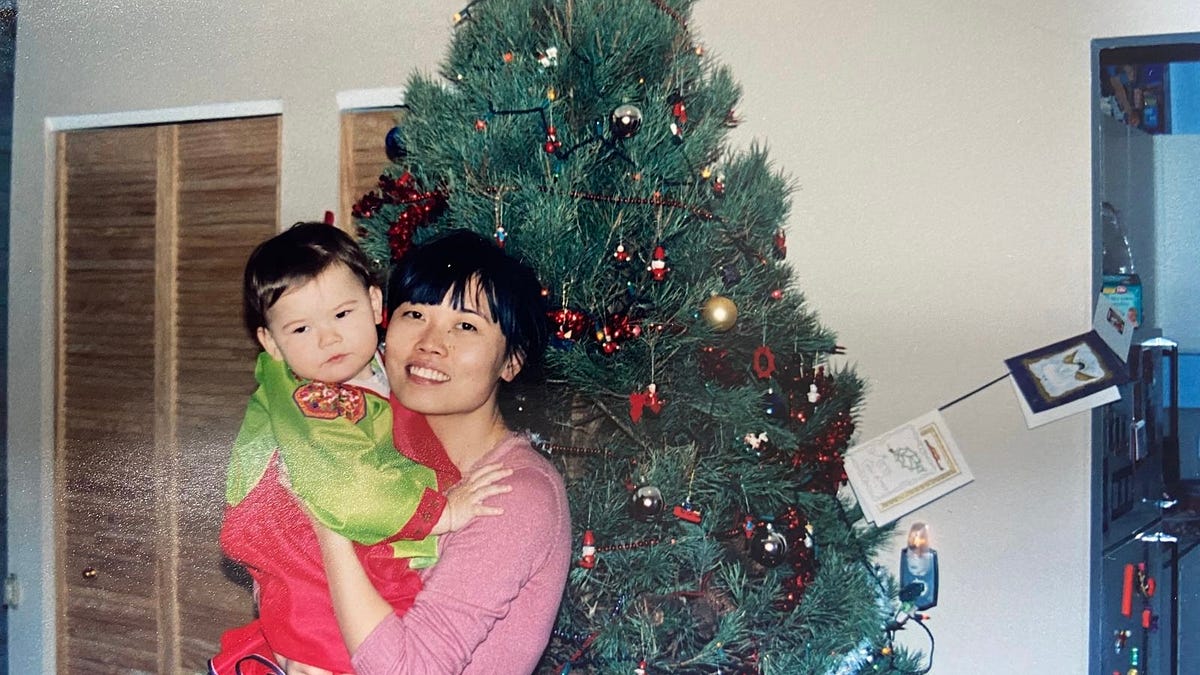
For reasons still unclear to me, there was a recent online fad concerning being 'wasian', that is, of Asian and white heritage. As someone who has been Wasian long before it was cool, I initially thought it was a mildly amusing if bizarre trend; it was nice to see this identity being more broadly discussed in the mainstream in a way I had never seen before.
However, as with every online trend concerning identity, it was quickly dissected and discussed for its problematic elements, and rightly so. Colourism, classism, and sexism reared their ugly heads, and arguments, which many of us have been making long before the widespread fame of figures like Alyssa Liu and Laufey, circulated. The fetishisation of Asian culture has been an issue for centuries, with 'oriental aesthetics' being borrowed and celebrated in the West, while the peoples themselves have been widely vilified, ridiculed, sexualissued or dismissed. The memes about Chinese cigarettes, indoor shrimp fishing, matcha and the craze for Japanese, Korean and Chinese cartoon characters is, in many ways, a 21st version of the eighteenth century lust for Chinese porcelain and Japanese lacquer work (an essay on this to come). It can also be understood as an extension of the colourism and the championing of Western beauty standards in East Asia; the idealised Wasian, the type which was paraded around the internet this past Spring/Summer, retains enough of their white features to make them palletable to Western viewers, while displaying just enough Asian-ness to remain exotic. This trend, disguised in some ways as a celebration of Wasian-ness, was in many ways, a means to cater to the tastes and aesthetics of the Western world's idea of Oriental beauty. (There are other points to be made about the glorification of East Asians over South East and South Asians, but I don't feel I am in the optimal position to be speaking about that as my experience, both academically and lived, is society's perception and treatment of East Asians). The trend simply amplified and reinforced the socio-cultural preference for pale, feminine, conventionally attractive (w)Asians made even more socially acceptable due to the added Westernisation experienced by Wasians.
Subscribe now
Another issue, one faced by many mixed cultural communities, is the knotty problem of fitting in and navigating multiple different cultural identities. I know I am not alone when I say I have often felt too white for Korean spaces and too Asian for white spaces, while at the same time feeling guilty and ill equipped because in many ways I don't feel Korean at all, and have been plagued by a vague sense of imposter syndrome because of it. While this issue isn't unique to Wasians, many other mixed communities have a different—which isn't to say an easier—experience of it.I wrote a paper several years agoabout the formation of Black Caribbean-British identity in London after the arrival of theHMT Windrushin 1948. One of the central themes in that paper was about how these 490 migrants, British citizens by virtue of the British Nationality Act which had come into effect the same year, were caught between the often hostile culture of their new homeland and the cultures of the islands from where they originated. One result, partly deliberate and partly as a natural response of moving to a new place, was that arrivals and their descendents created a new culture, one which was distinctly Caribbean-British, shaped by both the legacies of their heritage and the circumstances of their new homeland. While researching and writing this paper I was struck by not only the resilience of the migrants and their descendants (surprise surprise, being a Black Briton in mid-20th century Britain was not always easy) but also how, over half a century later, facets of this culture have become mainstays of popular British culture, the Notting Hill Carnival and the formation of a distinctly British reggae scene being two prominent examples.
Since writing that paper I have thought about parallels in the Korean migrant experience. Despite there being a relatively large Korean/mixed Korean diaspora in Canada and America (albeit a much smaller one in Britain) we have nothing comparable. I understand, of course, the Asian-American relationship is not the same as the British-Caribbean one, but considering how many Asians there are globally and how large of a diasporic community there is, it is odd that there aren't many similar phenomena. Similarly, the ways in which people of mixed Black and white descent are culturally and socially perceived in comparison to Wasians is fascinating to me, as in many cases it seems they have managed to develop and sustain a mixed race cultural identity which is far more coherent than any I've experienced in the mixed Korean community. Part of this is probably due to the fact that Korean groups, in my experience, feel very tribal. My mother's late parents reportedly had a mare when two of their three daughters turned up with white men (for their sakes' it's a relief they died before the marriage of their youngest daughter to yes, you guessed it, another white guy) and Koreans, as with many other cultures, are traditionally encouraged, if not pressured, to marry Korean. And God help you if you should rock up with a Japanese person.
I remember when Obama was elected to his first term as president and I heard people refer to him as the first Black POTUS. To my child brain, this didn't make sense. 'He's as Black as he is white,' I remember saying to my parents, 'surely it's more accurate to say he's the firstmixed racepresident.' I don't know if my parents had the heart or energy to explain that in the greater socio-political culture of the US, that distinction didn't really matter. But that idea seemed to plague me for much of my youth; my brother is lightskinned and, like Obama, I noticed that people often referred to him as Black, while I was almost never described as Korean or even Asian. I was always just mixed or, as my father sometimes claimed, bafflingly, 'just a white girl'. My Asianess seemed to rarely come into the equation, let alone the Koreaness which sometimes isn't even discerned. While I realise that this is mainly due to the way I look, a part of me sometimes feels it is due to some personal shortcoming.
This past July I was in Manchester with a girlfriend of mine on a night out when we were accosted by a man I can only describe as looking like a big toe in desperate need of a pedicure. After I had repeatedly asked him, politely, to leave us alone, he got aggressive so I stood up and told him, calmly albeit drunkenly, that this was 'why I hate white men.' He then offered to break my jaw and called me a 'chink', at which point my friend, even drunker than I was, took a swing at him. Obviously this was a horrible interaction but in the moment the fact that bothered me the most, after I had pulled my friend away from the fray which the rest of the road seemed to have gotten involved in, was less the racism and more the inaccuracy of it.
'I'm not achink,' I sobbed to my friend in the taxi afterwards, 'I'm agook.'
While this may seem like a silly difference to many, the few times I have ever been called a racial slur it's always been 'chink', and my anger at this misidentification has nothing to do with anti-Chinese sentiment, is partly due to the fact I am a pedant, but is mainly because of the frequent imposter syndrome I feel with regards to my racial identity. Additionally, I have often witnessed, in my own life and in larger socio-cultural contexts, the erasure of Korea. They call the Korean War the forgotten war, and shadowed as the nation has been by the giants of Japan and China, Korea and her peoples have been oft forgot or else lumped in with Western ideas of the East. To see this idea perpetrated against me, even incidentally, my blood boils. Koreans didn't experience the death of millions of citizens, the splitting up of millions of families and the total division of their country for some shit-for-brains bigot in the north of England to call me the wrong slur nearly seventy-five years later. The sort of asshole, may I add, who would most likely burst a blood vessel were you to lump Manchester in with Yorkshire, despite the fact they are neighbouring counties. But to him, people like me are just part of the hordes of Little Yellow People to the East.
I remember even in kindergarten, our (almost exclusively white) classroom participated in a Lunar New Year celebration and there was a Chinese boy who, whether by his parents or the school, was dressed in traditional Chinese clothing (this was twenty years ago now so I cannot attest to the authenticity of said clothing). By extension of being the only other East Asian in the class, the same garb was offered to me. Even as a four year old, though I could not articulate it, I felt the fact that a culture I didn't belong to was being assumed of me, even if it was in a slapdash, wellmeaning way, was ridiculous and vaguely insulting. I had never worn aqiapaoin my short life, why now was I being treated as some infantile representative of a nation and culture I knew nothing about?
This ties into the niggling insecurity I've had since I started high school and became aware of the notion of being Wasian and how it applied to me:I'm not Korean enough.Not even in the context of being Korean but in the context of being mixed. I have never been able to say more than a few disjointed words in Korean, I quittaekwondo(embarrassingly I just had to check how to even spell that properly) after only two weeks as a child, I can barely make any Korean food, and I didn't start enjoying kimchi until I was 19. Indeed, I even sayTaiyaki, the Japanese term, rather thanBungeo-ppang, which is a double blow to my Koreaness as it is a nod to the coloniser. While of course belonging to a certain ethnic group is not predicated on behaviour or taste or language, it can feel both isolating and like I am claiming something I have no right to. While I might cravekimchi jjigaewhenever I am ill or hungover, and the sound of Korean being spoken fills me with a comfort reminiscent of early childhood winters spent in Saskatchewan eating persimmons and listening to the adults speak while understanding none of it, my Korean-ness sits uneasily on me, like an understudy in an ill fitting costume.
This is partly the reason that my initial excitement over the Wasia trend was tinged with a sense of imposter syndrome because it seemed like so many other Wasians, even amongst my peer group, are more tuned into their Asian sides than I am. Additionally, for a while I have longed for a sense of community built on a shared Wasian identity that never seemed to exist for me growing up. A couple years ago I came across the'Big Wasian' Instagram videomade by user HippoBaller and her sister CementBrunette. Not only did I feel seen because this was one of the first pieces of online content I had seen around being Wasian, but it was also about being 'big' in a culture where (W)Asians are assumed to be petite as the default, and 'big' seems to encapsulate anyone over 5'5 and 120 lbs. Recently, I began speaking online to another half Japanese content creator based in San Francisco. Though he was born and raised there, our conversations seemed to indicate to me that he had more of a connection to both his Japanese side and his Wasian-ness than I do, and while it was nice speaking with someone who could relate to many of the Wasian experiences, in an odd way I felt a vague sort of jealousy of the Wasian community which has amassed in the Bay Area.
Feeling less Asian than other Wasians is an absurd but common anxiety I think. It is partly my own fault, as I have never taken the time or shown interest in learning Korean, as well as the fact that while Toronto is a very multicultural city, I didn't grow up around many other Wasians, let alone half Koreans. Indeed, while I was aware that much of my family, and the members of my family that I was closest to for the most part, were Korean, for much of my childhood I struggled to see how exactly that related to me. Especially after my mum's parents passed away when I was seven and eight respectively, the Korean-ess in my life seemed to be relegated to the dinner table. I rarely heard my mother speak Korean, I'd only ever been to Korea once, over a decade ago now, and its part in my genetic and cultural make up never really came up in conversation.
As I grew older and started to reckon more with being half Korean, my relationship with the idea of Korea, especially as a woman, became more fraught. While the issues are not unique to Korea, I found it difficult to separate Korean identity with the misogyny I read and heard about. Anecdotally, I learned about how Korean women were treated, including women in my own family, the blatant preference given to sons over daughters, and the toxic sexism that seems to pervade so many facets of Korean society. I saw my little cousins idolise Kpop stars, all of whom I knew had undergone extensive surgery and strict lifestyle regimes to make them appear skinnier, paler, to elongate their noses and give them duolids. In short, to make them whiter. It pained me to see my little cousins, both full Koreans and both beautiful girls, long for this false image of Korean womanhood. Every popstar is, of course, used to push an agenda and promote near impossible beauty standards, but there is something particularly heartbreaking about the lengths at which many Koreans will go to appear more Westernised. Now, not only did I have to contend with not feeling Korean enough, but I also had to figure out how I was meant to feel connected to a nation which seemed to oppress women in an even more flagrant way than the West. There was a brief time in my late teens where I brashly claimed with adolescent certainty that I had no interest in Korea or Koreaness because of this misogyny. Since then my position has become more nuanced though it is still a source of concern for me.
I have spent time both being in absurd denial, or at least attempting to ignore my Wasianness and wearing it with pride, even attempting to make it a core part of my identity, whatever that means. Now, I am torn between trying to accept it as simply a fact about me in the same way that I have brown eyes or hay fever. Yes, it has shaped my culinary palette and ability to hold a grudge, but why should it mean anymore than that? On the other hand, I feel a niggling desire for community based on it. When I meet another Wasian in the wild, particularly when they're the first to ask me about it, I feel a little trill of joy and validation even if they cannot identify my exact mix. Like the Masons, it feels like a secret club in which only other members have any interest in identifying each other and there's a part of me, perhaps a juvenile one, that feels validated in my identity when another Wasian recognises that in me. I have undergone a successful peer review!
Off the Cuff is a reader-supported publication. To receive new posts and support my work, consider becoming a free or paid subscriber.
A note on cookies
Newshunt uses essential cookies to keep you signed in and to remember your language and country, so the site works the way you expect. With your permission, we'd also like to use analytics cookies to understand how people use Newshunt and improve it over time.
Accepting only affects analytics. To learn more, view our Privacy Policy or Terms & Conditions.
(0)Comments