


Lindsay Clancy's Mistrial Fight Is Not Over Yet but May Not End the Way She Wants, Lawyer Predicts
Category: Politics
Share
Archive
Like
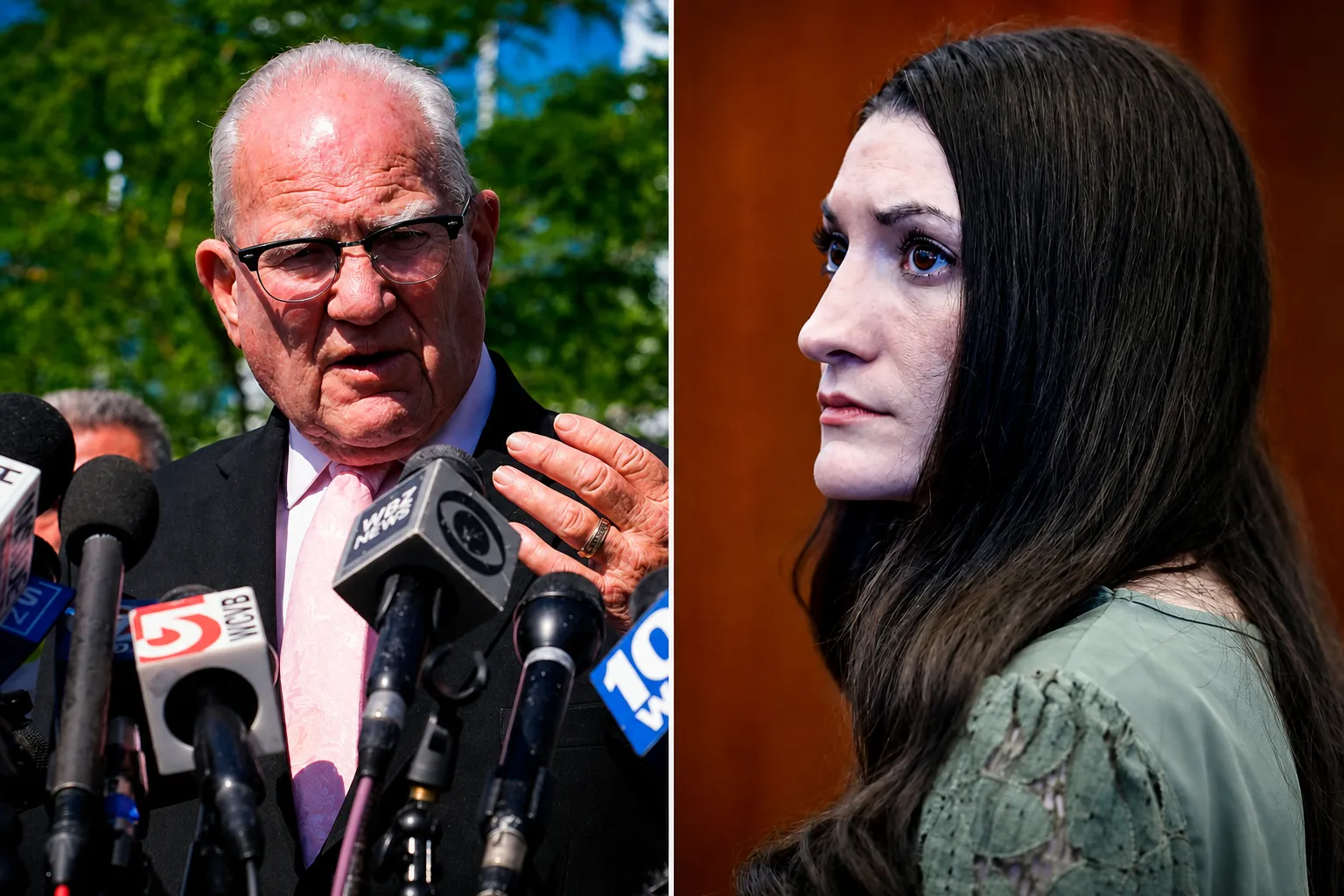
Kevin Reddington is pressing a long-shot bid to have a judge overrule the hung jury that deadlocked in Lindsay Clancy's murder trial.
The defense attorney, who represented Clancy, 36, through a six-week trial in Massachusetts, said Friday he will ask Judge William Sullivan to set aside the mistrial and rule from the bench that the Duxbury mother is not criminally responsible for strangling her three children. Reddington is expected to argue for the motion at Clancy's next hearing Sept. 29.
If granted, the move would shield Clancy from a possible retrial and conviction. But Boston lawyer Peter Elikann, who has no connection to the case, cast the maneuver as nearly impossible. 'Kevin Reddington has to be commended for leaving virtually no stone unturned,' Elikann said. 'It's commendable that he's bringing this motion forward.'
'The granting of [such] a 25(b)(2) motion is rare in the extreme,' he continued.
The motion can only succeed if Reddington proves the jury erred so egregiously that the judge has no alternative but to discard the deadlock. 'It would be used if it was genuinely believed that the jury got it totally wrong and that their decision was not based on sufficient evidence whatsoever,' Elikann said.
'However, most judges go through their entire career without even granting one of those once,' he added.
Elikann recalled just one such motion prevailing in Massachusetts, when a judge in 1997 reduced British au pair Louise Woodward's conviction from second-degree murder to manslaughter in the death of 8-month-old Matthew Eappen. 'We don't undo what juries did. We really respect juries,' Elikann said. 'It would have to be something that the jury got totally, totally wrong, and I don't think anybody is accusing the jury of that here.'
The 12-person panel — nine women and three men — deliberated more than 38 hours across seven days before sending three notes to Sullivan declaring themselves deadlocked on Tuesday, Wednesday and Friday. After the final note, as jurors were about to be brought back into court, Reddington made an eleventh-hour request for Sullivan to delay declaring a mistrial so he could pursue an emergency appeal.
Sullivan gave Reddington one hour to file with Massachusetts' highest court. The appeal centered on a Thursday note from the female foreperson stating one male holdout was refusing to follow instructions on reasonable doubt. Sullivan had already questioned each juror individually under oath and re-read his reasonable-doubt instructions, but denied Reddington's demand that the holdout be questioned further alone. Clancy's team built its appeal on that denial, though an appeals judge rejected the 11-hour bid and the panel was released Friday afternoon.
Juror names are scheduled for release Sept. 18, and both sides will likely monitor any media interviews for strategic insight. 'They kind of want to know the thinking of the jury, what impressions the jury had … because you might change your whole strategy,' Elikann said. Still, he noted Reddington 'said he clobbered the prosecution and would likely do the exact same defense he did this time.'
Plymouth District Attorney Timothy Cruz has not indicated whether his office will retry Clancy on the same charges, downgrade them, pursue a plea deal, or dismiss the case. The office is expected to reveal its position at the Sept. 29 hearing, where a new trial date could also be set. Reddington requested a two-week turnaround Friday, but Sullivan indicated late fall would be the earliest possibility — still extremely fast by Elikann's estimate, as retrials typically occur eight to 12 months after a mistrial.
At trial, Reddington argued Clancy experienced temporary insanity driven by severe postpartum psychosis, telling jurors she heard a hallucinatory voice commanding her to kill Cora, 5, Dawson, 3, and Callan, 8 months, and then herself. Prosecutors countered that she carefully planned the exercise-band stranglings on Jan. 24, 2023, before attempting suicide by cutting her wrists and neck, taking prescription medication, and throwing herself from an upstairs window. The former labor and delivery nurse sustained multiple spinal injuries and is now paraplegic and wheelchair-bound, held at Tewksbury Hospital pending resolution of her case.
A not-guilty-by-reason-of-insanity verdict would commit her indefinitely to a mental institution, with release only upon judicial and medical clearance that she poses no risk. A first-degree murder conviction would mean life without parole.
A note on cookies
Newshunt uses essential cookies to keep you signed in and to remember your language and country, so the site works the way you expect. With your permission, we'd also like to use analytics cookies to understand how people use Newshunt and improve it over time.
Accepting only affects analytics. To learn more, view our Privacy Policy or Terms & Conditions.
(0)Comments