


Preparing for High-Stress Training Evolutions
Category: Health
Share
Archive
Like
During underwater egress training, aka helicopter dunker training, one of my fellow students panicked and stopped the training so that he could get out. This training teaches key survival skills for aviation personnel flying in helicopters over water. It involves being harnessed into a seat in a mock helicopter, which then 'crashes' into a pool, sinks, and inverts. You are required to follow precise instructions in order to save yourself. Pretty much everyone experiences anxiety during the training.
The interesting thing about this training is that it doesn't require much swimming ability or any advanced technical skills. What it does require is mental control during a time in which you are anxious and disoriented (upside down, underwater, with ineffective vision and hearing, and without air). The goal is to manage your anxiety during the evolution, while learning that you are capable of saving yourself despite the anxiety. The training builds skills, normalizes the stress, and instills confidence that you can do it in a real situation.
You might be wondering what happened to my classmate? He was referred to the mental health department to help him with his anxiety. The problem was that he didn't have a mental health disorder, and meeting with the mental health provider didn't help him. In a small-world story, he ended up in my office. He learned visualization, performance breathing, the power of self-talk, cognitive reframing, and, through gradual exposure and practice of his new mental skills, he crushed the dunker.
These mental skills are integral for personnel undergoing high-risk training evolutions. Mental preparation for the training required in public safety positions is critical. It transfers to real-life scenarios, and many of the techniques are tied to long-term health. Realism and anxiety are necessary components of these trainings, be they fire-fighting training, survival training, flight training, or law enforcement, correctional, or military scenarios.
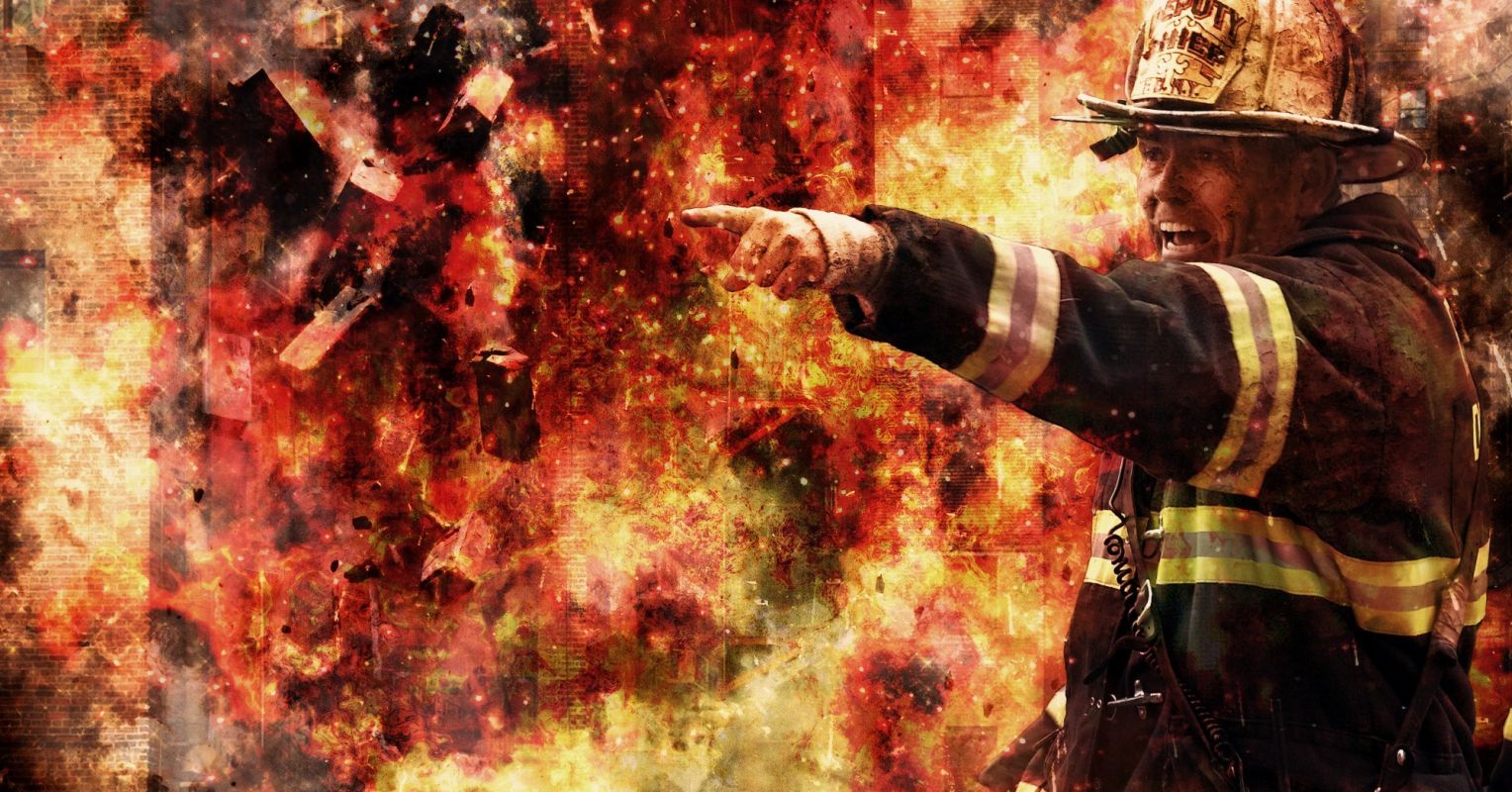
Source: Image by ThePixelman from Pixabay
The following are important mental skills which improve training performance.
Training/Technical-Related Knowledge and Skills
Though it should go without saying, knowing the educational material related to the training in question (e.g., live fire exercise) and practicing the skills to the extent that you can prior to the event are necessary. We all know that if you haven't studied for the test, you have almost no chance of doing well on the test. Mastering the technical material will make everything else easier and help you gain confidence faster.
Visualization
To help with mastering the material, performing optimally, and decreasing stress during the event, visualization is key. For visualization (also called imagery and mental practice) to be most effective, do the following: Use a first-person perspective (i.e., view it as you will during the event, not as though you are observing yourself); include every detail of the upcoming training event possible to include all necessary steps involved in the task; engage all five senses and imagine the associated sights, sounds, smells, touch, necessary movements, and emotions. Mental rehearsal can be used for emergency scenarios, to improve decision making under stress, or to practice multiple outcomes or scenarios which may be presented during any given training event.
Performance Breathing
Deep breathing is the fastest way to achieve physiological control, slowing down heart rate, regulating breath rate, and facilitating the management of anxiety. For this to work on demand, practice is important between and during training events. In addition to practicing such techniques as box breathing (breath in for 4 counts, hold for 4 counts, exhale for 4 counts and hold again for 4 counts – repeat) or diaphragmatic breathing (e.g., belly breathing), yoga and meditation allow for more advanced breathing practice and control. Mindfulness meditation in particular has been shown to alter time perception, literally providing individuals the sense that time has slowed. This type of mental control can be incredibly valuable when needing to make rapid, high stakes decisions.
THE BASICS Find a therapist near me
Self-Talk
Self-talk can be instructional or motivational. In instructional self-talk, you provide yourself task-specific instructions related to the task at hand. In motivational self-talk you provide yourself motivation and instill confidence (e.g., I've got this!). Both improve our performance during challenging tasks. It is notable that negative and defeatist self-talk can sabotage our efforts.
Cognitive Reframing
Being aware of our thoughts in the moment (believe it or not this takes practice!) allows us to examine them and re-interpret or change them to thoughts which are more adaptive, realistic, and healthy. As an example, imagine you are a student who enters into a high risk training evolution and experiences an increased heart rate, based on the thought, 'I'm going to fail this event.' This thought is an example of all-or-nothing thinking and an avoidance of knowledge of the very real obstacles that you've already successfully faced to advance to that particular point in training. This kind of thought will interfere with event performance. To manage it, ask yourself, is this thought supported by any evidence? What would I tell a friend in this situation who was having this thought? Finally, reframe the thought to something like, 'I have prepared for this; it's normal to be nervous; I can do this.'
Embrace Critical Feedback
Training programs are the places where we are expected to make mistakes, and in high-risk situations, you want any mistakes to occur in the training environment where there are safety measures in place. Often, how you respond to critical feedback in these training sessions is more important to the training program than the mistake you made. Reviewers want to see that you are able to think about your own performance objectively, are open to feedback, and are able to adapt and adjust your technique or approach. These skills provide a definite edge in training and beyond.
Mental skills are as important to master as the technical skills needed for any high risk training. The beauty of mental skills is that they readily transfer to other areas of our lives. Incorporating them into your daily battle rhythm will have immediate and long term effects across your career.
A note on cookies
Newshunt uses essential cookies to keep you signed in and to remember your language and country, so the site works the way you expect. With your permission, we'd also like to use analytics cookies to understand how people use Newshunt and improve it over time.
Accepting only affects analytics. To learn more, view our Privacy Policy or Terms & Conditions.
(0)Comments