


‘The fortunate ones': Lifesaving early warning for deadliest cancer
Category: Health
Share
Archive
Like
Advertisement
Exclusive PoliticsNSWCancer 'The fortunate ones': Lifesaving early warning for deadliest cancer Kate Aubusson
September 8, 2026 — 3:00am
Save
You have reached your maximum number of saved items.
Remove items from your saved list to add more.
Share
A A A
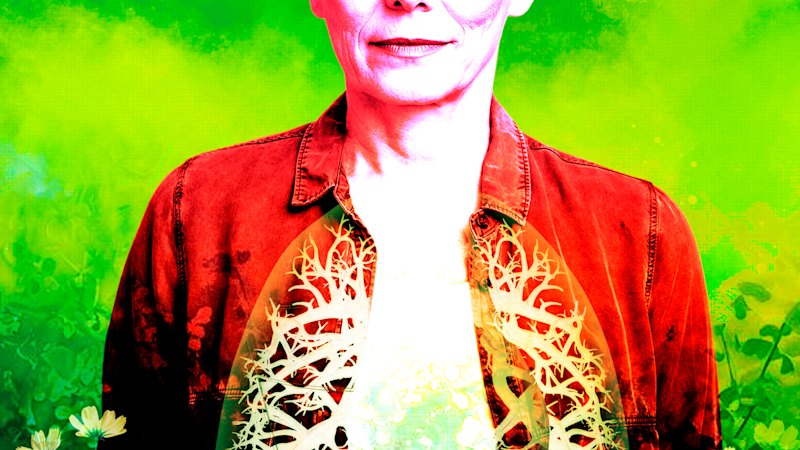
More than 60 people have been diagnosed with early-stage lung cancer before they developed a single symptom via a new screening program, paving the way for early intervention for the world's deadliest cancer.
They were among more than 30,000 people who underwent free low-dose CT scans during the first year of NSW's National Lung Cancer Screening Program rollout, as the booming illicit tobacco trade threatens to undo a century of work to reduce smoking rates.
Lung cancer screening is Australia's only risk-based screening program, unlike the bowel and breast cancer programs, which are age-based.
Monique Westermann
'There is a great deal of optimism about this program,' said Professor Tracey O'Brien, NSW chief cancer officer and Cancer Institute NSW chief executive.
People aged between 50 and 70 are eligible for screening if they are asymptomatic, currently smoke or have quit smoking in the past 10 years, or have a history of tobacco cigarette smoking of at least 30 pack-years (for example, one pack per day for 30 years or two packs per day for 15 years).
Advertisement
In Australia, most lung cancers are not diagnosed until they are at an advanced stage – spreading beyond the lungs or metastasised to other parts of the body – when treatment options are limited.
The five-year survival rates for stage 3 and stage 4 lung cancer are 17 and 3 per cent respectively.
'But for early-stage lung cancer, the chance of survival improved dramatically,' O'Brien said.
The five-year survival rate for stage 1 lung cancer is 68 per cent.
Smoking tobacco is linked to about 90 per cent of lung cancers diagnosed in men and 65 per cent of those diagnosed in women.
Advertisement
'The challenge is making sure more people who are high risk have the opportunity to be diagnosed at that early stage, and that is exactly what this is designed to do,' O'Brien said of the Commonwealth government screening program supported by Cancer Institute NSW. Related Article Cancer Revealed: The radical overhaul of cancer screening to detect most at risk
Participant Colleen decided to undergo screening as part of a health check-up in preparation for a holiday to Europe with her husband.
Colleen was on the cusp of 70 when she underwent screening in October. Two months earlier, she had quit smoking – a habit she picked up more than 50 years earlier as a teenager.
But the CT scan showed a suspicious shadow on her right lung, which further scans and a biopsy confirmed was a 12 millimetre tumour. She was diagnosed with stage 1B lung cancer.
Advertisement
'I could not have been more shocked. I thought they had mistaken me for somebody else,' Colleen said.
'If you have cancer growing inside you, you expect to be somehow aware of it. But there was no cough or pain. Nothing.'
Colleen underwent the first course of chemotherapy two days before a horrible Christmas. She quit smoking before her surgery in March to remove the middle and lower lobes of her right lung as well as monthly infusions of the immunotherapy nivolumab (Opdivo).
'But I consider myself one of the fortunate ones,' Colleen said. Related Article Dementia Almost 50 per cent of dementia cases could be prevented. This new advice tells us how
Advertisement
'If I had not had lung cancer screening, I have no doubt that it would have spread, and I would have been in a much more difficult position. In terms of treatment options, there may have been none.'
Colleen requested her surname not be published due to the stigma of her diagnosis as a smoker.
'The minute you say you have lung cancer, you feel tarred,' she said. 'That people will point the finger when you are at your lowest ebb is awful.'
Colleen has encouraged other smokers to get screened, but she said the response is often 'I don't want to know.'
'But I don't want to die a long, painful death. No, thanks,' she said.
Advertisement
More than 400 people screened in NSW had abnormalities in their lungs deemed high or very high risk and were referred for further testing to confirm or rule out lung cancer. Lung cancer in Australia Almost 9000 people died of lung cancer in 2025 - far outstripping the second most deadly cancer, colorectal (5235 deaths)
More than 15,000 new lung cancers were diagnosed in 2025
Lung cancer kills 2600 people each year in NSW
The 5-year survival rates by stage at diagnosis in 2011-2016 were: Stage 1, 68 per cent
Stage 2, 32 per cent
Stage 3, 17 per cent
Stage 4, 3.2 per cent
Source: Cancer Australia, Cancer Insitute NSW
Depending on their results, participants are connected to care and support, including routine screening, follow-up CT scans and referrals to specialist care.
'Every one of the people having a scan is giving themselves the best chance of survival,' O'Brien said.
The program, which began in July 2025, is Australia's first new national cancer screening program in almost 20 years.
Advertisement
O'Brien recommended at-risk people talk to their GP to find out if they were eligible.
People who have never smoked can also be at risk of lung cancer, and O'Brien urged anyone with symptoms to see their doctor urgently. Symptoms include a persistent new cough, coughing up blood, and shortness of breath.
Start the day with a summary of the day's most important and interesting stories, analysis and insights. Sign up for our Morning Edition newsletter.
From our partners
A note on cookies
Newshunt uses essential cookies to keep you signed in and to remember your language and country, so the site works the way you expect. With your permission, we'd also like to use analytics cookies to understand how people use Newshunt and improve it over time.
Accepting only affects analytics. To learn more, view our Privacy Policy or Terms & Conditions.
(0)Comments