


NC Is First In Flight And First To Start Voting – Trump Or No Trump
Category: Politics
Share
Archive
Like
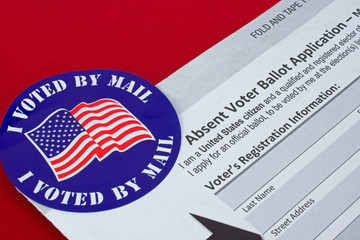
The national court battle over changing mail-in ballot rules is still going on, but North Carolina just made things a lot more complicated because North Carolina's elections boards are the first in the country to send out absentee ballots, and Guilford County and other counties across the state just began doing so.
That's because state law requires absentee ballots to be available 60 days before a statewide general election in an even-numbered year. So, if the new mail-voting restrictions ultimately take effect, some North Carolina voters may already have cast and returned their absentee ballots before the rules change.
The US Postal Service rule implementing President Donald Trump's executive order would make USPS a gatekeeper for absentee voting in federal elections. States would have to give the Postal Service lists of approved mail-ballot voters, and ballot envelopes would need standardized markings and unique tracking barcodes. USPS could refuse to process election mail that doesn't comply with those requirements.
Trump and other critics of voting by mail say it makes it easier for non-citizens to cast fraudulent votes.
The president, who often votes by mail himself, has been seeking ways to eliminate voting by mail or greatly reduce it. Democrats have been more likely than Republicans to vote by mail in recent elections. Reuters reported that 37 percent of Democrats voted by mail in 2024 compared with 24 percent of Republicans, citing data from the MIT Election Data + Science Lab.
So restrictions that make mail voting harder or cause more mail ballots to be rejected could, at least in theory, affect Democratic voters more.
Regardless, North Carolina just became the first state that's already off and running.
On Friday, Sept. 4, North Carolina's 100 county boards of elections began sending absentee ballots to voters who had requested them. That made North Carolina the first state in the country to begin voting in the 2026 midterm general election.
Some ballots were placed in the mail while military and overseas voters could receive theirs electronically. Those voters can now begin marking and returning actual ballots that will help determine control of Congress as well as the winners of state and local races.
The timing could hardly be more unusual.
On the same day that North Carolinians began voting, a federal judge extended an order blocking the US Postal Service from implementing new mandatory restrictions on how mail-in ballots are handled.
In other words, ballots are already moving through the mail while the courts are still deciding whether the federal government has the authority to change the rules governing their delivery.
Trump signed an executive order in March directing the Postal Service to establish a new system for mail-in ballots. Under the final rule developed by the Postal Service, states would provide USPS with lists of voters authorized to receive absentee ballots.
The new system also calls for ballot envelopes to meet federal design standards and carry unique barcodes that could be checked by the Postal Service. Ballots addressed to voters who didn't appear on the state-provided lists could be withheld from delivery.
Guilford County Board of Elections Director Charlie Collicutt told the Rhino Times this week that the potential last-minute changes have caused some consternation but that he has just been taking direction from the State Board.
He added that he's not at all sure what the logistics would be if the last-minute rule were implemented.
Collicutt spoke of the complexities of coordinating with the post office over who should and shouldn't get ballots sent to them. He said the complications are dramatically higher given the closeness of the election and added that one concern is that, if the new method is implemented, people who should legally receive ballots might not get them because of an error in the database or mistakes that could be made.
He also said one thing that keeps incidents of voter fraud so minuscule is that the penalty is harsh while the potential benefit is minor.
The Trump administration has argued that the Postal Service has the legal authority to adopt the requirements and that the changes would improve the security and orderly administration of elections.
The states and voting-rights organizations challenging the plan argue that the president and the Postal Service are attempting to take control of election procedures that the Constitution leaves primarily to the states and Congress.
They also argue that imposing an entirely new system just weeks before an election would create confusion and could prevent eligible voters from receiving ballots.
US District Judge Indira Talwani initially blocked major portions of Trump's order in June.
The US Supreme Court voided that injunction in August, finding that the challenge had been brought prematurely because the Postal Service hadn't yet issued its final rule. The justices didn't decide whether the proposed restrictions themselves were legal.
Once the Postal Service released its final plan, the challengers returned to court.
Talwani issued another temporary order on Thursday, Aug. 27, blocking implementation of core parts of the plan. On Friday, Sept. 4, she replaced that temporary order with a preliminary injunction preventing the Postal Service from making the new system mandatory for the November election.
The injunction allows states to participate voluntarily. As of Friday, no state had announced plans to do so.
The Trump administration appealed and on Sunday, Sept. 6, returned to the US Supreme Court, asking the justices to allow the Postal Service rule to take effect while the litigation continues.
While that legal fight rages on, North Carolina ballots are no longer sitting in a warehouse waiting for the rules to be settled.
Instead, they're on their way to voters.
The NC State Board of Elections reported that 46,653 absentee ballots had been requested statewide through Thursday, Sept. 3. That was down from 60,943 requests at the comparable point before the 2022 midterm election.
In Guilford County, 1,957 absentee ballots had been requested through Sept. 3. Those requests came from 937 registered Democrats, 688 unaffiliated voters, 330 Republicans and two Libertarians.
At the comparable point in the 2022 midterm election, Guilford County had received 3,117 absentee ballot requests.
That means Guilford's initial request total was about 37 percent lower than it was four years ago, though it's way too early to draw conclusions about overall turnout.
Voters can continue requesting absentee ballots through October. Most North Carolina voters cast their ballots during early voting or on Election Day.
Any registered North Carolina voter may request an absentee ballot without providing a reason.
The deadline for most voters to request one is 5 p.m. on Tuesday, Oct. 20. Election officials recommend making the request well before the deadline to allow time for the ballot to be mailed to the voter, completed and returned.
Completed absentee ballots must be received by the voter's county board of elections no later than 7:30 p.m. on Election Day, Tuesday, Nov. 3. A postmark by Election Day isn't sufficient.
North Carolina absentee voters must mark their ballots in the presence of either two witnesses or one notary. The voter must also include a readable photocopy of an acceptable photo ID or complete the photo ID exception form included with the ballot.
The Postal Service says that returning a North Carolina absentee ballot by mail now requires $1.98 in postage, the equivalent of three Forever stamps.
Because Monday, Sept. 7, is Labor Day and there will be no regular mail delivery, some Guilford County voters whose ballots were mailed Friday may not receive them until Tuesday or later.
The Guilford County Board of Elections is scheduled to hold its first meeting to review absentee ballot applications on Tuesday, Sept. 29.
Voters who request an absentee ballot but don't return it may still vote in person during early voting or on Election Day.
A note on cookies
Newshunt uses essential cookies to keep you signed in and to remember your language and country, so the site works the way you expect. With your permission, we'd also like to use analytics cookies to understand how people use Newshunt and improve it over time.
Accepting only affects analytics. To learn more, view our Privacy Policy or Terms & Conditions.
(0)Comments