


5 Facts About Mount Anak Krakatau, the Volcano Causing Chaos for Around 3,000 Flights in Indonesia
Category: Tourism
Share
Archive
Like
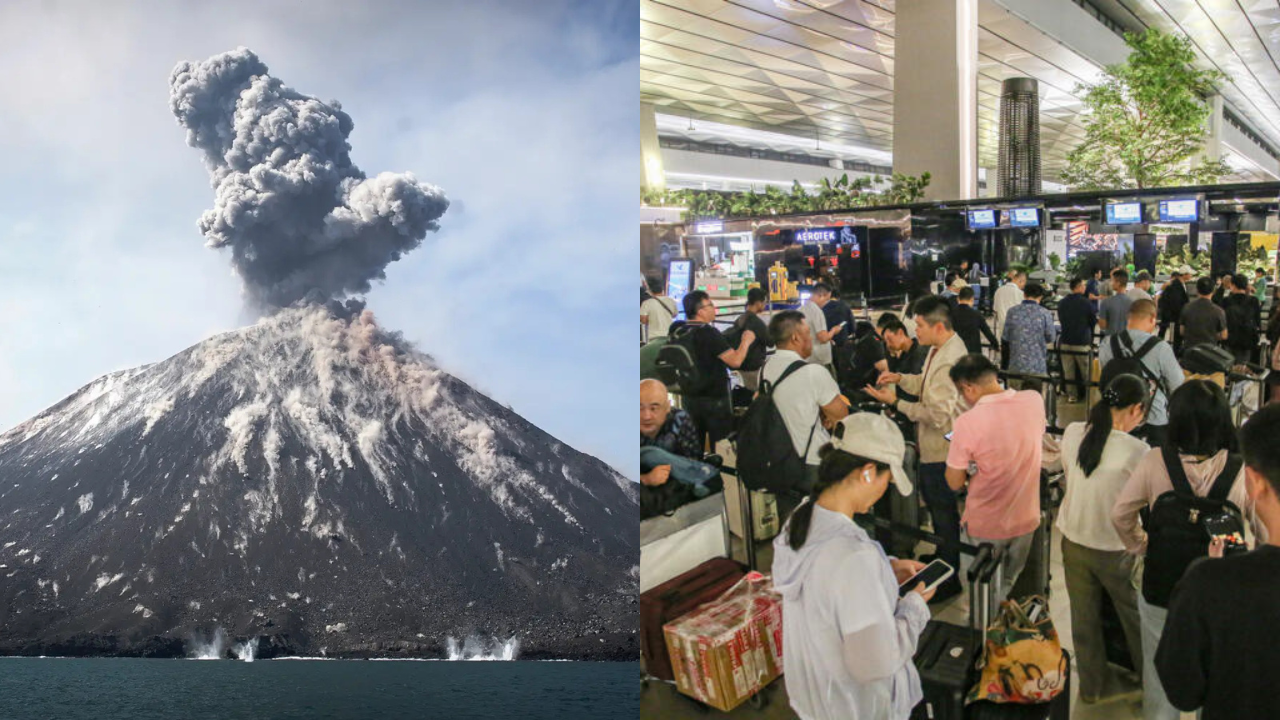
On Saturday (5 September), Indonesia's Mount Anak Krakatau erupted, spewing lava and volcanic ash high into the atmosphere.
Following the eruption, several airports across the country suspended operations over the weekend. Nearly 3,000 flights were disrupted, leaving more than 300,000 passengers stranded.
Image Credit: The Straits Times
Travellers aren't the only ones affected by the eruption. Several schools in Indonesia have also cancelled activities after students and residents reported eye irritation caused by volcanic ash. Additionally, many fishermen have cancelled their fishing trips due to safety concerns.
Here are some of the key facts you need to know about Mount Anak Krakatau: 1. The volcano was formed after its parent mountain disappeared
Image Credit: History Hit
You might have noticed that the name Mount Anak Krakatau contains the word anak , which means "child" in Malay and Indonesian. So, does that mean the mountain has a parent?
The answer is yes.
Mount Anak Krakatau was formed after its parent volcano, Krakatau, sank into the Sunda Strait following a devastating two-day eruption in 1883 that is considered one of the largest volcanic eruptions in recorded history. 2. Its parent volcano's eruption is among the deadliest in history
Image Credit: Volcano Discovery
Mount Krakatau erupted between 26 and 27 August 1883, producing what is widely regarded as the loudest sound ever recorded.
According to NASA, the explosion was heard more than 4,000km away, reaching locations as far as Rodrigues Island in Mauritius and parts of Australia.
The eruption is also considered one of the deadliest volcanic disasters in history. Approximately 36,000 people were killed after a series of tsunamis struck coastal areas across Sumatra and Java, with waves reportedly reaching heights of up to 30 metres. 3. Mount Anak Krakatau emerged less than 80 years ago
Years after the catastrophic eruption and disappearance of Krakatau, Mount Anak Krakatau emerged from the Sunda Strait, which separates the islands of Sumatra and Java.
According to NASA, the young volcano formed along the 3,000km-long Sunda Arc, where the Australian Plate subducts beneath the Eurasian Plate.
The region is also known for frequent earthquakes and volcanic activity, making it one of the most geologically active zones in the world. 4. The volcano has remained active since 1927
According to the Smithsonian Institution, the area where Mount Anak Krakatau now stands has experienced frequent volcanic activity since 1927.
The volcano has been at Alert Level 3, the second-highest warning level, since 2 July. On 7 July, an eruption sent an ash column approximately 100 metres into the sky. 5. A large portion of the volcano collapsed in 2018
Following a major eruption in 2018, a large portion of Mount Anak Krakatau collapsed, causing the volcano to lose about two-thirds of its height, from 338 metres to 110 metres, as well as roughly three-quarters of its mass.
The 2018 eruption also triggered a tsunami that killed more than 400 people and injured thousands across the coastlines of Java and Sumatra. Indonesia's main airport reopens after volcanic disruption
Days after multiple airport closures across the country, Indonesia has reopened its main aviation hub, Soekarno-Hatta International Airport, today.
Four other airports have also resumed operations, including Halim Perdanakusuma Airport and Husein Sastranegara Airport in Bandung.
Image Credit: NST
While the reopening of airports is likely to bring relief to stranded travellers, airlines now face the challenge of rebooking and transporting thousands of passengers to their intended destinations.
Featured Image Credit: FMT, France24
A note on cookies
Newshunt uses essential cookies to keep you signed in and to remember your language and country, so the site works the way you expect. With your permission, we'd also like to use analytics cookies to understand how people use Newshunt and improve it over time.
Accepting only affects analytics. To learn more, view our Privacy Policy or Terms & Conditions.
(0)Comments