


HarmonyOS 7 Beta Opens to 50 Devices: Agentic AI Arrives, App Check Required
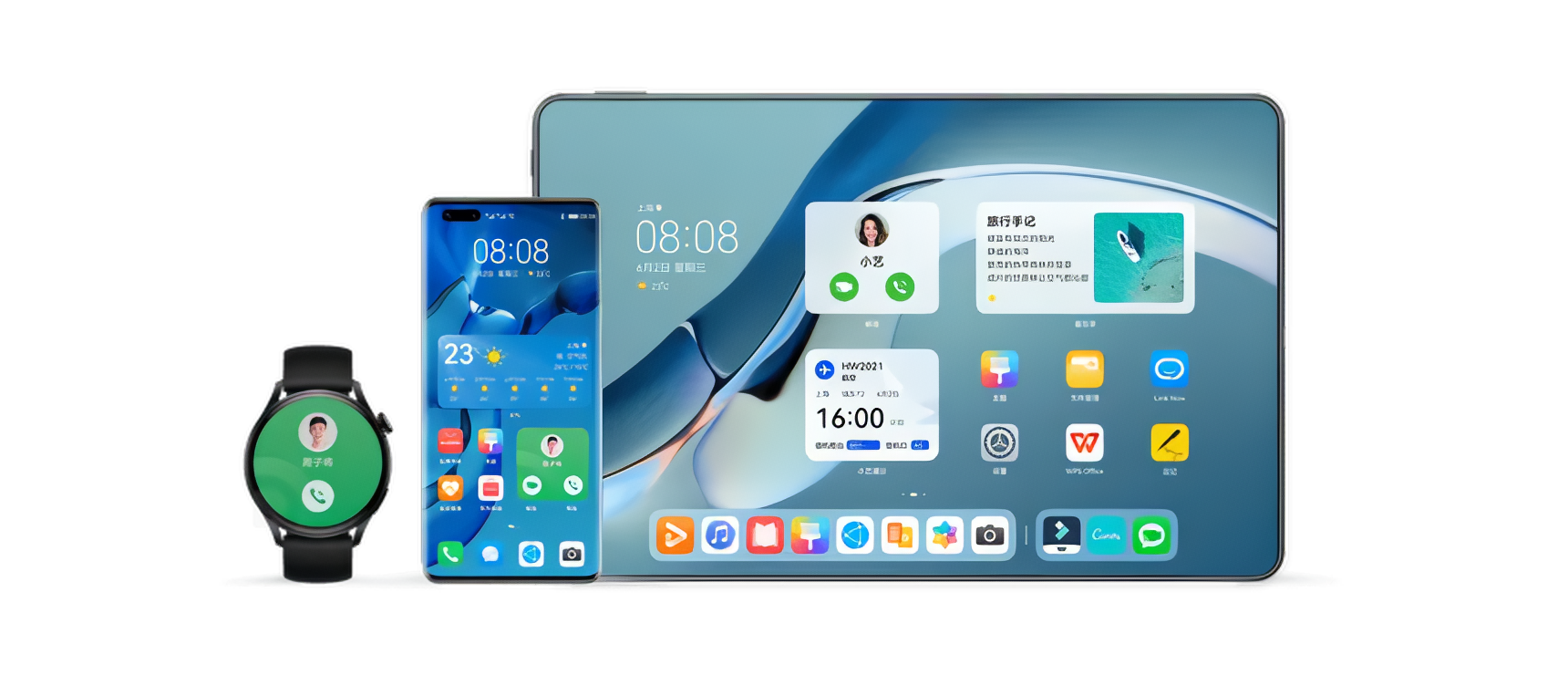
Category: SciTech
Share
Archive
Like
harmonyos.com
Huawei
The announcement came at the all-scenario launch event in Guangzhou — the same stage where Huawei unveiled the Mate XT 2, its second-generation tri-fold flagship — and it sets up an unusually visible public test of whether HarmonyOS has matured enough to support a large-scale rollout without friction. The beta build is version 7.0.0.105 SP10, delivered over the air.
Five Features That Distinguish HarmonyOS 7 From Its Predecessor
HarmonyOS 7 is the third major release of the pure HarmonyOS NEXT series — the architecture that stripped out all Android AOSP code and replaced it with Huawei's in-house HongMeng microkernel, first shipped commercially in late 2024. Within that unchanged foundational constraint, HarmonyOS 7 adds five substantive capabilities that prior versions did not have.
Agentic AI via Celia 2.0 and Agent Framework 2.0. The platform's biggest architectural change is not visual — it is how the OS handles user intent. Celia, Huawei's AI assistant, has been redesigned as a system-level agent rather than a voice command interface. The upgraded HarmonyOS Agent Framework 2.0
Running underneath Celia is the 30-billion-parameter edge version of openPangu 2.0, Huawei's large language model family. The 30B model uses a Mixture-of-Experts (MoE) architecture — only a subset of parameters is active during any given inference pass — which makes running a model of that total size feasible on the Da Vinci NPU in Kirin chips.
Read more:
Spatial UI and liquid visuals. HarmonyOS 7 introduces a
Ultraspace Storage (deduplication and compression). This is the feature most likely to produce an immediate, tangible result for beta testers on day one. Ultraspace Storage — also described in Huawei's Chinese materials as 超空间存储技术 (Super Space Storage Technology) —
Cross-device continuity overhaul. HarmonyOS 7 redesigns how paired devices interact across the HarmonyOS ecosystem. Under the updated system, a user can interact with a locked smartphone directly from a connected MatePad tablet or HarmonyOS PC —
AI Anti-Fraud. A dedicated on-device AI Anti-Fraud platform
The Performance Engine: Ark Scheduling and 15% Efficiency Gain
Underlying all five visible features is a system-level change: HarmonyOS 7 is the first version to embed a performance large language model — trained on 2 billion data samples — directly into the Ark Engine, the OS's core scheduling system. The result is a scheduler that learns per-user usage patterns and pre-allocates resources accordingly — Huawei describes this as a "thousand people, thousand faces" optimization, meaning the OS tuning adapts to individual behavior over time rather than applying a fixed scheduling policy to all users.
Huawei states a
The Ark Engine's model-based scheduler is what makes the agent architecture operationally viable at scale. Agentic tasks — multi-step, multi-app orchestrations — impose irregular and hard-to-predict workload bursts on the CPU, NPU, and memory bus. A reactive scheduler would produce noticeable latency spikes; the predictive model allows the system to pre-stage resources before Celia begins executing a task.
What the App Count Actually Means for Beta Users
HarmonyOS 7 operates on the same pure microkernel that shipped with HarmonyOS 5 (NEXT) in late 2024. The absence of an Android compatibility layer is not new. What is new is that the ecosystem has had almost two years to close the gap.
As of the HarmonyOS Ecosystem Conference 2026 (held August 28–29 in Shenzhen), Huawei reported that
For a beta tester in China, those numbers mean that WeChat, major Baidu apps, banking apps from the major state banks, mapping services, and productivity staples are overwhelmingly available natively. The gap that still exists is in international and niche-category apps — international social platforms, Western productivity software, and specialized professional tools that have not been rebuilt for ArkTS. A reader who relies on international services as part of their daily workflow should verify specific app availability before enrolling.
Celia 2.0's Expanded Permissions and the Data-Access Context
Agentic AI requires deeper OS permissions than a voice assistant. To orchestrate multi-step tasks across apps — generating training schedules, sending files from a laptop, managing calendar events, summarizing documents — Celia 2.0 needs read and write access to calendar, contacts, files, messages, and app data. That access profile is qualitatively more expansive than a traditional assistant that answers questions.
HarmonyOS 7 runs on hardware and software built and operated by Huawei, a company headquartered in Shenzhen, China.
The implication for HarmonyOS 7 specifically: the data types that Celia 2.0's agentic framework accesses — documents processed for summarization, calendar entries used for task planning, cross-device file transfers — represent a more comprehensive data profile than previous versions created through passive voice commands. For a user in mainland China whose primary workflow lives within the HarmonyOS ecosystem, this is the existing legal reality of operating on any domestically developed platform. For any reader outside mainland China who may encounter HarmonyOS 7 hardware through subsidiary offices, travel devices, or supply chain procurement, the same structural framework applies.
Read more:
Devices Eligible for the HarmonyOS 7 Open Beta
The initial open beta covers Huawei's premium lines across form factors. The
The Mate XT 2 — unveiled at the same Guangzhou event and
How to Enroll in the HarmonyOS 7 Open Beta
Enrollment is available now for compatible mainland China-spec devices through the system UI. Open the My Huawei (我的华为) app, tap the Upgrade Early Access (升级尝鲜) banner on the home screen, select Open Beta Registration, choose your enrolled device model, and accept the beta agreement. Once approved, the OTA package is available under Settings → System & Updates → Software Update.
Before enrolling: back up personal data to Huawei Cloud, verify that your most critical daily apps have updated native HarmonyOS builds, and ensure the device has at least 40% charge and sufficient free space to receive the update. Beta software may contain bugs; the stable release is expected this fall.
Frequently Asked Questions
Is HarmonyOS 7 compatible with Android apps?
No. HarmonyOS 7 is built on the HongMeng microkernel — a pure architecture with no Android AOSP code and no Linux foundation. Every app must be built natively for the platform using ArkTS.
What does "agentic AI" mean in HarmonyOS 7, and how is it different from a voice assistant?
A voice assistant responds to one command at a time — it hears a request, fetches or executes a single action, and waits for the next input. An agentic AI receives a goal and plans and executes multiple steps autonomously, calling different tools, apps, or data sources as needed without user input between steps.
How does Ultraspace Storage actually free up space, and does the recovered storage stay free?
Ultraspace Storage uses data deduplication and compression — not cache-clearing. Deduplication identifies and removes exact duplicate copies of data blocks stored in the system; compression reduces the physical size of stored files using lossless algorithms. Both operations produce permanent space recovery that does not refill over time the way cleared cache does. Huawei's stated
Does enrolling in the HarmonyOS 7 beta mean my device is subject to Chinese government data access?
China's National Intelligence Law applies to Huawei as a Chinese company regardless of which software version runs on its devices. Enrolling in the HarmonyOS 7 beta does not change that legal framework — it was already present on HarmonyOS 6. What HarmonyOS 7 does change is the scope of data that Celia 2.0's agentic architecture accesses: document summaries, task-planning calendar data, cross-device file transfers, and other multi-step task artifacts are now part of the platform's data profile in ways that a passive assistant did not create.
A note on cookies
Newshunt uses essential cookies to keep you signed in and to remember your language and country, so the site works the way you expect. With your permission, we'd also like to use analytics cookies to understand how people use Newshunt and improve it over time.
Accepting only affects analytics. To learn more, view our Privacy Policy or Terms & Conditions.
(0)Comments