


Mohamed Lahna Just Swam 28.5 Miles, Biked 3,000 Miles, and Ran Through the Mojave Desert to Become the First Prosthetic Athlete to Finish a Cross-Country Triathlon
Category: Sports
Share
Archive
Like
We'll keep you in the know on the hottest new gear, whiskey releases, TV shows and movies, and deals everyone's talking about. select all
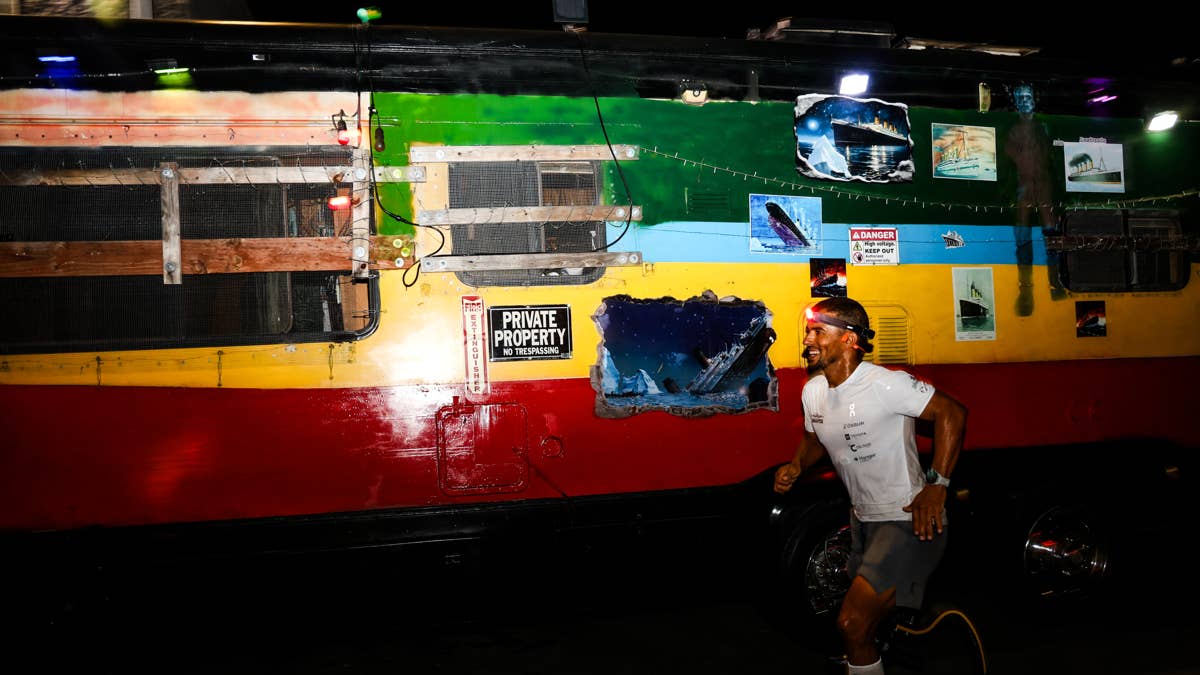
Just a little over a month ago, Paralympian and Celsius athlete Mohamed Lahna crossed the finish line at Venice Beach after completing a grueling, self-made, 47-day cross-country triathlon. Before reaching the Pacific, he had already swum 28.5 miles around Manhattan Island and pedaled roughly 3,000 miles across 16 states. All that remained was a brutal 300-mile run from Las Vegas to Los Angeles on a blade prosthesis, including a punishing stretch through the Mojave Desert. When Lahna finally hit the sand, the future site of the LA28 Paralympic triathlon, his mind was already fixed on his next target. Most athletes who finish a 3,300-mile ultra take months off to recover, but Lahna started pivoting immediately back into elite sprint-distance speed for the World Championships in Spain.
'LA 2028 is just around the corner and in order to qualify, I need to stay atop the competition, making sure I collect valuable points on the racing circuit while competing at the World Championship Finals in Spain,' Lahna says. 'Switching gears from endurance pace to sprint distance paratriathlon in just a few weeks is not typical or recommended, but I have no choice but to make the most of the time I have.'
Want the latest fitness advice and workouts to tackle any adventure? Sign up for our Blueprint newsletter.
Ryan Sosna Bowd
Transitioning from a 3,000-mile ride straight into hundreds of miles running through the desert is a massive test for any human body, let alone an adaptive athlete. While non-disabled runners deal with general muscle strain, running hundreds of miles on a prosthetic limb introduces a completely different level of physical wear. Every single stride creates intense mechanical leverage against the residual limb, concentrating massive impact forces onto a tiny area.
'I knew this cross-country triathlon would take its toll on my body and I had just accepted it as a given,' Lahna says. 'I prepared for my skin to take a beating during the run, but the bike was also tough on my shoulder, hands, and lower back after 3000 miles of pedaling with one leg fighting intense head and cross winds. I never realized how much I relied on my upper body in cycling. Of course, my left leg doing all the pushing and pulling on the pedal was fatigued every day. It's not easy fighting through the pain while also trying to stay focused on my road.'
Managing Mechanical Breakdowns Mid-Stride
The brutal desert heat didn't just attack his body…it literally melted his gear mid-stride. Asphalt temperatures became extremely hot, causing the specialized adhesive bonding his carbon fiber running blade to its mounting block to fail. The inner plastic liner of his socket warped from the heat, losing its custom fit and shifting against his raw, damaged skin. Instead of focusing on pace, Lahna had to manage mechanical breakdowns and friction every step.
'My affected right leg has been through friction before and I've experienced skin breakdown and boils in training, but never to this degree,' he says. 'There was no downtime to heal, so it was just a matter of patching what I could to get through the day and make it to the next. I did my best to apply anti-friction and numbing creams, but they literally melted within a few minutes. It became a routine where I would just run two miles at a time and stop to reapply creams so I could get to the next checkpoint. Mentally, I tried to just focus on those two miles at a time.'
Dialing in his nutrition played an equally vital role in keeping his body moving across three distinct disciplines. For his cold swim around Manhattan, he relied on warm fluids every 30 minutes to maintain his core temperature. On the bike, he gave himself complete freedom to eat as much high-quality food as possible to replace the massive calories he was burning, pairing electrolytes, carbs, and protein with sips of Celsius to stay alert.
'During the run, my stomach does not tolerate food very well because I tend to run with a lot of vertical travel to clear my prosthesis, and that bouncing usually leads to digestion issues,' he recalls. 'I woke up to have an early breakfast so I could give my body time to digest properly. Then during the run, I only consumed gels, electrolytes, and water with more sips of Celsius to stay energized.'
Men's Journal Newsletters
We'll keep you in the know on the hottest new gear, whiskey releases, TV shows and movies, and deals everyone's talking about. select all
Men's Journal: Breaking News
Men's Journal Gear Lab
Recommended by Men's Journal
Men's Journal Daily
Whiskey Wednesday
Men's Journal Blueprint (Fitness)
Email Address Sign up
or sign in with
Google
Facebook
Microsoft
Apple By signing up I agree to the Terms of Use and acknowledge that I have read the Privacy Policy . You may unsubscribe from email communication at anytime.
Ryan Sosna Bowd
Unfinished Business at LA28
Lahna's resilience comes from a lifetime of overcoming steep odds. Born in Morocco without his right femur, he didn't receive his first functional prosthesis until age 20. Just five years later, he rode his first bicycle, and two years after that, he finished his first marathon. Since then, he has captured multiple World Triathlon Para Series titles and became the only adaptive athlete to finish the brutal Norseman Xtreme Triathlon in Norway. Now at age 44, the two-time Paralympic medalist is preparing for one final push on the world stage.
'When I went into the Paris 2024 Paralympics, I was mentally preparing to finish my career there, but with LA 2028 being on home turf and not getting the gold in Paris, I felt like I had unfinished business,' Lahna says. 'It's not easy training another four years, especially being over 40 now, so LA is definitely my last go.'
Yet his 3,300-mile journey across America was about far more than setting up his next Paralympic run. Lahna used the platform to raise funds and awareness for the charitable organizations that shaped his life, including Save the Children and the Challenged Athletes Foundation, turning every mile of desert heat into a way to give back to the next generation.
'I felt compelled to make the best of my final athletic years and give back in a big way to the charities who got me where I am today,' Lahna says. 'Save the Children was there for me as a child. With no schools geared for children with physical disabilities back then, Save the Children funded a school that created a safe space for us to learn and grow. Society didn't have expectations for us to amount to anything, let alone get an education and a job. I am so grateful that I was given an opportunity to learn, and that my parents pushed me to do more than what was expected.'
About the author Madison Freeman
Senior Health & Fitness Editor, Men's Journal
Madison Freeman is a Senior Editor at Men's Journal, where she specializes in editing and writing stories that pertain to all things health and fitness. In addition to Men's Journal, you can find her work in Prevention, Clean Plates, Garage Gym Reviews, and Naked Nutrition.
A note on cookies
Newshunt uses essential cookies to keep you signed in and to remember your language and country, so the site works the way you expect. With your permission, we'd also like to use analytics cookies to understand how people use Newshunt and improve it over time.
Accepting only affects analytics. To learn more, view our Privacy Policy or Terms & Conditions.
(0)Comments