


India, China military commanders hold rare border talks in Arunachal sector
Category: Politics
Share
Archive
Like
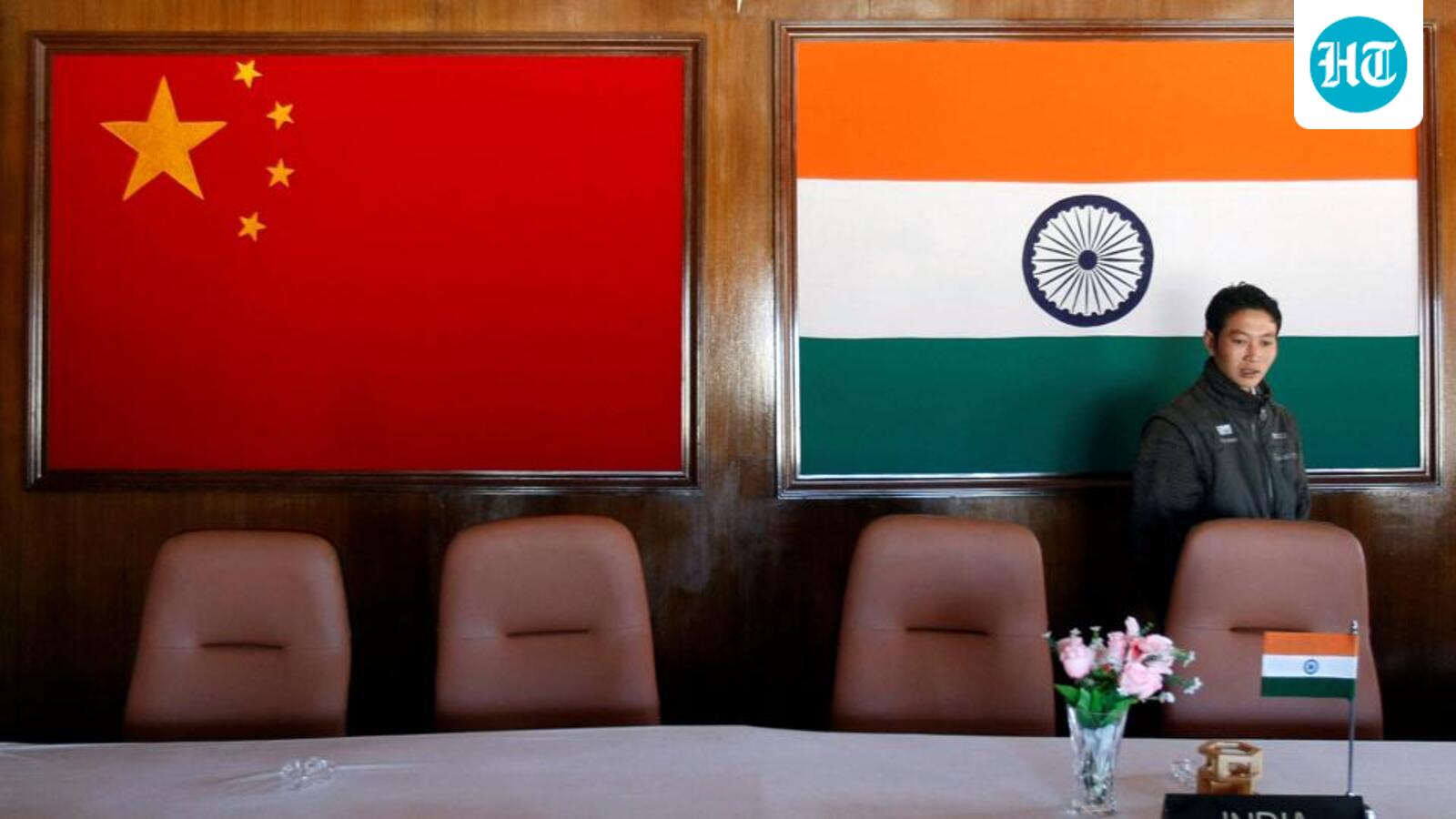
Top Indian and Chinese military commanders met for the first time in the Arunachal Pradesh sector during two sessions held on both sides of the border this week as a follow-up to recent meetings of the Special Representatives and a border mechanism, the external affairs ministry said on Tuesday.
The first session of the flag meeting between the senior military commanders was held on the Indian side on Sunday and the second session on the Chinese side on Monday, external affairs ministry spokesperson Randhir Jaiswal told a regular media briefing. He did not go into the details of the discussions between the military officials.
The military talks focused on issues along the Line of Actual Control (LAC) in the eastern sector, including maintaining peace and tranquillity along the frontier, people familiar with the matter said. Lt Gen Girish Kalia, who heads the Dimapur-based 3 Corps, led the Indian side. The Indian army has not commented on the talks.
The 24th round of talks between the Special Representatives – India's National Security Adviser Ajit Doval and Chinese foreign minister Wang Yi – in New Delhi on August 19 had resulted in 10 points of consensus, including creating mechanisms for talks between military commanders in the eastern and middle sectors of the LAC.
'Pursuant to the understandings reached between the Special Representatives of India and China in August 2025 and August 2026 and subsequent discussions at the Working Mechanism for Consultation and Coordination (WMCC), meetings of which were held in Beijing and New Delhi in May and August 2026 respectively, the first senior highest military commander-level flag meeting was held at Wacha on the Indian side in Arunachal Pradesh on September 6 and in Damai on the Chinese side on September 7,' Jaiswal said at the media briefing.
He noted that a similar mechanism for talks between military commanders already exists in the western sector, which includes Ladakh.
A military face-off between India and China in the western sector, which began in April-May 2020 and dragged on for more than four years, had taken bilateral ties to their lowest point in six decades. Since the two sides reached an understanding in October 2024 on ending the standoff, they have taken a number of steps to normalise the relationship and put in place confidence-building measures along the LAC.
It is not usual for Indian and Chinese military commanders to hold talks on both sides of the border, and discussions in the western sector are usually held alternatively on either side of the LAC. People familiar with the matter said the talks in the Arunachal Pradesh sector were held over two days as there were several issues to be discussed.
This week's meeting was the first since tensions erupted between the Indian Army and the People's Liberation Army (PLA) at Taksing, a remote area of Arunachal Pradesh's Upper Subansiri district, in July and August. The Indian side at the time that the two sides had agreed to use diplomatic and military mechanisms to 'avoid misunderstanding and miscalculation' along the border.
New Delhi has also maintained that the state of the border will determine the overall course of the relationship.
Rezaul Hasan Laskar is Foreign Editor with the Hindustan Times, which he joined in 2015. He began as a journalist in his hometown of Shillong in northeast India and has worked in newspapers and wire services over the years. He moved to New Delhi in 1997 and initially focused on defence, national security, Jammu and Kashmir and the northeast, while also working of foreign policy and international relations.
He has been part of the media delegation accompanying PMs on foreign visits and has reported from destinations ranging from Tibet to Ukraine. Between 2007 and 2013, he was the Press Trust of India correspondent in Pakistan, one of only two Indian journalists allowed to report from the country. He extensively covered Pakistan's domestic politics and the life of the common people, as well as the fallout of the 2008 Mumbai attacks on India-Pakistan relations and the subsequent trial in Pakistan of the suspects involved in the attack. As part of his reportage in Pakistan, he travelled the breadth of the country, from the Swat Valley to Balochistan.
Reza's first gig in journalism was writing a weekly music column, and music – especially classic rock – remains a keen interest. He is also a movie buff and a keen photographer.Read More
A note on cookies
Newshunt uses essential cookies to keep you signed in and to remember your language and country, so the site works the way you expect. With your permission, we'd also like to use analytics cookies to understand how people use Newshunt and improve it over time.
Accepting only affects analytics. To learn more, view our Privacy Policy or Terms & Conditions.
(0)Comments