


23 Ways to Unplug and Prioritize Paper Over Screens
Category: Entertainment
Share
Archive
Like
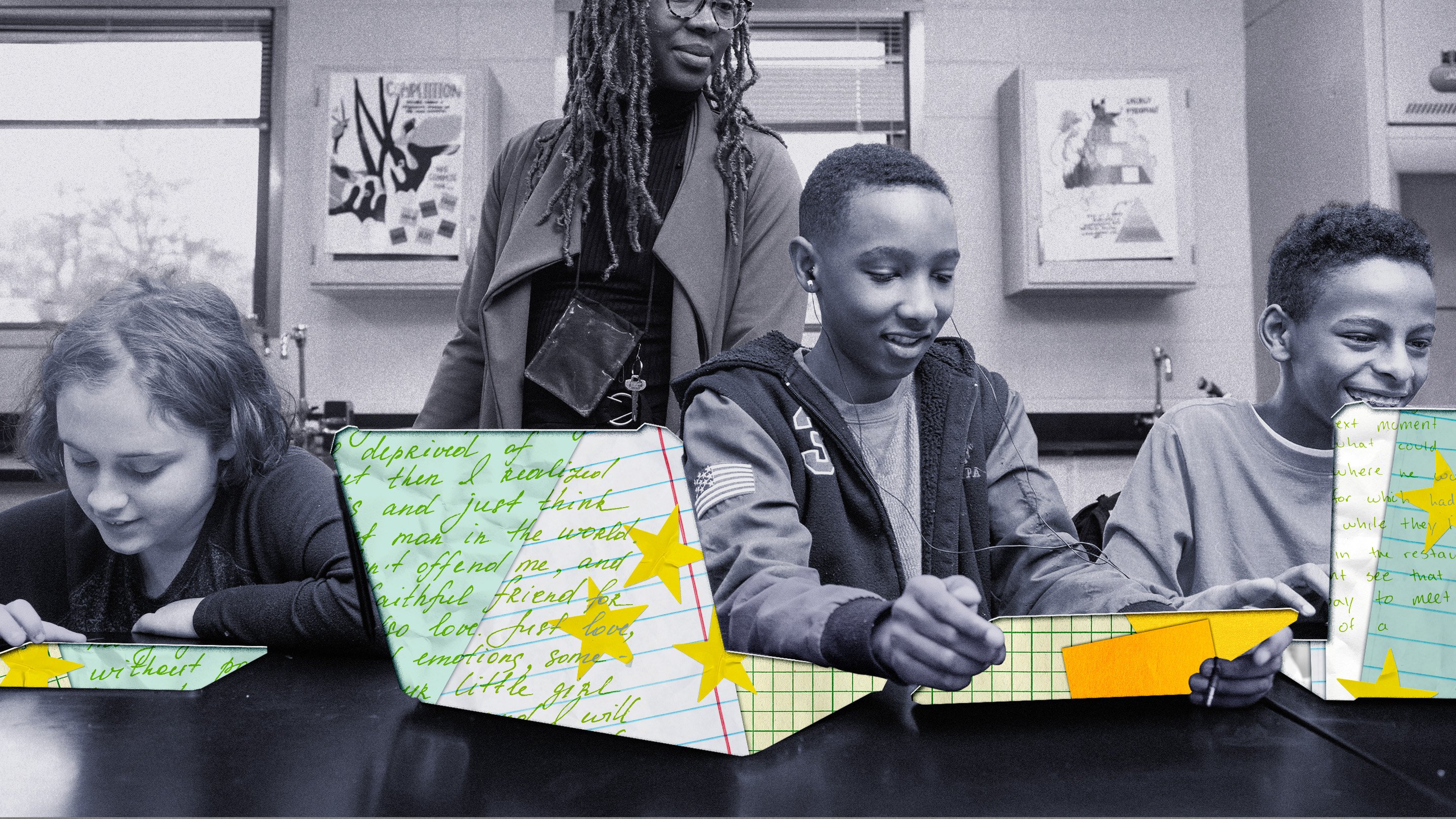
High school chemistry teacher Marcie Samayoa kept running into the same problem last school year: During class, her students were watching YouTube, scrolling Instagram, and prompting AI. Tired of competing with the distractions, she began to cut back on Chromebook use and lean more on paper-based activities.
'I had to reformat everything,' Samayoa told EducationWeek. But within weeks the payoff was clear: After shifting note-taking, vocabulary work, and review exercises to paper and mini-whiteboards, she saw a 'huge difference in attention' and had more energy to invest in teaching 'instead of managing screens.'
Samayoa is part of a growing number of teachers reconsidering how and when digital tools and devices should be used in the classroom—especially as concerns mount about AI's effects on critical thinking and creativity.
They aren't necessarily abandoning tech, so much as looking for more intentional ways to slow down student thinking, inspire reflection and collaboration, and sustain attention.
Here are 23 practical ways teachers are using notebooks, journals, sticky notes, and other analog materials and strategies to create engaging learning experiences across subject matters.
CAPTURE IDEAS
Work Like Historians: Like biographers, students in English teacher Dana Haring's and social studies teacher Tom Kelner's classes dedicate an entire notebook to important literary and historical figures, such as Frederick Douglass or Mary Shelley. As students move through new units or eras, they use the practice to collect valuable research and insights for writing assignments and to make historical contexts across various eras easier to grasp and connect.
A Question of Character: After reading a chapter from The Giver, middle school English language arts teacher Dana Smith hands each student a sticky note and asks them to write down a question they have about a character. While handing students a full piece of paper can feel 'intimidating,' Smith says, giving kids a sticky note lowers the bar: 'They can't stop writing.' The quick activity fits easily into the study of a book or story, and leads to short discussions that help students probe characters more deeply.
Imitate the Author: Have students use their notebooks to experiment with tone and voice by handwriting a short passage in the style of an author they're reading. After modeling the process, educator Penny Kittle asks students to imitate the poignant prose of Alan Gratz's historical fiction novel Refugee, then share their handwritten passages with a partner.
Nature Journaling: Nature journals can help students observe closely, practice sensory writing, and engage with natural phenomena. High school English teacher Christina Torres Cawdery brings her students outside to write, using activities like these:
Same Spot, Different Story: Students spend five minutes recording the colors, textures, sounds, and movements they notice in an outdoor location. Back inside, they practice tone by describing the spot first as if they love it, and again as if they hate it.
Students spend five minutes recording the colors, textures, sounds, and movements they notice in an outdoor location. Back inside, they practice tone by describing the spot first as if they love it, and again as if they hate it. Mood Swap: Students move to different outdoor locations and describe each spot through the lens of an assigned mood, such as creepy, hopeful, emotional, or excited.
Students move to different outdoor locations and describe each spot through the lens of an assigned mood, such as creepy, hopeful, emotional, or excited. The Secret Lives of Trees: Students choose a tree, rock, flower, or other natural element and use its physical details to invent a hidden backstory, motivations, and desires.
Word Journal: Academic specialist Lydia Friedman Siddique uses physical journals to get students examining one word at a time—deepening their understanding of key vocabulary throughout a unit. These could be math and science terms like 'circumference' or 'inertia,' or history and English terms like 'revolution' or "simile.' Students explore each word's etymology and definition, then add drawings or other representations to help them remember its meaning and connection to the larger unit of study.
ORGANIZE THINKING
Untangle Word Problems: At Concourse Village Elementary, students use a five-step math writing procedure to unpack challenging word problems. They annotate the question on a physical worksheet or in their notebook, then explain the strategy they plan to use, solve the problem, and communicate their thinking.
Evidence Note Cards: John Duffy's high school English students record noteworthy details, meaningful passages, and emerging questions on note cards as they read, then cluster cards according to patterns they recognize before writing an essay. The same quick evidence-gathering strategy can help students organize ideas while studying historical periods like the industrial revolution, biology topics like genetics, and another content-rich topic.
Weekly Sketching: Once a week, high school biology and chemistry teacher Selim Tlili has students spend 20 minutes sketching a scientific process or observation and writing what they notice beside the image. While studying plant growth, for example, students document how vegetation changes over time.
Comic Frames: Ninth-grade English teacher Brett Vogelsinger asks students to identify and sketch in their notebooks the four most important images in a poem, such as Walt Whitman's 'A Noiseless Patient Spider.' Sequencing poems visually draws attention to 'what they can or cannot yet visualize,' he writes, encouraging students to slow down and pay attention to the language.
Number Lines: Number lines are one of the best ways to teach early math students number sense, or older students about fractions and decimals. In her second-grade class, Laura Berman tapes a paper number line labeled from 0 to 30 to a whiteboard. Students place sticky notes labeled 4, 8, 11, 18, 21, and 26 where they think the numbers belong, prompting discussion about magnitude and spacing.
Handwritten Notes: Research shows that the slow, deliberate act of handwriting notes can improve students' recall of details, conceptual understanding, and academic performance. The practice forces students to focus on broader principles and big ideas, rather than isolated facts. You might occasionally ask students to take notes by hand during lessons, then give them a few minutes to revisit and reorganize what they wrote, add missing context, connect ideas, or circle questions they still need to answer.
Analog Annotations: Printed texts allow students to engage in analog annotations, which can help them better identify key passages, pose questions in the margins, and attend to the language—and their thinking—without distractions. Annotations can be loose interpretations made through creative visual expressions or a more systematic routine, like literacy specialist Molly Ostergaard's Pause, Think, Annotate system.
Courtesy of Molly Ostergaard
Draw to Understand: Research suggests that drawing can strengthen recall while helping students identify relationships between concepts and clarify their understanding. Students might create annotated diagrams of atoms or the water cycle, turn data into charts, or map connections among complex ideas. While studying bacteria, for example, students can build a concept map connecting bacteria such as Helicobacter pylori with their characteristics and effects—which helps them see 'what they know and where the gaps are,' writes education researcher Kripa Sundar.
RETRIEVAL AND REFLECTION
Self-Testing: Let students use notebooks to test themselves. Before an end-of-unit test on the American Revolution, for example, they can list and explain concepts they expect to appear on the test, such as the Enlightenment, taxation, and the Founding Fathers. This kind of self-testing strengthens learning: In one study, students who quizzed themselves on recently learned content scored a third higher on a follow-up test than peers who simply reread the material.
Think, Ink, Pair, Share: AP Psychology teacher Michele Cramer remixes this class formula by first asking every student to handwrite an answer to a discussion question before talking it over with a partner. The brief writing period ensures that everyone processes the question and develops an independent response first.
Daily Self-Reflection: Elementary teacher Jacqueline Garcia closes each day with a brief, optimistic reflection, using prompts such as these:
Memorable Moment Monday: What was the most memorable moment of the day?
What was the most memorable moment of the day? Take a Bow Tuesday: What are you most proud of today?
What are you most proud of today? Wonder Wednesday: What do you still wonder about?
What do you still wonder about? Thankful Thursday: What or whom are you thankful for today?
What or whom are you thankful for today? Feel Good Friday: What made you feel good about your learning or friendships this week?
Brain Dumps: Brain dumps are useful as a quick tool to get students to retrieve recent learning in their own words. After a lesson on tone in nonfiction, for example, high school English teacher Cathleen Beachboard has students close their laptops, put away their notes, and spend two minutes noting definitions of key words, examples used in the lesson, and ideas that stuck with them. 'This taps directly into research showing that reframing ideas in your own words immediately after exposure dramatically strengthens memory,' she writes.
Word Sorts: Middle school science teacher Pam Armanini gives each student a card with a science term, then asks them to find two classmates whose terms belong in the same category. A student holding 'recycle,' for example, might join students holding 'landfill' and 'incinerate' and identify the group as forms of waste disposal. The quick, collaborative activity gets kids moving, discussing, and engaging in retrieval practice or review.
Stop and Think: Pause at key moments during a lesson and ask students to respond to a question in writing before moving on. While teaching labor issues during the Gilded Age, for example, high school English teacher Dante Markley gives students a minute to write in their notebooks and describe the working conditions they're learning about, and imagine experiencing them.
Letter Writing: Handwritten letters give students an authentic audience and a reason to synthesize what they've learned. In Henry Seton's 10th-grade world history class, students write to a friend, family member, or community stakeholder explaining their understanding about topics such as the social construction of race or the significance of the Silk Road, for example.
SCREEN-FREE RITUALS
Tech-Free Days: Teachers might designate one day each month—or a regular period each week—as a time for minimal or no technology use. Educational technology director Alana Winnick recommends walking through lessons ahead of time and asking questions like these: What is the learning goal? How else could students achieve the same outcome without the use of devices? In Winnick's district, tech-free days transform online collaborative documents into chart-paper activities and gallery walks, and digital modules and videos into demonstrations, discussions, and hands-on projects like students building electromagnets.
Analog Soft Starts: Begin the morning—or the first five minutes of a period—with a quiet, screen-free activity. Montessori elementary teacher Donna Paul's soft starts include the following:
Daily Planning: Students sketch or write what they want to focus on or how they hope to feel.
Students sketch or write what they want to focus on or how they hope to feel. Mindful Journaling: Students respond to a prompt like 'One thing I'm noticing this morning is…'
Students respond to a prompt like 'One thing I'm noticing this morning is…' Quiet Reading Choices: Students can pick a book, poem, or short nonfiction text to read and settle into the room.
A note on cookies
Newshunt uses essential cookies to keep you signed in and to remember your language and country, so the site works the way you expect. With your permission, we'd also like to use analytics cookies to understand how people use Newshunt and improve it over time.
Accepting only affects analytics. To learn more, view our Privacy Policy or Terms & Conditions.
(0)Comments