


unknown
A eulogy to figs

A eulogy to figs
Aylin Öney Tan
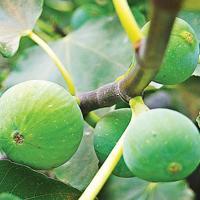
Figs mean summer — they represent the summer heat, where the sweet scent of fig trees mingles with the chirping of crickets and the singing cicadas. The scent of fig leaves on sleep-inducing lazy afternoons and the indescribable honey-like taste of a fig, chilled in the refrigerator, could be delightful, idle, happy moments of summer. Fig is a fruit steeped in mythological symbolism. In ancient Rome, the phrase 'Prima Ficus' was said to signal the end of summer. 'Prima Ficus' literally means 'First Fig.' It was an expression used to indicate that when the sweetest figs of the season appeared, summer was coming to an end and fall was on its way. Prima Ficus is also the time when one feels the first chill of the autumn months coming. September has already kicked in; fall is near. These days are past the days of first figs; they are fully ripe now, at their peak, so it's worth celebrating figs before summer waves goodbye.
Fig tree
There's an expression: 'To plant a fig tree in one's heart of the house.' It's truly an apt description. A fig tree has the ability to take root anywhere — so much so that it bursts through the ground where it takes root, leaving no solid stone or wall intact with its powerful roots. No matter which ancient archaeological site you visit along the Aegean and Mediterranean coasts, you'll see a fig tree that has taken root there. Sometimes it takes refuge at the base of garden walls; other times it stands tall and proud, like a solitary monument. Every faith has imbued the fig tree with meaning. In Hinduism, it has become the tree of life, seen as the tree that connects the earth to the heavens. In Jewish and Christian cultures, being under one's own fig tree has meant feeling safe, being in one's rightful place, homeland, and on one's own land. Buddhism has viewed the fig tree as a means of enlightenment. The fig tree certainly has a place in paradise as well. It is recognized as a sacred tree in the Quran. The fig tree has a common symbolism that connects cultures and faiths under one peaceful umbrella.
Fig leaf
There is a great deal of symbolism hidden in a fig leaf. In Western culture, a fig leaf also represents hidden secrets and topics that are kept under cover. It's no coincidence that Adam and Eve used fig leaves to cover their private parts after being expelled from the Garden of Eden. Fig leaves can grow so large that they can be used to conceal many things. They can also be a good wrapper. In Mediterranean countries, particularly in southern France and Italy, fig leaves are used to wrap cheese. As the leaf dries around the cheese like a paper wrapper, its protective qualities come into play, but most importantly, its wonderfully beautiful scent adds a completely unique aroma to the cheese.
The scent of fig leaf is so distinctive that it instantly transports you to warm summer afternoons in the Aegean and Mediterranean, filled with the sound of singing cicadas. Perhaps that's why there's a growing trend in professional kitchens: combining fig leaves with olive oil to create an incredibly aromatic oil. Of course, this oil is so concentrated that it can only be used drop by drop. But even a single drop makes the crickets ring in your ears, while on the palate, a whole tree full of fig leaves bursts forth.
Fig seeds
There is an expression in Turkish that can be translated as: Worrying about things that won't fit in a fig seed! The English equivalent could be, 'Making oneself miserable over something that amounts to a hill of beans.' With so many worries in the world these days, this should be everyone's life motto. But fig seeds are important, tough being miniscule, their presence is huge. So don't let fig seeds be missing from your table; the crunch of a fig seed in your mouth is like no other. Fig seeds go perfectly with pastries, cookies, cakes, even savory buns, salads, and yogurt-based appetizers. Sometimes you'll have very ripe figs going bad — never waste the seeds. Rinse them in a colander to let the sweet pulp drain away, leaving only the seeds. Dry them on parchment paper, or if you prefer, you can dry them in the oven at a low temperature. Keep them on hand — just like poppy seeds, you can sprinkle them wherever you like, and they'll add a little crunch to your life.
Last of figs
Figs are truly the highlight of summer — the sweetest and most succulent of all fruits. For us, figs equal summer, but above all, they remind us of the Aegean. In the summer, the whole Aegean region smells of fig leaves. The intoxicating perfume of the fig tree lingers in the air, alluring passers-by. Our province of Aydın is undoubtedly the fig capital of the world. Aydın's dried figs have been shipped to the entire world from the port of İzmir. That is why dried figs have been known as 'Smyrna figs,' after İzmir's ancient name. Aydın's Sarılop fig is ideal for drying, while İzmir's Bardacık fig, with its skin almost cracking and bursting open, is the best for eating fresh. Bursa's black figs, with their purple skin, which can withstand long journeys, even make their way to the British royal palace. Ripe figs taste like nectar from heaven. Now is the best time to enjoy them all — we must savor them before they're gone.
Related Opinion
A note on cookies
Newshunt uses essential cookies to keep you signed in and to remember your language and country, so the site works the way you expect. With your permission, we'd also like to use analytics cookies to understand how people use Newshunt and improve it over time.
Accepting only affects analytics. To learn more, view our Privacy Policy or Terms & Conditions.
(0)Comments