


Bob Brody
It took 74 years, but this lifelong Luddite learned to stop worrying and love AI

Surveys show that many Americans fear the worst about ChatGPT and other artificial intelligence tools. But AI can also be helpful.OpenAI founder Sam Altman speaks during the G20 Innovation Ministerial on Sept. 2 in Chapel Hill, N.C. His company's release of ChatGPT in 2022 unleashed AI on the masses.When it comes to the digital world, let's just say that during the past 30 years I've experienced nonstop technical difficulties.
My technophobia originated back in the mid-1990s. As the general public gained access to the World Wide Web, I took my cue from the movie 'WarGames,' a warning about how supercomputers could accidentally launch a thermonuclear apocalypse. Even as I sat in front of a computer all day for work, I avoided cyberspace entirely for fear of triggering World War III.
This same admittedly hyperbolic fear governed my initial response to artificial intelligence.
Advertisement
Article continues below this ad
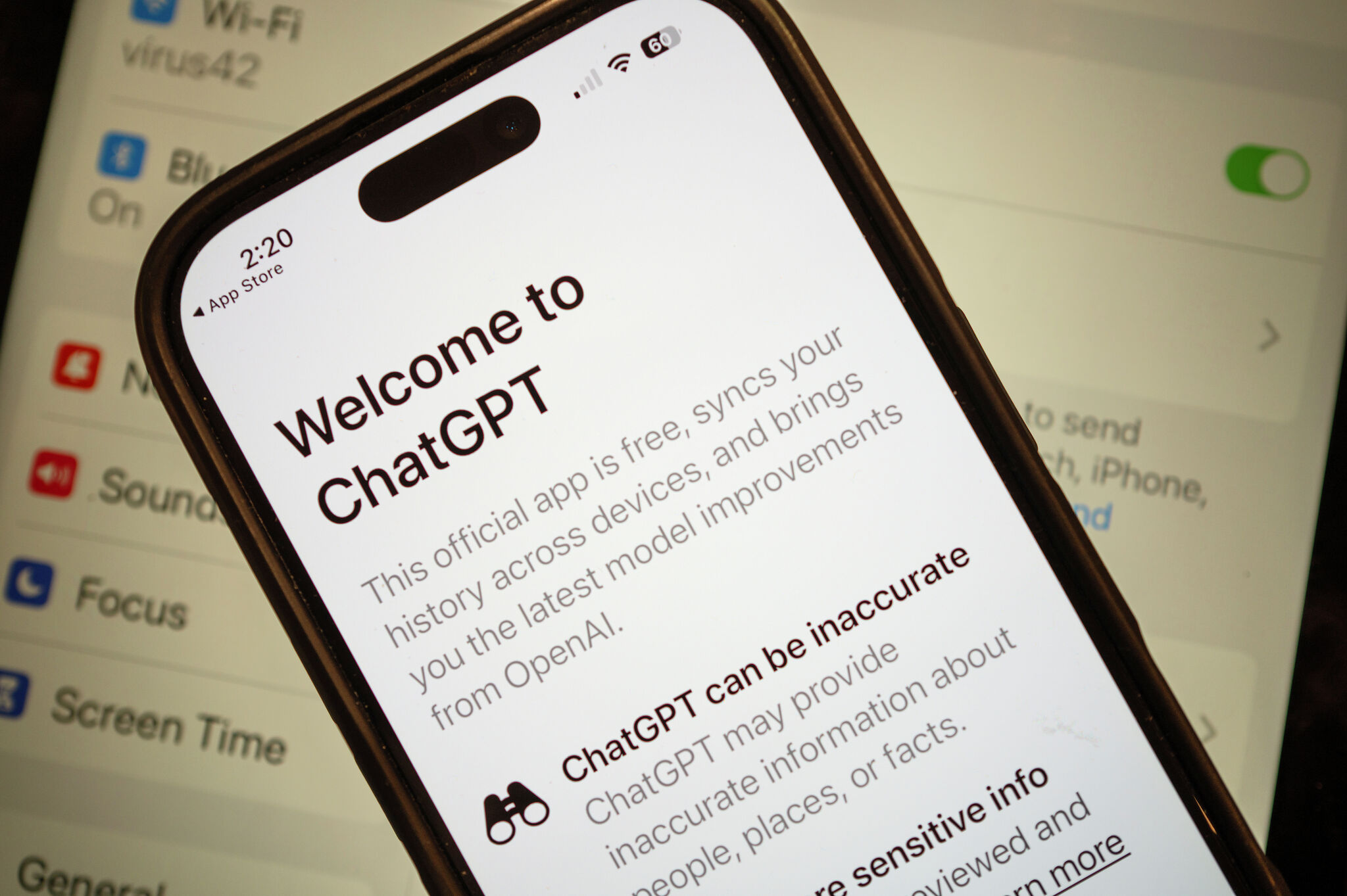
When ChatGPT launched in 2022, it aroused my deepest dread. After all, I'd seen the movie '2001: A Space Odyssey.' In that science-fiction classic, a computer named HAL 9000 developed a mind of its own during a space mission and tried to kill the astronauts onboard a ship, only to be deactivated and 'die.'
I assumed that if I just pretended AI would go away, it eventually would, leaving all of us to live our lives in peace.
I should have known that my reluctance to keep pace with the world was unsustainable.
Around 2005, everyone at the global professional services firm where I worked was handed a company BlackBerry. I never learned to operate the device, nor bothered to try.
Advertisement
Article continues below this ad
Eventually my dirty little secret was exposed. My colleague on a business trip asked me to send a BlackBerry message to a client saying we were running late for a meeting. For about 15 seconds I pretended I knew how to do so, my fingers fumbling in futility across the QWERTY keyboard. My colleague eventually caught wind and took over the task, laying bare my status as a Luddite dinosaur.
The irony here, so humbling that it hurts, is that I've spent the past 35 years practicing public relations. Yes, I'm a veteran communications professional who has all too often rendered myself incommunicado.
Now in my 70s, I'm finally trying to change that.
Turns out technology can be extremely useful — downright miraculous, really — especially for conducting research. At least daily now, I type in an AI prompt to pursue some fact or study or insight or advice. I do so either on behalf of clients or for my own scribblings or for some personal purpose, such as asking — in all seriousness — how I can convince my wife that living with me is anything other than exasperating.
It's all been a particularly interesting experiment because public reaction to AI has resembled the old version of me.
Advertisement
Article continues below this ad
Global apprehension over AI is running rampant: AI will promote cognitive off-loading and stop us from thinking for ourselves; AI data centers will destroy the environment; most ominously, rogue agents could seize control of nuclear weapons and harm humanity on a scale unprecedented and once unimaginable.
A recent report from the Pew Research Center found that 40% of Americans predict that AI's impact on society will be negative, while only 16% believe it will be positive. Similarly, an NBC poll early this year showed that 57% believe its risks will outweigh its benefits, with only 34% saying the opposite.
Concern over losing our jobs to chatbots is also widespread. A Reuters/Ipsos survey concluded that 53% of Americans are worried that AI will kill some jobs, while 37% felt otherwise. Likewise, Stanford University research revealed that 64% expect AI to lead to fewer jobs over the next 20 years, while only 5% expect more.
I, too, was worried about AI. But mostly on a smaller, more personal scale. And selfishly so. Maybe AI would replace me as a writer. Maybe it would minimize or even eliminate opportunities for me.
But professional practicality forced me to keep an open mind. Possibly, I realized, AI could help me more than hurt me.
Advertisement
Article continues below this ad
So, despite my concerns, I went a little humanoid the other day and tried a hack I never tried before. I asked AI to critique an essay I wrote. The one you're reading now.
Usually, I consult my wife or a friend or a fellow writer, if anyone. I just wanted to see what would happen. Would the analysis rendered hold any editorial value?
The editorial feedback I received from AI surprised me. It was among the best I've received in a writing career that now spans more than 50 years. My wife, given the details, agreed wholeheartedly.
AI judged my essay 'strong' and 'highly readable.' So far so good. I'm a chronic glutton for praise.
It also suggested I shorten the piece by 10% to 15% and strengthen the ending. I followed the advice.
Advertisement
Article continues below this ad
Will I now ask AI to do due diligence and vet all my other writing? Maybe. Every writer can always benefit from a good editor.
About Opinion
Guest opinions in Open Forum and Insight are produced by writers with expertise, personal experience or original insights on a subject of interest to our readers. Their views do not necessarily reflect the opinion of The Chronicle editorial board, which is committed to providing a diversity of ideas to our readership.
Read more about our transparency and ethics policies
At 74, then, going step by step, I'm finally overcoming my lifelong technophobia. My choice is simple. I can let movies dictate my attitudes. Or I can live my life — and do my job — in the so-called real world.
The laws of nature are pretty straightforward. To survive, we have to adapt.
Related Opinion
A note on cookies
Newshunt uses essential cookies to keep you signed in and to remember your language and country, so the site works the way you expect. With your permission, we'd also like to use analytics cookies to understand how people use Newshunt and improve it over time.
Accepting only affects analytics. To learn more, view our Privacy Policy or Terms & Conditions.
(0)Comments