


aakashjoshi
At Kota factories and Satya Niketan, Indian students are drowning in a broken system

Between suffocating floods and the cracking of the earth, the student in India today seems to live between the violence of the two. The Cockroach Janta Party protests, led by Gen-Z, may have stunned the ageing political establishment, but clearly we have light-years to go before the sanctity of either life or learning can be assured for our students — particularly for those from vulnerable sections of society.
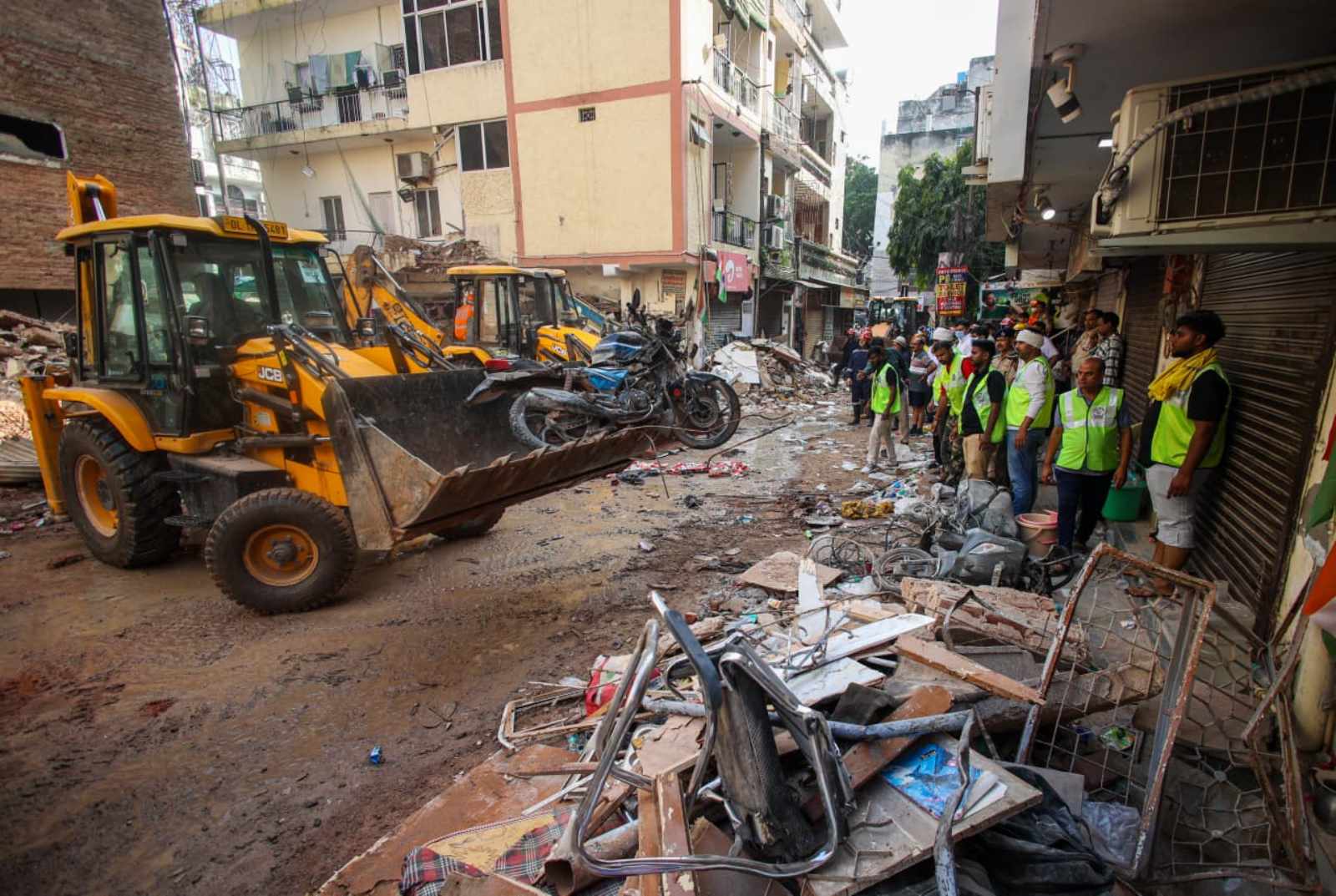
This is not about the lathis and water cannons whose threat to these very students in Delhi's Jantar Mantar is still raw for us. The disaster that actually ended lives is the building collapse in Delhi's Satya Niketan on Sunday, killing seven and injuring many more. Close to Delhi University's south campus, the building mostly housed students, most of whom were home on a Sunday afternoon. Their SoS echoed through the air and through the mobile phones of the dying: 'Save us, save us.' But the disaster was unforgiving.
These were some of our most vulnerable migrant students who sought a home near the university. Migrants are always vulnerable, more so migrants from the margins of state and society. But the migrancy of the student holds a dream of upward mobility that tinges her vulnerability with the darkest sadness. It screams the failure of a developing postcolonial nation where education and employment are still the only means of upward mobility, often the promise to breathe outside the miasma of poverty.
The building collapse bared the embers of another tragedy from 2024. That July, three UPSC aspirants drowned to death in the flooded basement of a coaching institute in Delhi's Old Rajinder Nagar. One survivor told a newspaper that in spite of charging a fee of Rs 2 lakh, the coaching centres lacked safety standards in spaces where the youth studied and spent time. Poor drainage and even electrocution deaths were common in these streets, and Delhi's unexpected monsoon caused the basement to flood. Student suicides remain in our memory. But what do we call these deaths? 'Accidents' reeks of both shame and sham. How do we remember them? Do we remember them at all?
Flooding water and quaking earth are dark omens. What they possess is not the talismanic significance of ritual and religion, but the forces of neglect and profit. These two almost nonsensically contradictory realities frame the fate of the Indian student today. Particularly those not rich enough to pay their way out of the country or lucky enough to win at the roulette wheel of entrance into elite institutes of technical and professional education.
Higher education, in most countries of the world, is the domain of the state. A few countries, most notably the US, have excellent private institutions that nevertheless cater to only a small, albeit highly influential percentage of the population. As someone who has been educated in a mix of state and private institutions in India and the US and has taught for the last 21 years in a public university in Canada and private universities in the US and India, I have observed the state-private dynamic from many angles and I come up with the same answer every time: It is only public institutions that can truly educate a nation. Private institutions, if shaped by genuine philanthropy, can at best create tiny islands of excellence, combining the intellectually exclusive with the socially inclusive, and hoping that their identity does not end up the other way around.
But what we did to the K-12 system is what we're now doing to the edifice of higher education. Not only the failure but the orchestrated onslaught on public institutions of higher education around the country led to the claustrophobic dead end that triggered the CJP protests at Jantar Mantar. But while the economy struggles and jobs fail to materialise, the greed of property development continues, and unchecked growth finally chooses as its prey the vulnerable bodies of the migrant student. That corrosive greed, Delhiites have already learned bitterly this year, does not discriminate between immediate stakeholders in either health or higher education — between those connected to hospitals or to universities.
Meanwhile, the migrant student, the provincial aspirant to educational and professional success, remains just as vulnerable to the greed of the private player, who has now gained destructive prominence due to the dysfunction of the public system. The glaring lacunae left by governmental failure have now been eaten up not only by profiteering private institutions of questionable quality, but by the toxic architecture of the coaching industry, the Kota Factory to most Indians. One doesn't know where the massive fees go, but as the family members of the dead UPSC aspirants now know, it is not being funnelled into the creation of a safe learning and living environment for customers. I'm sure India's many Kota factories have their shares of Jeetu Bhaiyas — the conscientious teacher-mentor from the Netflix show by that name — but I'm also sure their rarity and structural irrelevance make no impact on the landscape of the terrifying mental and physical health of the students stuck in their clutches.
We remember the suicides, as we must. We will never forget S Anitha, the poor Dalit student from Tamil Nadu, whose tragedy bared everything that is dark and destructive in India today: The relentless attempt of the juggernaut of the central government to override state authority and dismantle federalism, the oppressive myth of 'One Nation, One Exam', the structural violence and exclusion fated for the vulnerable. It took just one death to reveal them all, but the suicides didn't stop.
The suicides stay with us and power protests. But a reality just as tragic greys our sky today. The students who may not take their own lives may just have their lives taken away from them. Death may come either from the strategic neglect of governments or the greed of private players who prey upon the anxiety of millions at the Great Roulette Wheel of seats or jobs. From earth or water. Who knows what else is next?
Majumdar's most recent book is Open Intelligence: Education Between Art and Artificial
Related Opinion
A note on cookies
Newshunt uses essential cookies to keep you signed in and to remember your language and country, so the site works the way you expect. With your permission, we'd also like to use analytics cookies to understand how people use Newshunt and improve it over time.
Accepting only affects analytics. To learn more, view our Privacy Policy or Terms & Conditions.
(0)Comments