


unknown
Reaching out, falling short: Assessing Mazloum Abdi's failed pitch to Turkish public

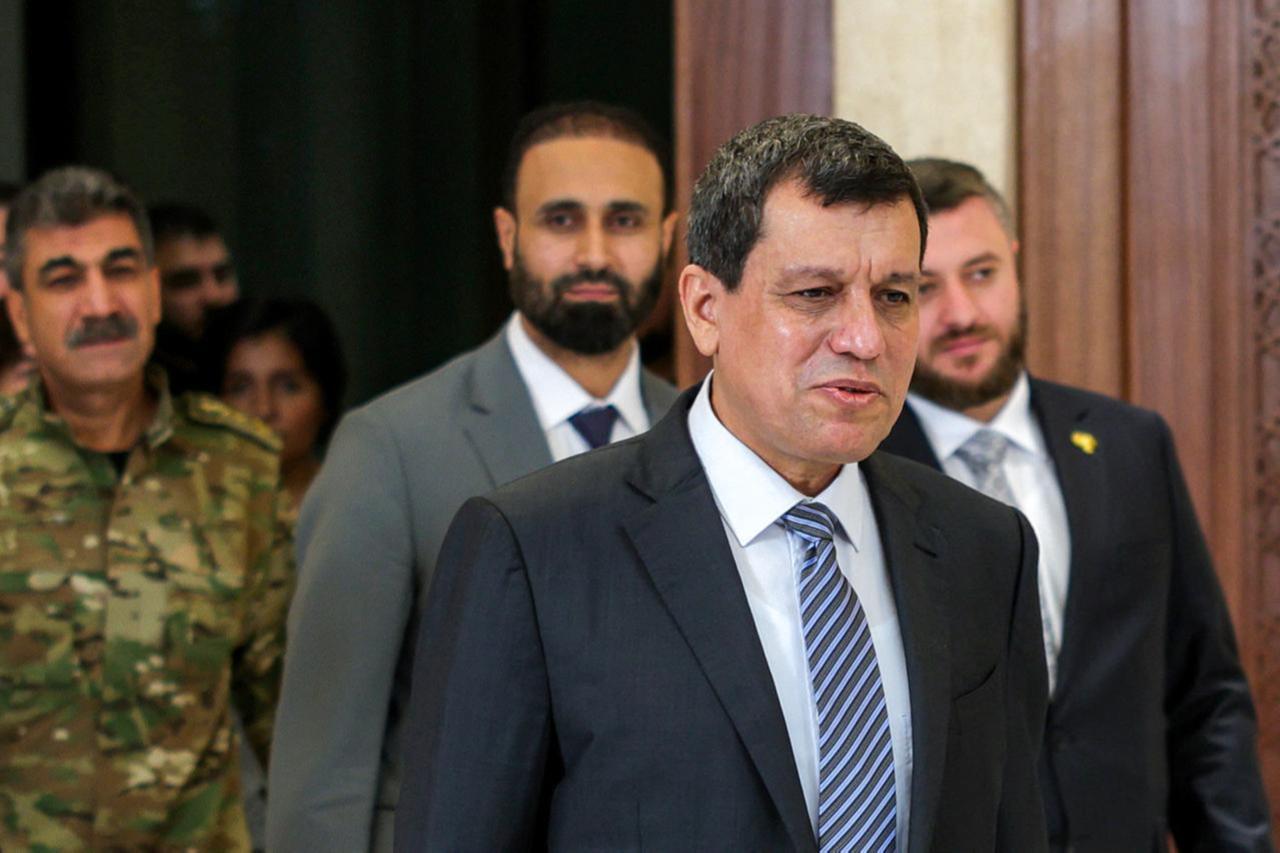
This photo taken on August 25, 2026 shows Mazloum Abdi, leader of the now-defunct Syrian Democratic Forces (SDF), arriving before a televised speech at the People's Palace in Damascus. (AFP Photo)
T he former general of the newly dissolved Syrian Democratic Forces (SDF), Mazloum Abdi , gave an interview to a Turkish TV channel. It is a development that would have seemed inconceivable only a few years ago, like many things that have happened in Syria since the beginning of December 2024.
The incredibly scripted, robotic, and unnatural interview was an apparent attempt by Abdi to reach out to the Turkish public. However, the channel and the journalist he chose signaled that the primary audience for his appearance was the pro-PKK audience in Türkiye rather than the broader Turkish public.
While the interview contains much information about the situation in Syria, I will focus on the two most important messages he sent to the Turkish public and evaluate whether he was convincing. Convincing the skeptics
In his interview and the apparently pre-planned questions, Abdi spent a lot of time trying to convince skeptics among the PKK support base in Türkiye.
He underlined the wins for Kurds in Syria and framed a picture where Kurds no longer deserve to die and can gain their rights via peaceful means. He emphasized the continued political struggle and explained the cultural, social, and political gains for Kurds. On the other hand, he also made it quite clear that rejecting a deal would lead to the misery of Kurds in Syria and block the pathway towards the rights they have gained.
This rhetoric was of utmost importance as it fits into the overall narrative of the current "Terror-free Türkiye" process.
Syria was the area where the PKK and its supporters (mostly Turkish-speaking Kurds in Türkiye and Europe) saw a success story. For them, their dream collapsed. And Abdi gave them an alternative narrative that is peaceful. I believe his comments have helped and can further help to convince PKK supporters and members to distance themselves from terror and pursue their rights via legal politics. Failed attempt to mend ties with Türkiye
Abdi openly said he wants to come to Türkiye and have good relations with the Turkish state. Reinforcing this cooperative stance, he stated: "Türkiye's influence in Syria will continue. Due to being a border neighbor and many other factors, this influence will persist. Türkiye can play a positive role in the reconstruction of Syria, especially economically or in other matters. I believe it will play this role. I also believe that the ongoing peace process between Imrali and the Turkish state will have a positive impact on the resolution of the Kurdish issue in Syria."
Seeing that the deputy defense minister of Syria and former commander of the SDF, Sipan Hemo, was removed from Türkiye 's terrorism list, Abdi has grounds to hope for this. However, his situation is much different from Hemo's or the governor of Hasakah, Nureddin Issa Ahmad. Neither Hemo nor Ahmad is directly responsible for any PKK terror attacks in Türkiye that killed civilians.
Abdi, on the other hand, has the blood of hundreds of Turkish citizens on his hands. Before moving to Syria, he oversaw the PKK 's urban terror cells. To genuinely mend ties with Türkiye, he must distance himself from his past. I understand that it may be hard for him to publicly and directly apologize due to several factors, but he must come up with a framing for an apology that will show goodwill towards the Turkish people.
This responsibility also includes the Syrian president. While Türkiye understands the dynamics in Syria, at some point tensions may arise over the fact that a major adviser to the Syrian president has not shown any remorse about the killing of hundreds of Turkish citizens.
Syrias president Ahmed al-Sharaa (R) shaking the hand of Ferhat Abdi Sahin, also known as Mazloum Abdi after the signing of an agreement in the Syrian capital Damascus on March 10, 2025. (Photo by SANA / Handout / AFP) Attacks orchestrated by Mazloum Abdi: Aug. 22, 1996: A rocket-propelled grenade attack on village guards heading to their posts near the Orencik hamlet in Semdinli. A total of 5 people were killed—3 village guards (Kurdish security personnel working for the Turkish state) and 2 civilians—and 11 were wounded (all Kurdish).
Nov. 8, 1996: A rocket attack on a minibus in Cukurca, Hakkari. Seventeen people were killed (all Kurdish), including 12 village guards, and 8 were wounded.
July 10, 2005: A bomb attack at an entertainment venue in Cesme (Turkish tourism region), injuring 20 people.
July 16, 2005: A bomb placed in a minibus was detonated at Kadinlar Denizi in Kusadasi (a beach in a Turkish tourism region). Six civilians were killed.
Aug. 29, 2006: An attack in the Kalekapisi area of Antalya (a Turkish tourism region). Four civilians were killed, and 87 were wounded.
July 27, 2008: The Gungoren attack in Istanbul. Seventeen civilians, including five children, were killed, and 154 were wounded.
Aug. 20, 2008: A suicide bombing on the Mersin–Adana highway, injuring 13 police officers.
Oct. 3, 2008: An attack on the Aktutun Gendarmerie Outpost in Semdinli. Seventeen soldiers were killed.
Dec. 7, 2009: The Tokat–Resadiye attack. Seven soldiers were killed.
June 19, 2010: An attack on the Gediktepe Base Area in Semdinli, Hakkari. Eleven soldiers were killed.
Oct. 31, 2010: A suicide bombing in Taksim Square, Istanbul. Thirty-two people, including 15 police officers, were injured.
July 14, 2011: An attack in Silvan, Diyarbakir. Thirteen soldiers were killed.
Aug. 17, 2011: An attack in Cukurca, Hakkari. Eleven soldiers and one village guard were killed.
Sept. 20, 2011: An attack in the Kumrular area of Ankara. Five civilians were killed, and 34 were wounded.
Oct. 18, 2011: An attack in Cukurca, Hakkari. Twenty-six soldiers were killed.
Aug. 20, 2012: A remote-controlled car bomb attack in Gaziantep. Nine civilians, including four children, were killed and 66 were wounded.
Given this long-standing record of terrorism, it would be naive to expect the Turkish government to readily accept Abdi into any formal and quick dialogue at the highest levels.
Related Opinion
A note on cookies
Newshunt uses essential cookies to keep you signed in and to remember your language and country, so the site works the way you expect. With your permission, we'd also like to use analytics cookies to understand how people use Newshunt and improve it over time.
Accepting only affects analytics. To learn more, view our Privacy Policy or Terms & Conditions.
(0)Comments