


Seidu Mutawakil
When the Chief Justice sounds political, Ghana should worry

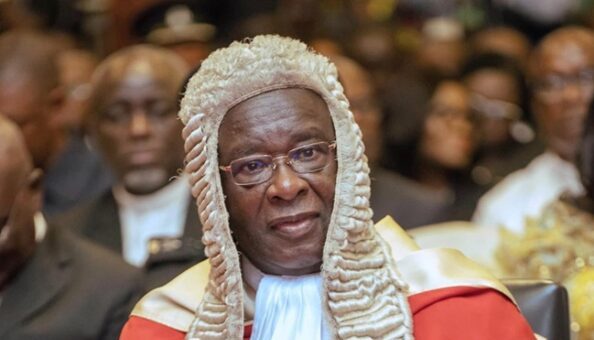
Ghana's Chief Justice, Paul Baffoe-Bonnie, may have intended to praise a turnaround in public institutions, but his recent remarks have opened a far more consequential question: how political can the head of Ghana's Judiciary sound before the institution he leads begins to lose its appearance of neutrality?
During a September 2 visit to the Minerals Income Investment Fund (MIIF), following a visit to SSNIT, the Chief Justice praised what he described as improved performance under the current administration and asked: '…what really we have been doing in the past eight years'.
Referring to SSNIT's earlier plans involving some assets, including Labadi Beach Hotel, he added that one could wonder 'how Ghana could have sunk so low'.
He subsequently urged MIIF managers to help ensure the success of President John Mahama's development agenda.
The problem is not that the Chief Justice praised good governance. Nor is there anything inherently improper about a judge acknowledging effective public administration.
The problem is the political meaning attached to 'the past eight years.' In Ghana's political vocabulary, that is unmistakably a reference to the eight-year Akufo-Addo administration. Coming from a political commentator, such an assessment might be regarded simply as an opinion.
Coming from the head of Ghana's Judiciary, however, the same words carry greater institutional weight and inevitably invite closer scrutiny.
Article 125(4) of the 1992 Constitution makes the Chief Justice the Head of the Judiciary and gives him responsibility for its administration and supervision, while Article 127 establishes that the Judiciary, in both its judicial and administrative functions, is subject only to the Constitution and must not be controlled or directed by any person or authority.
These provisions do not impose a blanket gag on the Chief Justice. But they make institutional independence, and the public perception of it, non-negotiable.
That distinction matters. Franklin Cudjoe of IMANI Africa argues that the Chief Justice merely expressed an opinion and committed no offence.
But Prof. Kwaku Asare has urged him to exercise restraint, warning that references to the 'past eight years' carry an unmistakable partisan political meaning. CDD-Ghana has similarly called for restraint and discretion in his public engagements to protect the Judiciary's credibility.
The NPP, unsurprisingly, has gone further, accusing him of conduct that risks eroding confidence in judicial neutrality.
Former Information Minister Kojo Oppong Nkrumah has also questioned what he described as an unprecedented tour of state-owned institutions by a Chief Justice.
Supporters of Baffoe-Bonnie have sought to equalise the criticism by pointing to former Chief Justice Gertrude Torkornoo's public praise of former President Nana Addo Dankwa Akufo-Addo.
Their argument is straightforward: if Torkornoo could openly commend a sitting president without such remarks being treated as evidence of political bias, why should Baffoe-Bonnie's comments attract such intense scrutiny? It is a legitimate question, but it ultimately reinforces the need for a consistent standard, one that does not change according to which political side benefits from a Chief Justice's words.
That standard is reflected in international judicial ethics. The UN-backed Bangalore Principles of Judicial Conduct recognise judges' freedom of expression, but make clear that such freedom must be exercised in ways that preserve the dignity, impartiality and independence of judicial office.
They caution judges against inappropriate involvement in public controversies and political debate.
The issue, therefore, is not whether Baffoe-Bonnie has committed a constitutional offence. There is insufficient basis for such a conclusion.
The harder question is whether his words could reasonably create the perception that the Judiciary is applauding one political administration while condemning another.
For a Chief Justice, perception is not cosmetic. It is constitutional capital.
Governments come and go. Political parties win and lose. But when citizens enter a courtroom, they must believe the judge before them is accountable to the Constitution, not Jubilee House, not the NPP, not the NDC and certainly not public applause.
The Chief Justice may have intended to praise institutional performance. But in Ghana's fiercely partisan political environment, he should know better than most that words from the bench carry a weight that ordinary politicians' words do not.
The Judiciary is Ghana's last institutional refuge when politics fails. If that refuge begins to look politically coloured, the damage will not belong to Baffoe-Bonnie, Mahama, the NPP or the NDC. It will belong to Ghana.
Related Opinion
A note on cookies
Newshunt uses essential cookies to keep you signed in and to remember your language and country, so the site works the way you expect. With your permission, we'd also like to use analytics cookies to understand how people use Newshunt and improve it over time.
Accepting only affects analytics. To learn more, view our Privacy Policy or Terms & Conditions.
(0)Comments