


Mary Wambui
OPINION: Threats, abductions and intimidation: Why Kenya must protect journalists ahead of 2027 polls

Audio reading is not supported on this browser.
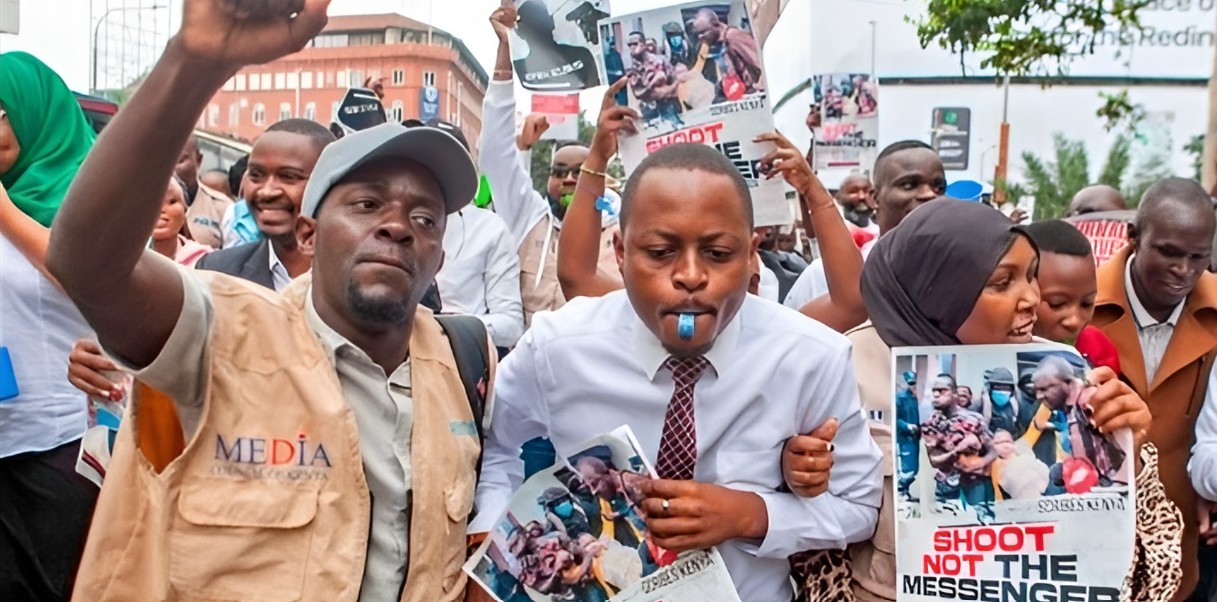
Kenya's rising threats, attacks and intimidation against journalists are putting press freedom at risk, raising fears that political pressure could silence critical reporting and weaken democratic accountability.
Journalists can be infuriating. They simplify. They sometimes exaggerate. They even get it wrong sometimes. Most are left-wing leaning, so their attitudes often jar with the rest of the population. When they act unethically, people are rightly outraged because a lot is expected from them. Anger against journalists should, however, not create room for harm. Trust in the news media has declined across the rich world, especially since the advent of social media allowed errors in reporting to be more widely reviled. So, some people may not care much when they hear that journalism is in trouble. Yet it is in their interest to care. Constitutionally, Kenya has all the trappings of a democracy. It does not lock up journalists for what they write. Yet in dozens of ways, politicians in Kenya often make the job of journalists and their lives difficult, especially during electioneering periods. Recent incidents of threats and intimidation against journalists are worrying. The last week's abduction of Standard Group associate editor Alex Kiprotich by armed, masked men was an epitome of impunity because it was meant to evoke fear. In that very week, there was the assault of K24 TV journalist Nelson Mutwiri at the County Assembly of Meru. During the bloody Linda Mwananchi political rally in Homa Bay County a fortnight ago, at least eight journalists—including reporting teams from AFP, TV47, Citizen TV, and the Standard Group—were physically assaulted, injured, and robbed by armed youths. In nearly every democracy, free expression is enshrined in law. So, it ought to be hard for politicians to use criminal acts as a cudgel against journalists. But they are finding workarounds. One is to be politically connected with the police and those holding power. Another wheeze is to hit media companies with laws that are unrelated to journalism. Today, technology has changed what it means to be a journalist and opened new avenues for free expression. Anyone with a phone can today film a police officer brutalising a protester or a politician hurling ethnic hate and post it on social media, which is a useful check on accountability. But overall, the digital revolution has not been as liberating as many people once hoped because those wielding power and their supporters have used the platforms to threaten and discredit journalism and journalists. Apologists for crackdowns often argue that news outlets and journalists, too, should be accountable. But they understate the degree to which they already are. There are laid-down guidelines in the law on how to complain against false or malicious reporting by journalists. Harming them is not one of the ways of expressing dissatisfaction. Protecting journalists and their work matters for several reasons. It is not just that free speech is the bedrock liberty on which other liberties depend. It is also because critical journalism is an essential check on public duty bearers. If the mighty know that abuses will be neither exposed nor publicised, they are likely to commit more of them. It should be known that in the absence of a probing press, it is easier for officials to embezzle unobserved or make sweetheart deals without push-back. One of the most alarming trends is that political leaders who claim to be democratic are increasingly using tactics pioneered by more authoritarian regimes. Typically, they do not try to silence truth-tellers entirely. Rather, they seek to create a media ecosystem in which the public hear amplified praise of the ruling party and only faint whispers of dissent. By accusing journalists of common crimes, politicians can spread the idea that they are untrustworthy. They can also intimidate others into self-censorship. What is difficult to measure then becomes the questions that don't get asked because people are fearful, or stories that don't get written because people are afraid. When several press-gagging techniques are combined, the effect can be overwhelming and a journalist faces a choice: between a life of penny-pinching and peril telling the truth, or one of financial and physical security praising politicians. Politicians would like to use taxpayers' cash to promote fawning coverage: deploying yes-men to run the public broadcaster, directing state advertising budgets towards pliant media platforms and nudging friendly tycoons who rely on public works contracts to take over independent media firms and neuter them. At the same time, they make it harder for critical outlets to thrive—or even survive. Those that insist on doing investigative reporting may find that the government not only refuses to advertise with them but leans on private firms to shun them, too. It is alarming that democratically elected leaders are going after individual journalists. Those who irritate the powerful are often doxxed and harassed so as to build fear and silence in them. Journalists have plenty of faults, but preventing them from doing their jobs will have dire consequences. A robust newsgathering ecosystem, once destroyed, is hard to rebuild. And a country with less press freedom will be dirtier and worse-governed. The writer is a political reporter with The Eastleigh Voice. Views in this opinion piece are his personal and do not reflect those of The Eastleigh Voice.
Facebook Twitter/X Instagram TikTok YouTube WhatsApp
Related Opinion
A note on cookies
Newshunt uses essential cookies to keep you signed in and to remember your language and country, so the site works the way you expect. With your permission, we'd also like to use analytics cookies to understand how people use Newshunt and improve it over time.
Accepting only affects analytics. To learn more, view our Privacy Policy or Terms & Conditions.
(0)Comments