


Arun Anand
How Ladakh's New Lifelines Can End Its Isolation

Got Question about the News?
Over the past few months, a series of infrastructure works in Ladakh have focused on reducing isolation, extending the tourist season, and bringing reliable electricity to remote valleys. Official figures and project updates released between March and August 2026 show measurable progress on roads, aviation, and the power grid, with several works targeted for completion before winter.
The road network remains the backbone of movement in a region where high passes close for weeks or months. Administration data cited in August 2026 states that the total road length has grown from 1,799 km in 2019 to more than 4,200 km, while the number of bridges has risen from 19 to 72. Seasonal disruption has also shortened. Zoji La, the main gateway from Kashmir, which earlier stayed closed for about 127 days a year, is now closed for roughly 16 days. The annual closure of the Kargil-Zanskar road has fallen from 154 days to 11 days.
These reductions have already changed travel patterns: of the 3,30,332 tourists recorded from January to July 2026, 1,16,523 (35.27 per cent) entered via the Kashmir route, 17.09 per cent via Manali, and 47.64 per cent arrived by air.
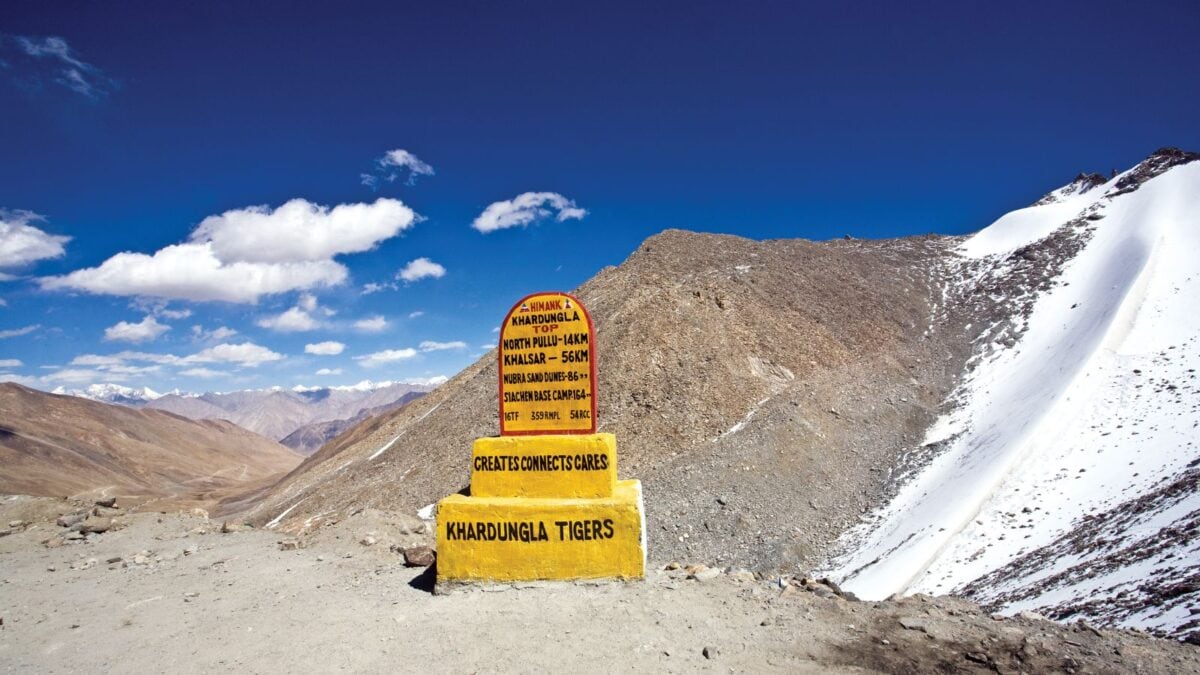
Work on several high-altitude corridors continued through the summer. Progress reports from May indicated about 91 per cent completion on one package of the Kargil–Zanskar road (NH-301) and more than 82 per cent on a 30-km two-lane upgrade of the same highway. In June, the Union Road Transport and Highways Ministry announced additional works that include a Rs 1,000-crore Leh South Bypass and a Rs 200-crore North Bypass to ease congestion in Leh town and improve links towards Khardung La. Tendering was reported complete for the South Bypass, with construction expected to start shortly.
Other planned tunnels on the Srinagar–Leh and Manali–Leh axes include the Fotu La twin-tube tunnel, estimated at Rs 1,200 crore, and larger structures at Baralacha La, Lachulung La, and Tanglang La. Together, these are intended to cut distance and travel time on the Manali axis once completed.
Aviation capacity is expanding in parallel. The new integrated terminal at Kushok Bakula Rimpochee Airport in Leh was reported to be 83 per cent physically complete in July 2026. Once operational, it is designed to handle up to 54 flights a day, compared with the present 15–17.
Beyond Leh, the administration, the Indian Air Force, the Airports Authority of India, and the Civil Aviation Ministry reviewed civilian use of two additional airfields. At Thoise in Nubra Valley, five acres have been allotted for a new civil terminal, runway recarpeting is scheduled for completion in November 2026, and civilian operations are targeted to begin from December 2026 using a refurbished existing charter terminal. A joint inspection of Kargil Airport was fixed for 1 September 2026 to assess readiness for civil flights.
Officials have stated that these services would improve access to Nubra, Turtuk, Drass, Kargil, and areas towards Siachen Base Camp.
Electricity supply has been another priority. In June, the Lieutenant Governor announced that two 220 kV transmission lines – 189 km from Drass to Padum and 79 km from Phyang to Diskit – were targeted for completion by the end of September 2026 at a combined sanctioned cost of Rs 1,925 crore. The lines, part of the Prime Minister's Development Package, are intended to provide round-the-clock power to Zanskar, Nubra, and Siachen Base Camp and reduce reliance on diesel generators.
Four substations are planned in Zanskar and two in Nubra; eight more 66 kV substations are proposed across Changthang at locations including Durbuk, Chushul, Nyoma, Korzok, Hanle, and Chumathang. Separately, the Revamped Distribution Sector Scheme, covering six packages at Rs 1,216.86 crore, is under implementation with a March 2028 completion target.
Taken together, the works address three constraints that have long shaped daily life and economic activity: winter road closures, limited flight slots, and patchy grid supply. Shorter closure periods on Zoji La and the Zanskar road already allow more months of reliable surface movement. Higher airport capacity and additional airfields would spread arrivals beyond Leh and ease pressure on the single existing civilian airport. Grid extensions into Zanskar and Nubra would support schools, health facilities, homestays, and small enterprises that currently depend on costly and polluting generators.
Execution challenges remain typical of high-altitude construction: short working seasons, land acquisition, and the need for specialised equipment. Review meetings held through the year have focused on timelines for the Leh terminal, Thoise runway, Kargil inspection, and the September power-line targets.
If those targets are met, the 2026–27 winter will be the first in which several remote blocks have both improved road access and a more stable electricity supply – a combination that officials say is essential for year-round services and a longer tourist season.
The physical numbers – including kilometres of road, days of pass closure, flight-handling capacity, and kilometres of new transmission lines – give a concrete picture of the scale of work under way. For residents of Padum, Diskit, Turtuk, or Chushul, the practical test will be whether buses run later into autumn, whether a flight can land at Thoise in December, and whether the lights stay on without a diesel engine running through the night.
Ultimately, Ladakh's infrastructure push goes beyond roads, flights, and transmission lines. It is about making a remote and strategically important region more integrated and creating a strong foundation for Ladakh's sustained development.
The writer is an author and columnist. He is a writing fellow with the Middle East Forum, Washington. His X handle is @ArunAnandLive. Views expressed are personal and solely those of the author and do not necessarily reflect News18's views.
Ladakh is undergoing significant infrastructure development, including the expansion of its road network from 1,799 km in 2019 to over 4,200 km by August 2026, and an increase in bridges from 19 to 72. Aviation capacity is also expanding with a new terminal at Leh airport and plans for civilian operations at Thoise and Kargil airports. Additionally, two 220 kV transmission lines are targeted for completion by September 2026 to provide reliable electricity to remote areas.
New infrastructure has significantly reduced road closure periods. The Zoji La pass, a main gateway from Kashmir, now closes for approximately 16 days annually, down from 127 days. Similarly, the annual closure of the Kargil-Zanskar road has decreased from 154 days to 11 days. These improvements enhance year-round access and support tourism.
The new integrated terminal at Kushok Bakula Rimpochee Airport in Leh was 83% physically complete by July 2026, designed to handle up to 54 flights daily. Civilian operations are targeted to begin at Thoise in Nubra Valley by December 2026, and Kargil Airport is being assessed for civil flights. These expansions aim to boost tourism and improve access to remote regions.
Related Opinion
A note on cookies
Newshunt uses essential cookies to keep you signed in and to remember your language and country, so the site works the way you expect. With your permission, we'd also like to use analytics cookies to understand how people use Newshunt and improve it over time.
Accepting only affects analytics. To learn more, view our Privacy Policy or Terms & Conditions.
(0)Comments