


Eyad Abu Shakra
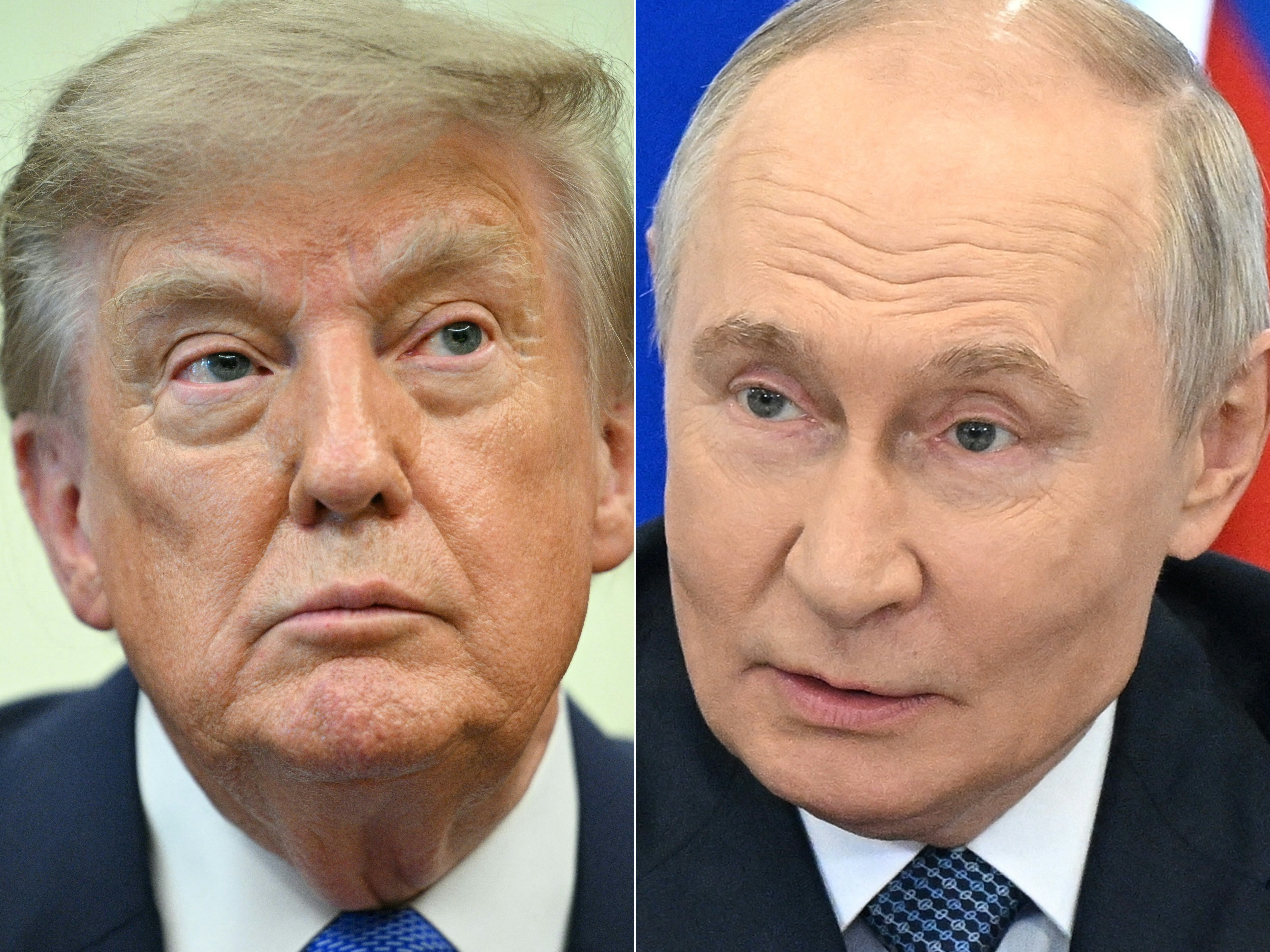
Drawn-out conflicts that link Trump and Putin

War in the field is vastly different from war on paper. Brilliance in planning does not grant immunity from surprises. Experience dictates that while a ruler knows when he goes to war, he does not know when he will return. That is determined by the condition of the enemy or adversary, its capacity for endurance and resistance, and its weaponry and morale. A war begins with the desire to bring the enemy to its knees, but if the conflict drags on, it transforms into an attempt to convince them to accept defeat, or at least a portion of it.
Hubris is a common trait among both nations and individuals, reflecting an explicit tendency to overestimate one's own power and a propensity to underestimate the adversary or diminish the significance of their assets. Consequently, wars are often fraught with surprises. While one can go to war alone, returning in the same manner is impossible unless a knockout blow is achieved — an outcome that is either impossible or exceedingly rare. A single drone can suffice to shatter the illusion of victory or dominance.
The questions are numerous. Does Iran want to exit the war, and can it do so without being able to claim a victory? Whom does it need to confront this 'economic asphyxiation' — China, Russia, or both? Does it want to keep the embers burning to allow the Strait of Hormuz to cast its vote in the US midterm elections?
Wars are often fraught with surprises
Ghassan Charbel
Does Donald Trump need Vladimir Putin to achieve a victory or near-victory in the current war with Iran? Most likely, he needs at least a lack of obstruction if cooperation proves unattainable. Reports have indicated that Russia assisted Iran in restoring part of its military arsenal using a secure corridor, the Caspian Sea, which is a closed sea where Western interventions have no leverage. This same safe passage could help Iran circumvent the policy of 'economic ostracization' waged against it by the US administration.
To tighten the policy of economic asphyxiation on Iran, Trump requires the cooperation of two key players: China and Russia. It is not in China's habit to engage in adventures that exact heavy costs on its economy and the global economy. Furthermore, it is not embroiled in a military conflict from which it needs to extricate itself, unlike Russia. Does Trump dream of a deal with his 'friend' Putin, and can he help him emerge from the Ukrainian quagmire so that the Russian leader responds by helping him facilitate the twisting of Iran's arm?
Amid the intensifying 'tanker war' in and around the Strait of Hormuz, Trump dispatched his envoys, Steve Witkoff and Jared Kushner, to Moscow and Kyiv in a renewed bid to seek peace there. Putin did not hesitate to offer welcoming gestures, most notably halting the bombardment of Kyiv for three days, ostensibly awaiting the departure of Witkoff and Kushner. Exhibiting his characteristic ingenuity, the Russian president kicked off the meeting by praising the US president and his dedication to pursuing peace between Russia and Ukraine. However, the master of the Kremlin is merely feigning flexibility without offering any fundamental concession that would allow for actual progress toward ending the conflict.
Does Putin need Trump? Everything in the current landscape suggests that he does. For the fifth consecutive year, the Russian army has been fighting on Ukrainian soil. While it has seized vast parts of its targeted territories, it has failed to compel Ukrainian leader Volodymyr Zelensky to cede any portion of land.
Patience remains the best adviser
Ghassan Charbel
When the Russian army invaded Ukrainian territory on Feb. 24, 2022, many mistakenly believed that Putin would not have embarked on such an adventure unless he was certain of a swift victory. An impression prevailed that the Russian president had necessarily made meticulous calculations, particularly since Washington had dispatched CIA Director William Burns to warn him of the consequences of any invasion. Some believed that the imbalance of power in favor of the Russian military would compel the authorities in Kyiv to swallow the bitter pill of seeking a ceasefire as a prelude to accepting the victor's terms. However, this did not happen, and the West decided to penalize Putin for bringing border-altering wars back to Europe.
In the fifth year of the war, Putin finds no option before him other than to refine the destruction of Ukraine's infrastructure — a bloody, daily process of devastation. In response, Ukraine retaliates by targeting power stations deep within Russian territory, after its development of drone warfare enabled it to damage Russia's prestige within its own borders. It is a dangerous game and a frightening cycle: Putin dispatches his missiles, punishing facilities and individuals, only for Zelensky to appear, launching his drones to shake the Russian leader's confidence that victory is near.
It is clear that Putin needs Trump, and the reasons are numerous. Over the past five years, Russia has lost more than 1 million people, including dead, wounded, and missing. This has been accompanied by severe sanctions imposed by the West. The casualties, sanctions, and continuation of the war are all factors that have led to a decline in Putin's popularity. They have also damaged Russia's image and suggested that its presence in the superpower club is no longer justified except by its possession of a massive nuclear arsenal.
Following his return to the White House, Trump provided notable favors to his friend in the Kremlin. He did not include the defense of Ukraine among his top priorities. Rather than addressing the gravity of changing borders in Europe, he spoke instead of the costs of supporting Ukraine. He attempted to compel Zelensky to bow to Putin's will and intentionally insulted him before the cameras. Trump's gifts to Putin, however, did not force Ukraine to accept the Russian solution. Europe managed to keep Zelensky standing in the face of the Russian storm, albeit with diminished capabilities.
Have the combatants in the Strait of Hormuz and Ukraine grown weary? And can Trump formulate a deal in Kyiv that helps him impose a deal near the strait? In the quest for answers, patience remains the best adviser.
Ghassan Charbel is editor-in-chief of Asharq Al-Awsat newspaper. This article first appeared in Asharq Al-Awsat. X: @GhasanCharbel
Related Opinion
A note on cookies
Newshunt uses essential cookies to keep you signed in and to remember your language and country, so the site works the way you expect. With your permission, we'd also like to use analytics cookies to understand how people use Newshunt and improve it over time.
Accepting only affects analytics. To learn more, view our Privacy Policy or Terms & Conditions.
(0)Comments