


unknown
Electing a new UN Secretary-General and the future of the multilateral international order

The election—or selection—of a new Secretary-General of the United Nations is an opportunity that arises only once every ten years, since the customary practice in the overwhelming majority of previous cases has been to renew the incumbent's mandate for a second term.
Perhaps the sole exception was the late and distinguished Dr Boutros Boutros-Ghali, the first Egyptian, Arab and African to serve as UN Secretary-General. The occasion offers an opportunity to examine and reflect not only on the state of the organisation and the wider UN system, but also on the condition of the multilateral international order as a whole. It further allows us to identify the issues and dilemmas confronting international relations—issues that inevitably affect the international order and, consequently, the United Nations itself.
When the United Nations was established at the end of the Second World War in 1945, it embodied the shared determination of the victorious powers to build a multilateral international order founded on the maintenance of international peace and security. Further duties and responsibilities were subsequently assigned to the UN system, including the promotion of economic and social development, respect for human rights and protection of the environment, among others.
The United Nations system has faced numerous, varied and formidable challenges since its establishment. It moved from laying the foundations and rules of a new multilateral international order to navigating the difficult Cold War era, which came close to plunging the world into a third world war, particularly during the Cuban Missile Crisis. That period also witnessed the emergence and evolution of regional conflicts that remain unresolved to this day, including the Arab-Israeli conflict, at whose heart lies the Palestinian question; the dispute between China and Taiwan; and the conflict between India and Pakistan. Nor should we forget the Korean War, which left the Korean Peninsula in a state of enduring tension that continues today.
Although the United Nations has so far been unable to resolve these conflicts or prevent the outbreak of wars associated with them, it has made significant efforts to de-escalate tensions, contain recurrent flare-ups and limit their global impact, to the extent permitted by the circumstances of an international organisation that ultimately reflects the collective will of the international community.
At the same time, the Cold War period witnessed positive developments that must not be overlooked, and the United Nations system left a significant imprint on—and played an important part in—achieving many of them. Foremost among these was the dismantling of colonialism across the vast majority of the Global South. These countries achieved political independence, and most sought to attain economic, cultural, media and other forms of national independence.
The United Nations declared 1960 the 'Year of Africa', as 17 African countries gained independence that year. The organisation also began issuing political declarations with substantive legal implications for the eradication of colonialism. The UN system devoted many of its activities to dismantling the apartheid regimes then in power in South Africa and Rhodesia, now Zimbabwe, and to ending South Africa's occupation of Namibia.
During the 1970s and 1980s, also under Cold War conditions, the United Nations system adopted initiatives aimed at establishing a New International Economic Order and a New World Information and Communication Order. These initiatives formed part of an effort to complete the foundations of independence in the countries of the Third World and to build a more just, equitable and balanced international order capable of reinforcing international peace and security.
Over those four and a half decades, a succession of heavyweight figures served as UN Secretary-General. Each sought to do his utmost, and each experienced both success and failure. One of them, Sweden's Dag Hammarskjöld, paid with his life for his determined and tireless efforts to secure the independence of Congo-Kinshasa, now the Democratic Republic of the Congo.
He had earlier played a prominent, pivotal and successful role in confronting the Suez Crisis and the war that followed the late Egyptian president Gamal Abdel-Nasser's nationalisation of the Suez Canal and the ensuing tripartite aggression against Egypt by Britain, France and Israel.
In the post-Cold War era, expectations were high that the international system would enter a period of détente and that the world's major crises would be resolved following the end of bipolarity. At the initiative of its then Secretary-General, the late Dr Boutros Boutros-Ghali, the United Nations convened a series of international conferences, each devoted to a specific issue, including the environment, women and social development. Dr Boutros-Ghali also presented 'An Agenda for Peace' and 'An Agenda for Development' as foundations for a new international order. The period likewise witnessed important developments in disarmament, including the Chemical Weapons Convention and the Comprehensive Nuclear-Test-Ban Treaty.
Nevertheless, the 1990s witnessed regional crises and wars accompanied by massacres and ethnic cleansing in Africa's Great Lakes region, particularly in Rwanda and Burundi, as well as in the Balkans, especially Bosnia and Herzegovina, following the breakup of the former Yugoslavia.
The United Nations sought to intervene and to encourage effective action by the international community to resolve these conflicts. Only after immense human sacrifice, enormous material losses, precious time squandered and massive flows of refugees and migrants that shocked the world did the international community, acting through the United Nations and the North Atlantic Treaty Organisation (NATO), succeed in ending the wars and securing political settlements.
On the economic front, despite widespread expectations of a bright and prosperous future for all humanity, the Asian financial crisis erupted in 1997, producing catastrophic repercussions that swiftly spread around the world.
The establishment of the World Trade Organisation in 1995 also contributed to a contraction in the economic mandate and role of the United Nations system, which had focused on advancing international cooperation for development, particularly for the benefit of the Global South. At the same time, organisations outside the UN system assumed a greater role in decision-making within the international economic, trade, monetary and financial order. These included the Bretton Woods institutions—the International Monetary Fund, the World Bank and their affiliated bodies—as well as the World Trade Organisation.
The decline of the United Nations' role in these fields coincided with a failure to conclude international treaties and agreements in related areas. Negotiations aimed at establishing a code of conduct for the transfer of technology were suspended, while the United Nations Conference on Trade and Development (UNCTAD)—a body of the General Assembly that had served as a forum for the Global South and as its voice on international economic, trade and financial issues—suffered a broader decline.
The third millennium fared no better than the 1990s. UN Member States adopted the Millennium Development Goals (MDGs), to be achieved between 2000 and 2015, while the organisation devoted considerable efforts during the final decade of the second millennium to countering the notion of a 'clash of civilisations' by promoting a 'Dialogue among Civilisations'. Yet the new millennium began with the attacks of 11 September 2001 in the United States, which intensified discourse about a clash of civilisations and placed the 'war on terrorism' at the top of the multilateral international agenda.
The 'war on terrorism' was subsequently invoked to justify the US invasions of Afghanistan in 2001 and Iraq in 2003. Nor did the upheaval end there. The global financial crisis erupted in 2008, and the world has yet to recover fully from its devastating consequences. The United Nations system proved unable to address either the crisis itself or its repercussions with sufficient effectiveness.
Similarly, the UN system was unable to deal effectively with the consequences of the uprisings and revolutions that began in several Arab countries in late 2010 and were described by the Western media as the 'Arab Spring'. Although the United Nations achieved a measure of success in responding to refugee flows from several countries in the region, political settlements followed a different course. In Tunisia and Egypt, domestic developments ultimately determined the outcome of those events, while in Libya, NATO shaped their trajectory. In Syria, the crisis evolved into a state of instability that persisted until December 2024. Even after that date, however, conditions had yet to return to normal. De facto fragmentation continued in Yemen and Libya, alongside renewed internal armed conflict in Sudan and Somalia's effective division, while numerous international and regional actors intervened in most of these cases.
The United Nations also failed to initiate any new international disarmament negotiations. Indeed, with only rare exceptions, the prospect of concluding new international treaties and agreements across a range of fields became stalled.
The third decade of the twenty-first century has brought multiple and serious challenges that have subjected the resilience of the multilateral international order to exceptionally severe tests. These began with the COVID-19 pandemic and the grave threat it posed to human life, as well as its catastrophic effects on a global economy that had yet to recover from the 2008 financial crisis.
This was followed by the war between Russia and Ukraine, with its damaging consequences for peace and security in Europe and its repercussions for global food supplies and prices; the Israeli war on the Palestinian Gaza Strip and the devastation and suffering it inflicted regionally and globally; and, most recently, the US-Israeli war against Iran, whose continuing tragic repercussions affect global energy supplies and freedom of navigation, among other serious consequences.
The United Nations has failed to address these crises because the international will required to resolve them conclusively and justly has been absent. Even the end of the Israeli war on Gaza came through a US-led process and the creation of a 'Board of Peace' chaired by the US president, which many regarded as diminishing the standing and role of the UN Security Council—the body entrusted with maintaining international peace and security.
Likewise, the adoption by UN Member States of the Sustainable Development Goals (SDGs), to be achieved between 2016 and 2030, appears unlikely to deliver the desired results. Only three years and a few months remain before the end of that period, yet a considerable number of countries have been unable to achieve the stated goals in full.
Against this backdrop, the selection of a new UN Secretary-General comes at an exceptionally sensitive, consequential and dangerous moment for the international community and the multilateral international order. This is not because a new Secretary-General would be capable of single-handedly resolving any global conflict, nor because the role of individuals in shaping human history should be exaggerated at the expense of objective considerations and conditions. Rather, historical and practical experience has demonstrated that the Secretary-General's character matters and carries influence, weight and significance. This remains true even while recognising that no Secretary-General can achieve breakthroughs without the commitment and effective support of the organisation's Member States, particularly the five permanent members of the Security Council.
If the person selected possesses initiative and the capacity to innovate, create and think beyond established conventions, while remaining firmly committed to international legitimacy, and if that person combines courage and boldness with sound judgement, balance and wisdom, he or she can play an important, historic and effective role in steering the international organisation towards resolving—or at least advancing the resolution of—a number of issues and overcoming some of the challenges confronting the multilateral international order today.
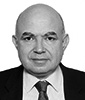
* The writer is an expert on international relations.
Follow us on:
Facebook
Instagram
Whatsapp
Short link:
Related Opinion
A note on cookies
Newshunt uses essential cookies to keep you signed in and to remember your language and country, so the site works the way you expect. With your permission, we'd also like to use analytics cookies to understand how people use Newshunt and improve it over time.
Accepting only affects analytics. To learn more, view our Privacy Policy or Terms & Conditions.
(0)Comments