


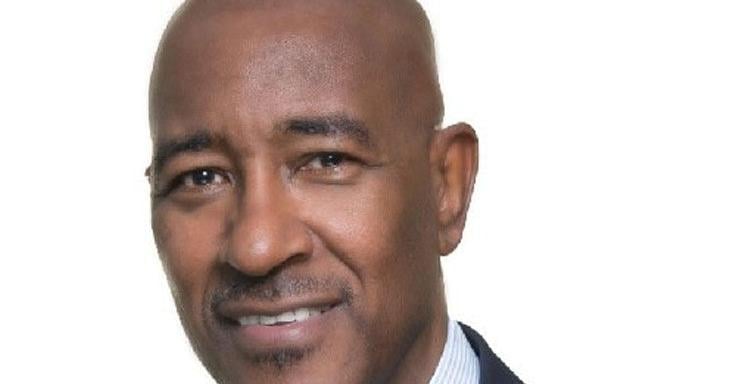
Robert Le Hunte
Beyond one statistic

Last Sunday, on the eve of our 64th anniversary of Independence, I argued that you cannot build a country you do not know.
Our Independence Day debate persuaded me that perhaps I had left something out. There is a difference between knowing our history and understanding what that history means for the society and economy we inherited.
Prime Minister Kamla Persad-Bissessar argued that Trinidad and Tobago should have done much better during its 64 years of self-government. She pointed out that at Independence our per-capita income exceeded that of countries including Japan, Singapore, Spain, Portugal, Malaysia and China, concluding that Britain left us 'a very prosperous functioning country'.
It is a provocative argument, but not necessarily a complete one.
I readily concede that Trinidad and Tobago entered Independence with significant economic and institutional advantages. Should we have done better in diversifying our economy after decades of petroleum wealth? Yes. Managing crime? Clearly. Have we always spent our resources wisely and built institutions as strong as they should be? No.
Independence means accepting responsibility for those failures.
But prosperous by what measure?
Per-capita income tells us the average output of an economy. It does not tell us who owned the productive assets and land, how income was distributed, what workers earned, or who had access to education, healthcare, housing and capital.
Prosperous for whom?
Consider education. As colonialism drew to a close, secondary-school enrolment in 1961 was approximately 15,000. Today, secondary-school enrolment is in the vicinity of 100,000. Access to education has been transformed.
Consider health. Life expectancy around Independence was approximately 63 years; today it is approximately 74. Infant mortality has fallen from close to 60 deaths per 1,000 live births to approximately 17, alongside a substantial expansion in access to healthcare throughout the country.
These statistics do not prove that everything improved. Crime alone would make such a claim absurd. They demonstrate something more important: development cannot be measured by selecting one economic statistic.
Neither can countries simply be compared on a spreadsheet. Population, geography, market size, natural resources, history, institutions and national choices matter.
Singapore's achievement is extraordinary and deserves admiration. But Singapore made choices appropriate to Singapore. Development involves choices about political freedom, social organisation, individual liberty, income distribution and quality of life, as well as income.
There is another question buried inside this discussion. If Britain left us so prosperous, are we therefore to assume that remaining constitutionally attached to Britain would have produced a better outcome?
Where is the evidence?
Caribbean societies remaining attached to metropolitan powers have had varying experiences. Guadeloupe and Martinique receive benefits from being integral parts of France, yet their economic outcomes have not simply converged with metropolitan France.
Dependency does not guarantee prosperity any more than independence guarantees it.
There is also something fundamentally incomplete about evaluating Independence as though it were merely an investment decision.
What value do we place on determining our own destiny?
Trinidad and Tobago determines its foreign policy, manages its natural resources and speaks internationally in its own name. Independence gave us the right to make decisions for ourselves. It also gave us the right to make mistakes. We must own both.
The danger today is that complexity struggles for attention while the provocative statement travels instantly. Nuance becomes weakness; complicated history is compressed into a statistic and a conclusion.
The 64 years since Independence were not simply 64 years of governments and politicians. They were years of teachers, nurses, doctors, engineers, energy workers, public servants, entrepreneurs, farmers, trade unionists and ordinary citizens building this country. They expanded education and healthcare, developed Point Lisas, extended electricity and water, built businesses and institutions, fought for better wages and working conditions, broadened the middle class and opened doors previously closed to large sections of our population.
National accountability does not require national self-denigration.
We should acknowledge our failures without fear, learn from countries which succeeded where we have not, and demand much better of ourselves and our leaders.
But perhaps the more useful question at 64 is not where Trinidad and Tobago theoretically should have been. It is where we intend to go.
What economy will replace our dependence on petroleum? What standard of education should every child receive? What level of crime, inequality and inadequate infrastructure are we prepared to tolerate? What balance do we want between economic growth, individual liberty, social protection and quality of life?
Last Sunday I argued that you cannot build a country you do not know. This week I would add this: you cannot intelligently judge how far a country has travelled unless you understand where all its people actually started.
We should not confuse accountability with rewriting our history, nor allow the seductive simplicity of one statistic to define 64 years of nationhood.
The challenge is not to lament the country we supposedly failed to become. It is to determine, together and deliberately, the country we intend to become next.
• Robert Le Hunte is a former executive director of Republic Bank Ltd and the Inter-American Development Bank, and a former managing director of ANSA Bank. He is at present engaged in policy and financial consultancy throughout the Caribbean and Africa.
Related Opinion
A note on cookies
Newshunt uses essential cookies to keep you signed in and to remember your language and country, so the site works the way you expect. With your permission, we'd also like to use analytics cookies to understand how people use Newshunt and improve it over time.
Accepting only affects analytics. To learn more, view our Privacy Policy or Terms & Conditions.
(0)Comments