


unknown
MUDOGO: Rising cost of strikes: Can data help us plan and mitigate better?

A few years ago, I was interviewed for a county health leadership position in one of Kenya's 47 counties. One of the questions I grappled with from the County Public Service Board members during the interview was how I would help address common strikes as a member of the County Health Management Team.
In response to the question, and based on my perspective at the time, I proposed that the strikes be handled using three approaches. One: before they happen; two, when they are happening; and three, after they happen.
In very few words and with little confidence, I said that, if successful, I would work with other managers to plan well before, during, and after the strike, to minimise its impact. Whereas I thought I had not answered the question satisfactorily and that it may have cost me the position, the interviewing panel nodded, indicating that perhaps I was the right candidate. Luckily, I got the job.
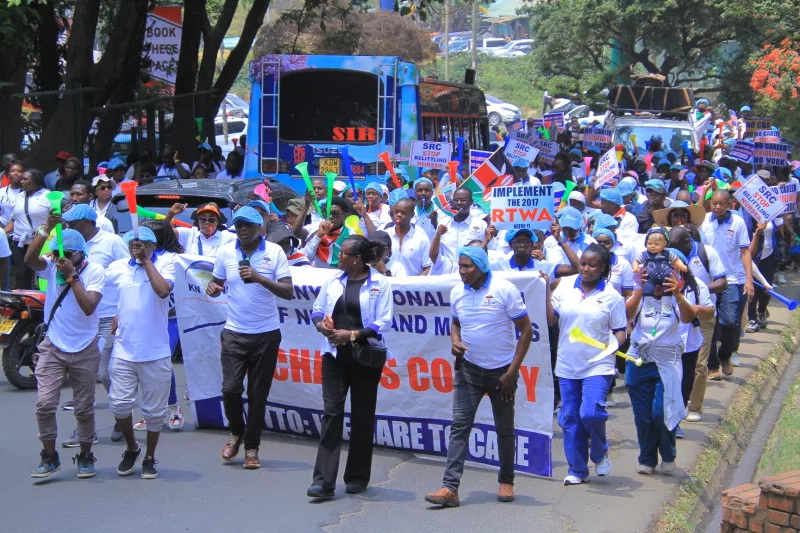
A few years later, the county staff went on strike, and I saw things I had never seen before. For weeks, staff were on the roads dancing, causing mayhem, including walking around with caskets. On the other hand, patients who needed urgent care continued to suffer. Unfortunately, I had no major support to offer. My theory of 'before, during, and after' did not seem to work.
In my life, I had never experienced firsthand what it was like to go through a strike, either as an employee or a manager. How could I? I had spent years working in the non-profit and private sectors. In these two sectors, it is rare and almost unheard of for employees to go on strike. Employment terms, including salaries, are typically agreed upon between the employer and individual employee before a contract is signed.
Additionally, if and when employees become dissatisfied, they can resign, while employers can terminate employment when an employee consistently fails to meet agreed targets and expectations. Public service is a different ball game altogether.
Nurses across the country are on strike, again. Think of a mother who has carried her pregnancy for nine months and is counting down the days until she finally holds her child. On the day she goes into labour, she arrives at her nearest health facility only to find that there is no one to attend to her. In that moment, a labour dispute becomes much more than a disagreement over a CBA; it becomes a matter of life and death.
Last week, the Kenya Aviation Workers Union went on strike, disrupting services across the country's major airports. Think of the traveler who was meant to board a connecting flight but missed it because of a strike they knew nothing about. An important opportunity may have been lost.
The continuing nurses' strike took me back to my interview with the County Public Service Board. In retrospect, my answer to the question of how I would help address recurring strikes should have centred on data, giving substance to my before, during and after approach.
Before a strike happens, leaders in public service and managers at different levels should use data to identify patterns and anticipate trends in industrial action. How often have strikes occurred? What issues have triggered previous strikes? Which groups of workers are most likely to participate, and which services would be most affected?
Such insights can help managers identify warning signs early, engage workers before grievances escalate, and put contingency measures in place where a strike appears likely. They can also guide timely communication with the public, particularly those who depend on the affected services.
During the strike, managers need data in real time to understand the scale and distribution of the disruption. Which services are no longer being provided? How many clients are affected, where are they located, and who among them is most vulnerable? What emergencies are emerging, and where are alternative services available?
After the strike, managers and public service leadership must work with the leadership of the striking staff and other stakeholders to use data to evaluate the cost and damage caused by the strike and put in place mechanisms to prevent similar scenarios in the future.
Strikes will continue to happen. They are part of Kenya's reality of labour relations and public service. But their consequences do not have to be as severe as they often are. Leadership cannot always prevent industrial action, but it can do a better job of anticipating it, responding to it and learning from it.
Data will not end strikes. But it can help us plan better, respond faster and, ultimately, help reduce lives lost in the event of strikes.
NIH Insight Fogarty Postdoctoral Fellow
Related Opinion
A note on cookies
Newshunt uses essential cookies to keep you signed in and to remember your language and country, so the site works the way you expect. With your permission, we'd also like to use analytics cookies to understand how people use Newshunt and improve it over time.
Accepting only affects analytics. To learn more, view our Privacy Policy or Terms & Conditions.
(0)Comments