


venkat
Opinion: USA Telugu Associations Must Stand Up Now

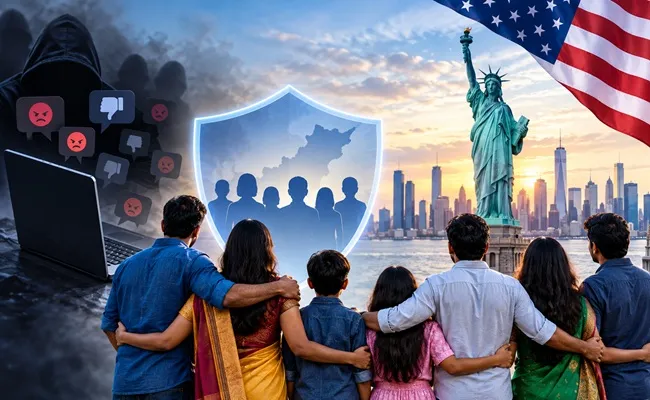
Where are the Telugu associations in the United States when members of their own community are being targeted online?
Several Telugu organizations highlight their commitment to serving and supporting the Telugu community. That commitment deserves recognition, but it must also be tested when the community faces hostility.
In recent times, social media platforms have witnessed accounts that appear to single out Telugu people with offensive, derogatory, and sometimes threatening content. The issue deserves serious attention rather than being dismissed as ordinary online criticism.
Some posts allegedly circulate misleading material by presenting incidents from India as though they occurred in the United States. Such content is used to provoke racism against Telugus, potentially creating unnecessary fear, resentment, and hostility toward an entire community.
There are also instances of personal insults, abusive comments, and body shaming directed at individuals. When online activity crosses into harassment, threats, impersonation, or other unlawful conduct, it should not simply be ignored.
The identity or nationality of those operating such accounts should not become the central issue. Whether an individual is Indian, Pakistani, American, or from elsewhere is secondary. What matters is whether the conduct violates the law or deliberately promotes hatred and intimidation.
This is precisely where established Telugu organizations can play a constructive role. Groups such as NATS, TANA, ATA, AAA, TTA, SiliconAndhra, and other community organizations have significant networks and resources.
Why can't these organizations come together and consult qualified attorneys about the situation? A coordinated legal assessment could determine what conduct is actionable, how victims can preserve evidence, and what appropriate remedies are available.
The organizations do not need to engage in online fights. They do not need to respond to every provocative post. Their responsibility should be to protect community members through lawful, measured, and credible action.
The first step could be to create a mechanism for people to report serious online harassment and threats. Evidence such as screenshots, links, dates, and account details can then be preserved and reviewed by professionals.
The United States has strong legal institutions and established procedures for dealing with harassment, threats, discrimination, and other misconduct. Community organizations should encourage affected individuals to use those channels rather than confronting offenders personally.
There is another reason for acting responsibly. Online campaigns that repeatedly portray an ethnic or linguistic community negatively can contribute to an atmosphere of hostility. Nobody should wait for an online dispute to turn into a real-world confrontation.
There is an X handle that appears to be dedicated to spreading hatred against Telugus. Many claim that it is being operated by a Pakistani, though this has not been verified. If that is true, the question is: why is the account targeting Telugus in particular? Shouldn't there be a proper investigation into this?
The Telugu community has grown enormously across the United States. Its organizations have demonstrated their ability to mobilize thousands of people for conventions, cultural programs, and charitable activities. That same collective strength should be visible when community members genuinely need support.
This is therefore a call for unity, vigilance, and responsible action. Telugu associations need to make it clear that harassment, threats, and targeted abuse will be documented, challenged through lawful means, and taken seriously.
Silence is no longer an adequate response.
Padmaja Avirneni, TX
Related Opinion
A note on cookies
Newshunt uses essential cookies to keep you signed in and to remember your language and country, so the site works the way you expect. With your permission, we'd also like to use analytics cookies to understand how people use Newshunt and improve it over time.
Accepting only affects analytics. To learn more, view our Privacy Policy or Terms & Conditions.
(0)Comments