


Statesman News Service
Why don't we marry the same way?

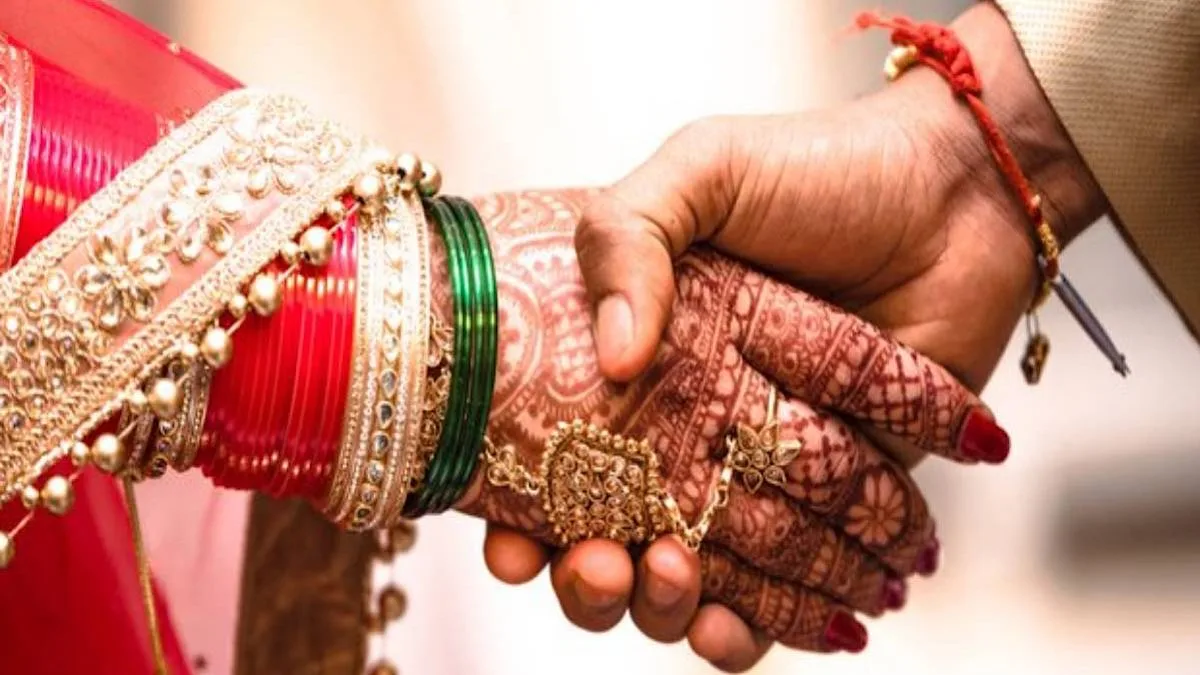
In India, a wedding is rarely just the union of two people. It is a meeting of families, customs, languages, cuisines, histories and communities. This is why an Indian wedding can look completely different depending on where it takes place. A wedding in Kerala may have little resemblance to one in Punjab. A Bengali wedding may follow rituals unfamiliar to a Tamil family. A Christian wedding in Goa, a Muslim wedding in Hyderabad, a Sikh wedding in Amritsar or a tribal wedding in the Northeast may each have their own ceremonies, clothing and symbolism. Yet all of them are recognised as weddings.
So why, in one nation, don't we marry the same way? The simplest answer is that India was never culturally uniform. Its geographical size is only part of the explanation. Over centuries, different communities developed their own ways of understanding family, kinship, religion and social relationships. Marriage naturally became one of the strongest places where these identities were preserved. Geography played an important role. Different regions developed different foods, clothing, occupations and lifestyles, and wedding traditions evolved alongside them.
Advertisement
Climate influenced clothing and cuisine. Agricultural communities developed ceremonies connected with harvests and seasons. Coastal communities developed food traditions shaped by access to seafood and tropical ingredients. Local flowers, grains and spices b ecame par t of wedding celebrations. History added another layer. India's many kingdoms, migrations, trade routes and cultural exchanges created traditions that travelled, merged and changed. Communities moved across regions and carried their customs with them. Some traditions remained relatively local, while others spread widely.
Advertisement
Religion also shaped married rituals, but even within the same religion there is enormous variation. Hindu weddings are perhaps the clearest example. A wedding in North India may prominently feature the pheras around the sacred fire, while a South Indian wedding may place greater emphasis on the tying of the thali or mangalsutra, exchange of garlands and rituals specific to the regional community. Bengali weddings include customs such as the bride's ceremonial entrance and the shubho drishti, while Maharashtrian weddings have their own distinctive rituals and symbolism.
There is no single 'Indian Hindu wedding.' There are many. The same diversity exists beyond Hindu traditions. Muslim weddings vary significantly among regions and communities. Sikh weddings centre around the Anand Karaj ceremony, yet surrounding customs and celebrations can differ according to family and region. Christian weddings in India may combine church traditions with local customs, clothing and food. Then there are India's tribal and indigenous communities, whose marriage traditions may be completely different from mainstream ceremonies. Some have distinctive dances, community participation , symbolic exchanges and traditional forms of matchmaking.
This diversity tells us something important: marriage is not only a religious institution; it is also a cultural memory. When samples repeat a wedding ritual, they are often repeating what their grandparents and great grandparents did. A particular song may carry the language of a region. A piece of jewellery may represent a community's history. A dish served at the wedding may have been prepared in the same family for generations. In that sense, weddings become living videos.
But Indian weddings are changing. Urbanisation, inter-state marriages, migration and social media are creating increasingly hybrid celebrations. A couple may combine a traditional ceremony with a modern reception. A bride may wear a South Indian saree after for one ceremony and a North Indian lehenga for another. Families from different linguistic or religious backgrounds may deliberately combine their customs. Intercommunity marriages are therefore producing something new: the Indian fusion wedding. At the same time, modern weddings also raise questions about expense and social expectations.
The pressure to organise increasingly elaborate celebrations can place financial burdens on families. The idea that weddings must be extravagant has been amplified by social media, celebrity culture and the wedding industry. Perhaps the challenge for modern India is not to make every wedding look the same, but to decide which traditions are worth preserving and which pressures are worth abandoning. A wedding does not become meaningful because it follows the same script as everyone else's.
Its meaning often comes from the traditions that make it personal. India's wedding diversity therefore reflects something larger about the country itself. We have a national identity without having to erase regional identities. We can belong to one nation while speaking different languages, eating different food and celebrating different customs. That is why we don't marry the same way. And perhaps we shouldn't. India's strength has never been its ability to make everyone identical. It has been its ability to allow different traditions to exist, evolve and sometimes come together. One nation. Many languages. Many cultures. And, naturally, many ways to say, 'I do.'
(The writer is a South-Korea based author and Doctor of Physiotherapy.)
Related Opinion
A note on cookies
Newshunt uses essential cookies to keep you signed in and to remember your language and country, so the site works the way you expect. With your permission, we'd also like to use analytics cookies to understand how people use Newshunt and improve it over time.
Accepting only affects analytics. To learn more, view our Privacy Policy or Terms & Conditions.
(0)Comments