


Staff Writer
AUSTIN CHASTAIN: There's more to Michigan State Police than traffic stops

DIMONDALE — You see the red lights, the blue car and an officer walking up to your car, maybe to give you a ticket or tell you your taillight is out.
In that moment, you're annoyed.
'Ugh, I'm going to get a ticket.'
Or maybe, 'Why me? Why did I get stopped?'
But when you picture the Michigan State Police, is that what you picture — traffic stops, tickets, flashing lights and the things you encounter on the road?
I recently learned just how incomplete that picture is.
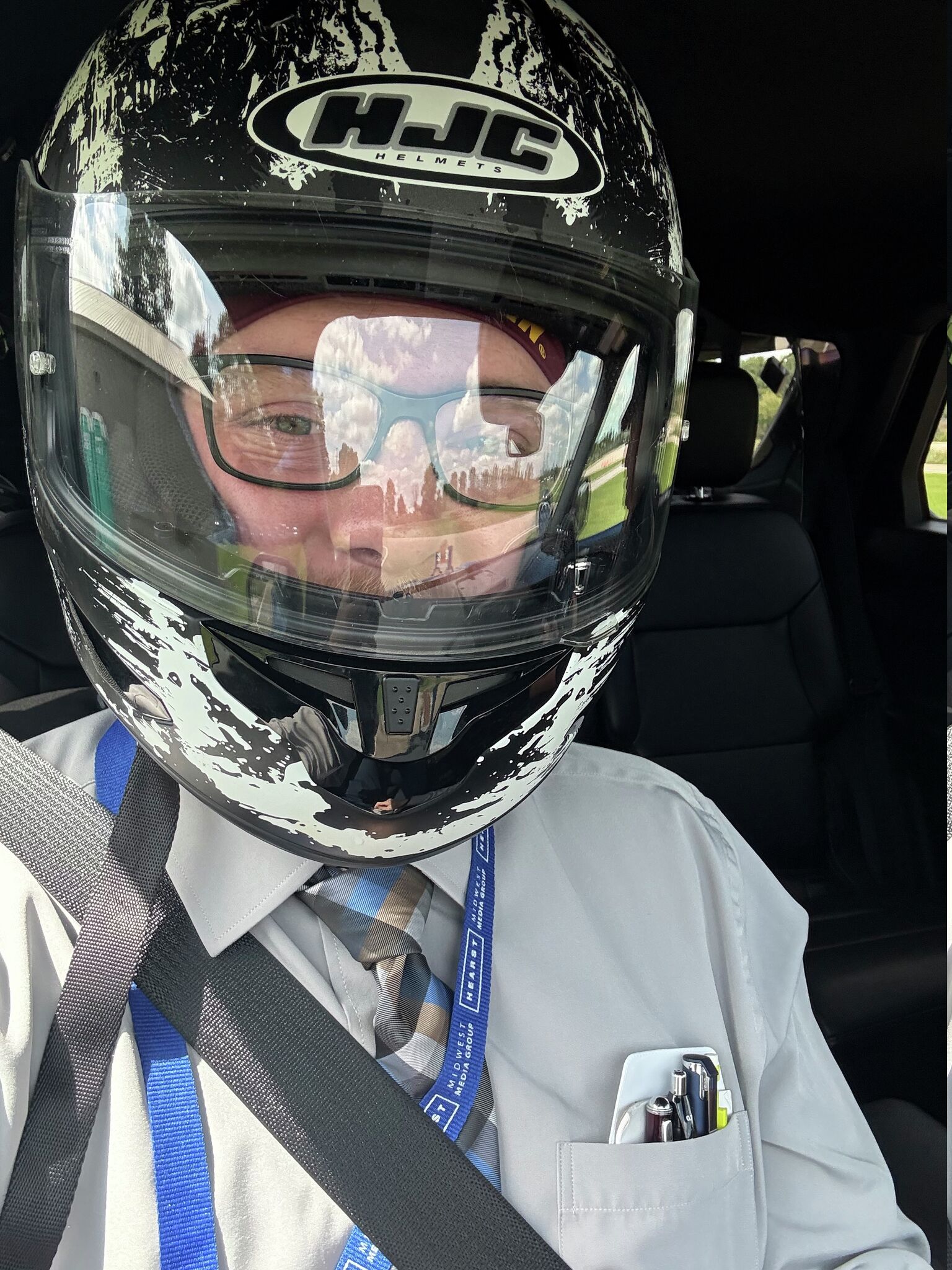
I had the opportunity to tour MSP's training facility, ride along on the performance test track and sit down with some of the agency's leaders for several stories for the Pioneer, including stories about Community Service Troopers, the teen driving program and the agency's efforts to improve wellness among its employees.
I sat down for more than an hour with Col. James Grady and several other leaders from across the agency and discussed everything from community policing and driver training to mental health and the future of MSP.
One common refrain from Sgt. Martin Miller and Grants and Community Services Division Director Nancy Becker Bennett was essentially: 'I could sit here for a week and tell you all of the stories we have.'
I started to believe them.
Listening to Grady and Sgt. Don Stewart in particular, their energy was infectious. I noticed the respect they had for each other and the people around them.
There was one thing Grady said that stuck with me.
'At some point, it'll be time. Time is up, and it'll be time for you to move on,' Grady said. 'That's why ... we seize the day to take advantage of making some positive change where we can make it happen.'
My response?
'So can I run through the brick wall now or later?'
That led to Grady trying to recruit me to join MSP.
If you know me, you know that's probably not in the cards for me at this point in my life. My future wife agreed — I could do it, but I'd probably hate it.
I may not be trading in my reporter's notebook for an MSP badge anytime soon, but I walked out of the building with a much longer list of stories than the one I walked in with.
That might have been my biggest takeaway from the day.
As reporters, we often interact with law enforcement when something has already gone wrong.
There's been a crash. A crime has been committed. Someone has been arrested. We read the releases, make the phone calls, ask the questions and tell you what happened.
Those are important stories, and asking difficult questions of the people and institutions we cover will always be part of this job.
But there's also value in showing up when nothing has gone wrong.
I went to MSP expecting to learn about a handful of programs. Instead, seemingly every answer led to another question and another potential story.
I learned about troopers working with preschoolers and teenagers. I learned about efforts to address mental health and trauma among sworn and civilian employees. I learned about programs and responsibilities I didn't know existed.
At one point, I thought I heard someone mention Tunisia.
As in, the country.
No, I hadn't misheard.
Members of the Tunisian National Police Directorate of Training were visiting MSP that week. That became one more entry on my rapidly growing list of things I didn't know about the agency when I walked through the doors that morning.
None of that means my job is to become a cheerleader for the people I cover.
It means spending time with the people I cover and understanding what they do gives me the opportunity to ask better questions — including the difficult ones when they need to be asked.
I walked into the training facility thinking I had a pretty good idea of what I was there to cover.
I walked out realizing how much I didn't know.
Near the end of our conversation, Grady offered me some advice.
'Keep coming back, sir,' he said. 'There's plenty to cover about this agency.'
You don't have to tell a reporter twice.
Related Opinion
A note on cookies
Newshunt uses essential cookies to keep you signed in and to remember your language and country, so the site works the way you expect. With your permission, we'd also like to use analytics cookies to understand how people use Newshunt and improve it over time.
Accepting only affects analytics. To learn more, view our Privacy Policy or Terms & Conditions.
(0)Comments