


Gordon Brown
A little honesty would be useful in Lebanon

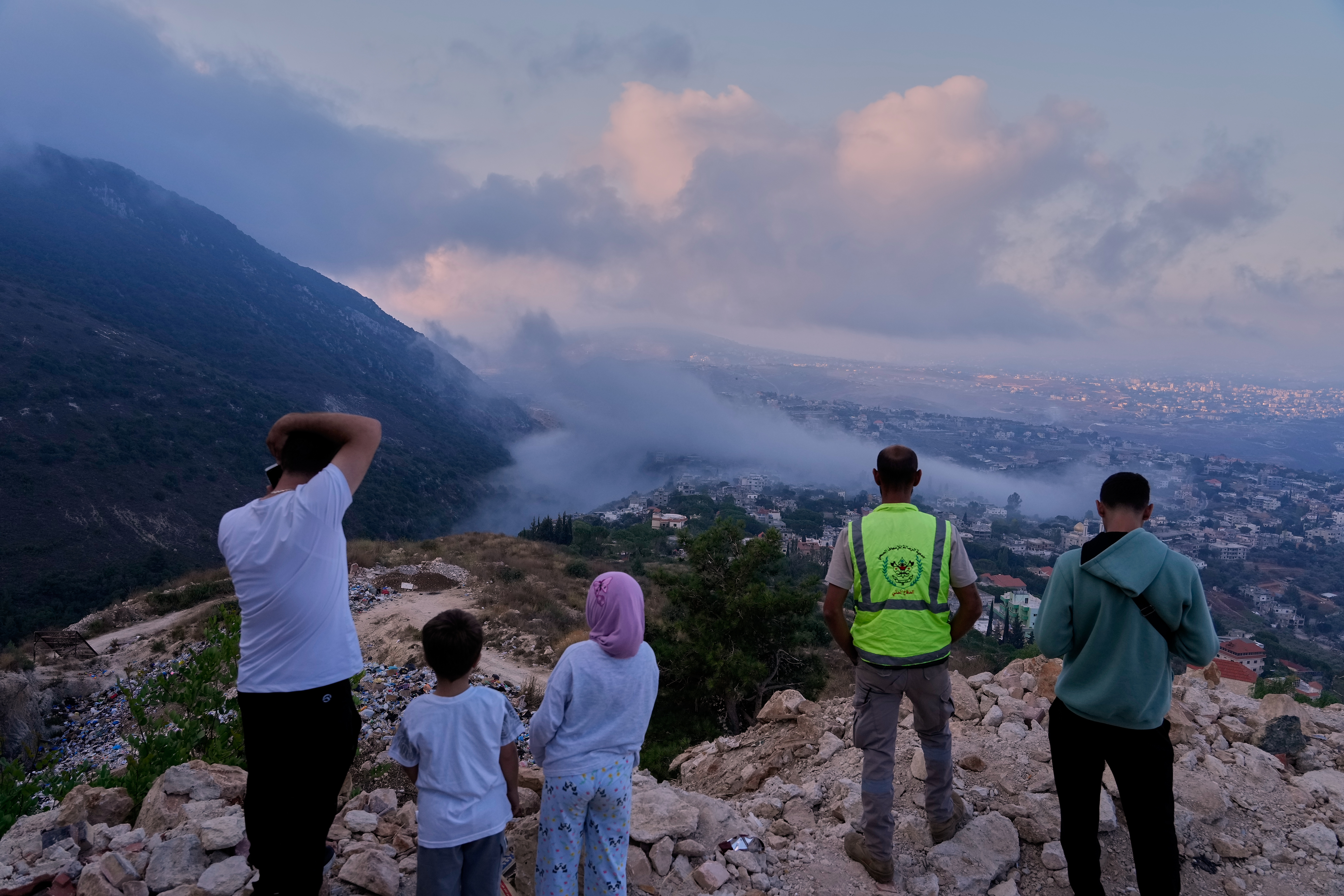
The issue of the Ali Al-Taher ridge in southern Lebanon has ended up as a distraction and a different phase has begun — one that changes nothing in the substance of the matter.The Israeli propaganda machine, organized and disseminated by experts in psychological warfare, gave many people, including numerous Lebanese, the impression that we were witnessing something akin to the Normandy landings of the Second World War or the fall of Saigon at the end of the Vietnam War.Yet these heights, which I suspect the vast majority of Lebanese outside the south had never even heard of, are no different in terrain to many other areas across Lebanon. In the calculations of modern warfare and Israel's strategic objectives alike, they were already militarily indefensible.Let us momentarily set aside the dramatization surrounding the 'extraordinary tunnels' and the supposedly 'exceptional' strategic value of the ridge. The confrontations of recent months in southern Lebanon were not part of a conventional war of direct engagement in the traditional sense. Rather, they amounted to an attempt to disrupt, exhaust, raise the costs of and complicate plans. All this unfolded amid the countdown to Israeli and US elections on the one hand and the Israeli-American confrontation with Iran on the other.The so-called support war launched by Hezbollah undoubtedly provided many with more than enough justification for the Israeli occupation and displacement measures. Yet observers, including many Lebanese who are sympathetic to neither Hezbollah nor Iran, understood the reality that the party's leadership had been drawn, perhaps unwillingly, into a conflict it likely knew from the outset was unequal, pitting it against the strongest regional power in the Middle East, backed by the world's most powerful nation.The problem for Hezbollah is that it does not handle politics as skillfully as it handles armed resistance. Also, even if it had avoided becoming involved, it would still have suffered losses after losing its Syrian corridor and a significant portion of its financial resources, while also forfeiting much of the sympathy it once enjoyed among Sunni communities in Lebanon, Syria and other Arab countries.
Meanwhile, Israel is now governed by the most hard-line, militaristic and religious-nationalist leadership in its history, with Benjamin Netanyahu serving as its political face. Behind Netanyahu, his generals and the settler extremists who support his rule stand powerful American and international lobbying groups that have crossed the point of no return in pursuing what they see as the 'final solution' — eliminating the Palestinian identity, cause, culture and living presence.
Hezbollah faces a serious challenge from Shiite groups that oppose its conduct and slogans.
Eyad Abu Shakra
In my view, Hezbollah's silence regarding the deliberate Israeli exaggeration of what was achieved at the Ali Al-Taher ridge stems from its desire to preserve the morale of its supporters by not having to admit that it lost a battle but not the war.Nevertheless, the party undoubtedly faces a serious challenge from Shiite groups that oppose its conduct and slogans and that have every right to object after years of marginalization and accusations of disloyalty. What is striking today is that some of these groups have lost all restraint in their political and media retaliation.Even some Shiite liberals and leftists no longer hesitate to express schadenfreude and, at times, to participate in incitement, despite fully understanding the complexities of the Lebanese arena and the potential consequences, now more than ever, of absolute Israeli dominance in Lebanon and across the region.These people have yet to grasp that the choice is no longer between Iranian clerical extremism fueled by sectarian rhetoric and a democratic, moderate Western alternative offering reasonable models of coexistence. Even if the current conflict were to bring down the regime in Tehran, there is no indication on the horizon that Israeli or Western racism, whether in Europe or the US, would begin to recede.If this is the situation within parts of Lebanon's Shiite community, then how can we imagine the feelings of others, their sense of triumph and their eagerness to provoke?Can we truly be optimistic that Lebanon's official institutions will act rationally, free from spite and gloating, and independently of the ongoing and escalating Likud-inspired rhetoric that Washington appears largely unconcerned about despite its future risks?Will the Lebanese public accept official assurances that Israel has no territorial ambitions in southern Lebanon beyond disarming Hezbollah in order to protect its settlements?And will they believe that the displacement of hundreds of thousands of people and the destruction of dozens of towns and villages in southern and southeastern Lebanon are merely temporary measures whose consequences will simply disappear once Netanyahu feels his settlers are safe?I realize that these are not comfortable times, neither in the Arab world nor beyond it. I fully understand that the game of nations is now being played without rules or restraints and indeed without a referee.I believe that the visionaries among international leaders must recognize, before it is too late, that the cost of repairing the damage inflicted over the past two years could be extraordinarily high.
I also hope that the courageous among them — those capable of helping to reduce tensions — will acknowledge that the structures of power and governance, even in long-established Western democracies, have become vulnerable to potentially devastating collapse at the hands of the racist and populist forces that are poised to assume power in several pivotal countries.
Eyad Abu Shakra is managing editor of Asharq Al-Awsat, where this article was originally published. X: @eyad1949
Related Opinion
A note on cookies
Newshunt uses essential cookies to keep you signed in and to remember your language and country, so the site works the way you expect. With your permission, we'd also like to use analytics cookies to understand how people use Newshunt and improve it over time.
Accepting only affects analytics. To learn more, view our Privacy Policy or Terms & Conditions.
(0)Comments