


Báo Pháp Luật Việt Nam
Seeking public opinion in Hanoi on the overall adjustment of the Red River urban zoning plan.

Follow Vietnam.vn on
Gathering feedback in two stages
According to Plan No. 176/KH-SXD dated September 5, 2026, of the Hanoi Department of Construction, the consultation process is carried out in two stages: consultation during the planning phase organized by the Planning and Architecture Project Management Board, and consultation during the planning appraisal phase chaired by the Department of Construction.
The consultation scope includes 16 wards and communes within the planning boundary, including Thuong Cat, Dong Ngac, Phu Thuong, Hong Ha, Bo De, Long Bien, Linh Nam, O Dien, Me Linh, Thien Loc, Vinh Thanh, Dong Anh, Bat Trang, Thanh Tri, Nam Phu, and Hong Van; and 8 wards and communes within the planning influence area, namely Tay Ho, Hoan Kiem, Cua Nam, Hai Ba Trung, Vinh Tuy, Vinh Hung, Yen So, and Yen Lang commune. For agencies and organizations in the aforementioned localities, the deadline for providing written feedback is 15 days from the date of receipt of the dossier.
For directly affected communities, the planning documents (including the Opinion Form) are posted and displayed at the headquarters of the commune/ward People's Committee or public gathering places; simultaneously, the electronic Opinion Form is uploaded to the website of the Department of Construction, the Hanoi Institute of Construction Planning, and the local information system.
For residents throughout the city, the planning documents and electronic feedback forms are posted on the websites of the Hanoi People's Committee, the Department of Construction, and the Hanoi Institute of Construction Planning. The feedback period is 20 days from the date the feedback request is made public.
The Department of Construction will organize online conferences to receive, synthesize opinions, and respond to the public according to the city's unified mechanism, tentatively scheduled for September 11, 17, and 25, in a format combining in-person meetings at the City People's Committee headquarters with online participation at local locations.
During the planning review phase, state management agencies provide written opinions within 10 days; organizations and experts provide written opinions within 15 days from the date of receiving the dossier, after which the Department of Construction organizes a Review Council meeting as prescribed.
Ensure that the consultation process is carried out in a coordinated and thorough manner.
Based on the plan of the Hanoi City Party Committee and the Hanoi Department of Construction, to date, the communes and wards within the planning boundaries and the planning influence area have proactively and urgently developed specific implementation plans at the local level even before the announcement date, ensuring that information dissemination, propaganda, and public consultation are carried out synchronously and thoroughly.
Local authorities have also fully prepared the necessary facilities for posting and displaying planning documents at the People's Committee headquarters, village/neighborhood cultural centers, and community centers; they have also prepared the information technology infrastructure to upload documents and electronic opinion forms on the local government's official portals/websites, digital platforms, and social media, as well as the technical infrastructure to connect the various locations for the online conference with the city.
The communes and wards have clearly assigned personnel and focal point officers responsible for receiving and compiling daily opinion polls; proactively developed plans to ensure political security and social order throughout the opinion-gathering period, and promptly detected and handled cases of individuals exploiting the opinion-gathering process to post false information, incite unrest, or disrupt public order.
Organizing a broad consultation process is a crucial step in finalizing the overall adjustment of the Red River urban zoning plan, at a scale of 1/5000. This demonstrates the open-minded, democratic, transparent spirit of Hanoi City, promoting the people's right to self-governance and creating high consensus in the implementation of the plan.
Through the consultation process, a mechanism for information exchange, public and transparent dialogue, and two-way feedback between the government and the people will be established; the opinions, thoughts, and aspirations of the people, especially households within the project's affected area, will be listened to, and the relevant authorities will provide quick, specific, and accurate responses.
According to the Hanoi People's Committee, Hanoi, as an important economic , cultural, and political center of Vietnam, has a history deeply marked by the rice-farming culture.
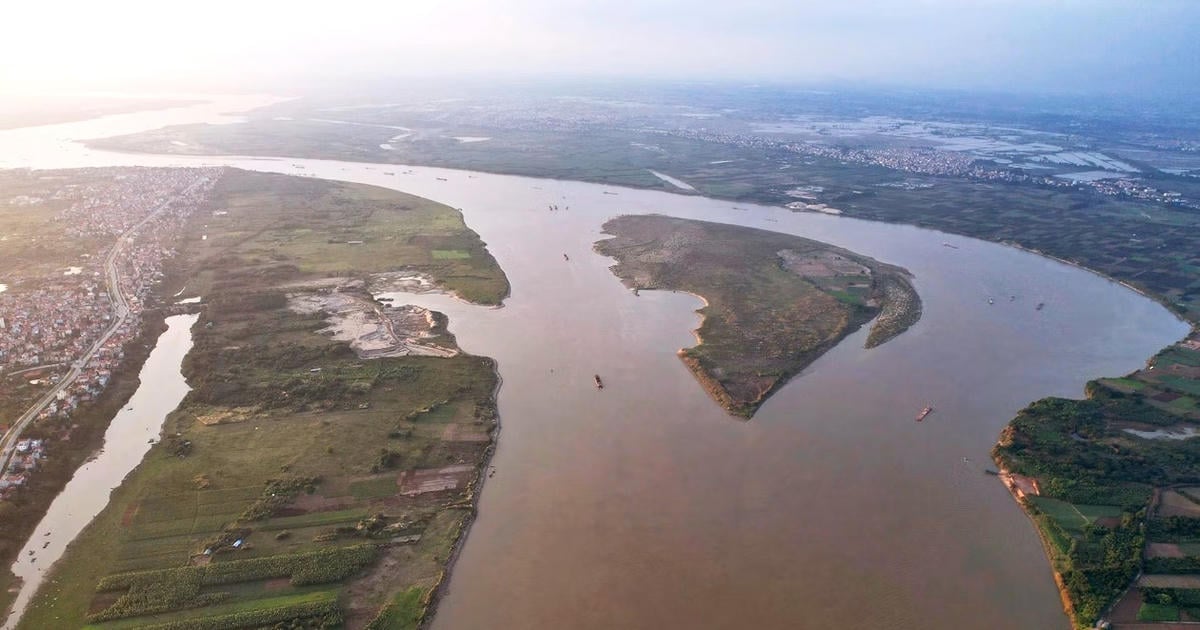
In particular, the Red River and its riparian areas play a crucial and irreplaceable role in the development of Hanoi. Due to the need for flood control, dikes have gradually been built along both the left and right banks of the Red River; however, these dikes have also created a separation between the Red River and the city's development space.
The transportation and technical infrastructure in the area outside the dike along both sides of the river is still lacking and not synchronized; the urban landscape has not been invested in or exploited in proportion to its position as the central axis of the city; encroachment and illegal use of riverside land, and environmental sanitation problems occur frequently.
In this context, investing in the Red River Landscape Boulevard Project is necessary to create a central green space axis linked to creative culture along the Red River, serving as an economic and social development axis and symbolizing Hanoi's "Culture - Identity - Creativity," aiming towards a "civilized, modern, and sustainable capital" with contemporary intelligence and global stature.
The six core values identified to gradually realize the above goal are: "Flood prevention and safety - Ecology - Infrastructure - Functional transformation - Economic development - Culture and civilization".
The scope of the planning adjustment study spans 40km in a northwest-southeast direction, passing through the central urban area; from Hong Ha Bridge to Me So Bridge, within the administrative boundaries of 16 communes and wards of Hanoi City.
Hanoi City clearly stated the principles for adjusting the planning, including compliance with the approved Master Plan for Hanoi Capital City with a 100-year vision. Ensuring unified urban development spatial orientation, the framework infrastructure system, green corridors, and the structure on both sides of the Red River as the central landscape axis of the Capital City. Ensuring flood control safety and dike stability. Not altering or reducing flood drainage capacity; not encroaching on flood drainage corridors, dike slopes, or dike bodies.
Simultaneously, harmonize urban development, conservation, and riverine ecology. Maintain the role of the Red River as the central green axis, cultural axis, and landscape axis. Adapt to climate change and promote sustainable development. Synchronize technical and social infrastructure. Ensure connectivity with neighboring sub-areas. Create a legal basis for legitimate projects in the floodplain area, while maintaining strict control over risks and environmental impact.
Along with organizing public consultations on the overall adjustment of the Red River urban zoning plan, scale 1/5000 (section from Hong Ha Bridge to Me So Bridge), Hanoi City also organized public consultations on the partial adjustment of the Ba Dinh Political Center area plan and the partial adjustment of the H1-1B urban zoning plan (Ho Guom Lake area and its surroundings).
Source: https://baophapluat.vn/lay-y-kien-nhan-dan-thu-do-ve-dieu-chinh-tong-the-quy-hoach-phan-khu-do-thi-song-hong.html
Related Opinion
A note on cookies
Newshunt uses essential cookies to keep you signed in and to remember your language and country, so the site works the way you expect. With your permission, we'd also like to use analytics cookies to understand how people use Newshunt and improve it over time.
Accepting only affects analytics. To learn more, view our Privacy Policy or Terms & Conditions.
(0)Comments