


Tommy Pinette
Susan Collins has scant claim to ‘County roots'

Tommy Pinette is a lifelong Mainer, originally from Limestone. As a trained historian and cultural theorist, he has investigated the effects of Maine's 1919 English-only law, situating the banning of French and Wabanaki languages in Maine public schools and contemporary Wabanaki struggles for greater sovereignty today.
The U.S. Senate race this coming November pits lumber barons turned petit oligarchs against a history of organized labor on the margins of American society.
There is much commentary on the 'County roots' of both Troy Jackson and Susan Collins. For the most part, it stinks of myopic malaise from Portland or comes from out-of-state commentators who know nothing about living in a deindustrialized borderland.
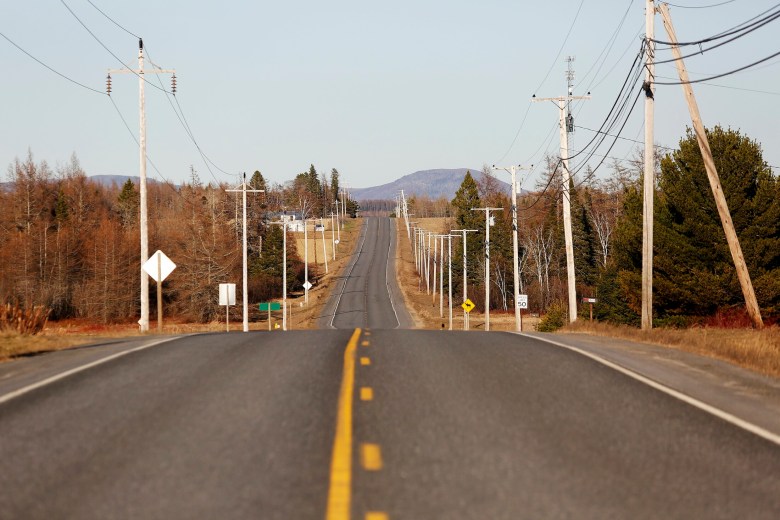
Northern Maine, known as The County to many Mainers, is not the serene and pastoral North Woods you see on social media.
It is Wabanaki homeland that has witnessed similar struggles between local workers and distant capital. It is home to the same deterioration and destruction of rural depopulation witnessed other former industrial heartlands, like coal country and the upper Midwest. It has a history of violent racial politics, in which potato farmers housed Mi'kmaw potato pickers in barns and sheds, covered with human feces, in order to sell potatoes for millions of dollars.
In fact, The County has its fair share of oligarchs and owner classes. They are called, ironically enough, 'farmers.' While this image conjures up a humble and hardworking family man tilling fields by hand, the reality is one of agribusiness and global markets, of a select few families in each town who own incredible amounts of capital and real estate compared to the rest of the town. These family oligarchs swing town governments and cut off federal money.
Advertisement
Northern Maine is a place where old money still speaks. Settler families like the Collinses, who first settled in the middle of the 19th century, still hold enormous moral and political sway over the communities they dictate. While the region's overreliance on the potato industry has ultimately made it one of the poorest counties in America, these very 'farmers' are glorified as the last bastion of a true 'County culture.'
These families are given an almost feudal reverence, held up as models of agrarian work ethic and Christian family values. In reality, they are the reason Northern Maine is impoverished and hemorrhaging its brightest young people.
I know the Collins family's wealth personally. By way of hypergamy, I gained private access to the lives of Caribou's oligarchs, seated in their fiefs behind the high school. I was permitted access to their 'camps,' nestled on Madawaska Lake, mansions three times the size of my family's home complete with motorboats, Sea-Doos, in-home movie theaters and Castilian lofts. Before this, I thought the peak of wealth in Northern Maine was a finished basement. I saw wealth for the first time in these camps.
The families I spent time with all paid homage to the lords of Caribou: the Collins family. They have an elusive image in Caribou. The younger members of the family tend now to be shipped to private, $60,000/year schools, likely because the defunded school system in Caribou is no longer rigorous enough for their children.
The Collins family has played the same game of bait-and-switch as Susan has played in the U.S. Senate the past 24 years. They are held up as exemplars of 'the County work ethic' while also embedding themselves multi-generationally into a conservative bloc in local politics, blocking access to essential resources and community food programs.
It is concerning to see that every member of the Collins family who has been in politics has identified as a Republican.
Advertisement
The Collins family, the petit oligarchs par excellence, were innovators in this style of borderlands backroom politics. Donald Collins, Susan's father, is the former mayor of Caribou. Samuel Wilson Collins Jr., Susan's uncle, was a Republican lawyer and politician who worked in the War Department after World War II, developing surveillance programs.
Susan Collins comes from an Anglo-Saxon family of lumber barons. They are the pinnacle of settler privilege, gaining millions of dollars from unceded Wabanaki territory (the traditional homelands of the Mi'kmaq and Wolastoqey peoples, specifically). The Collins family sits at the top of the lumber supply chain, first opening a sawmill on the Aroostook River between 1844 and 1845.
The suggestion in an Aug. 2 news report in this newspaper ('In Aroostook County, Senate contest of locals doubles as test of Trump's base') that Collins and Jackson are both from logging families is laughable.
Today, members of the Collins family fly in private jets and chum around with the children of billionaires in some of New England's most prestigious private schools. Troy Jackson is a worker, someone who has needed to place his survival and quality of life on a wage; someone who did the actual labor of cutting, assembling and shipping logs that the Collins family had the settler privilege of owning the means of production for.
One's heritage is not one's destiny, but the apple tends to fall not far from the tree. Susan Collins is not an advocate of Maine, or even a model of The County. She is just the logical conclusion of a regional oligarchy in Northern Maine that protects and serves only itself.
While the professional class of Northern Maine idolizes the Collins family for giving them national recognition, multiple generations of the family have steered local politics in the direction of economic austerity and defeatism.
Mainers, we can only hope to better our lives if we choose differently. Choosing Susan Collins is insanity. We must choose differently.
Related Opinion
A note on cookies
Newshunt uses essential cookies to keep you signed in and to remember your language and country, so the site works the way you expect. With your permission, we'd also like to use analytics cookies to understand how people use Newshunt and improve it over time.
Accepting only affects analytics. To learn more, view our Privacy Policy or Terms & Conditions.
(0)Comments