


unknown
Iowans' votes matter more than usual this year

The time when U.S. election campaigns didn't hit high gear until around Labor Day is long past. But Iowans ought to expect even more consuming politics between this year's holiday and Election Day.
Candidates, political parties and stakes are all arguing, with more than usual justification, that the state's immediate direction is up for grabs, and that control of Congress could depend on the outcomes of Iowa's five federal races.
It isn't hyperbole. The ovals we fill in when we vote really can redirect policy at all levels of government (or signal support for staying the course). There has rarely been a stronger argument for Iowans to spend a portion of the next eight weeks getting more familiar with the candidates.
Pieces of the campaign for governor's unicorn nature have been clear for a while, such as this being the first election in 20 years without an incumbent running.
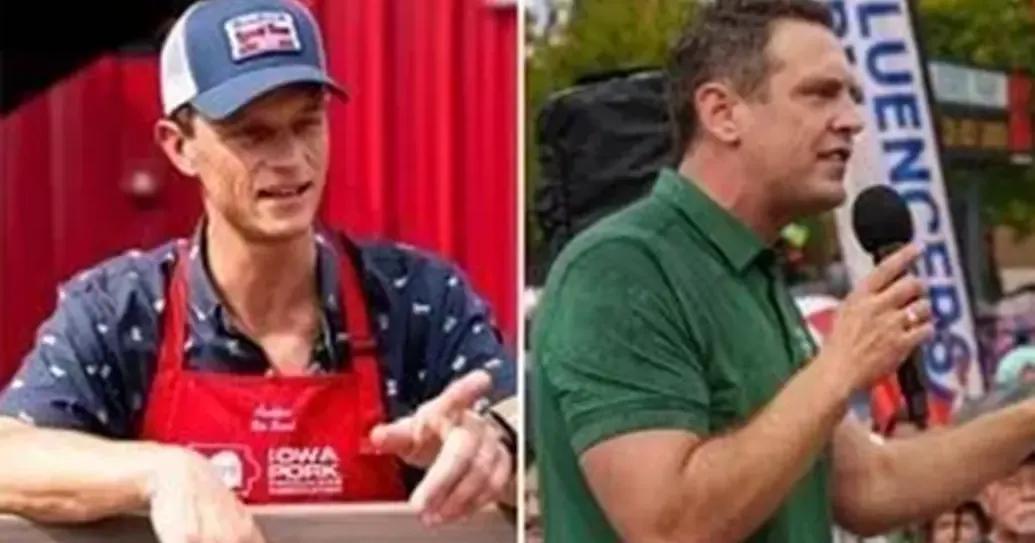
Democrats are pushing in a lot of chips on the notion that State Auditor Rob Sand â the only Democrat to win a statewide election in 2022 â is a talented enough politician to undo an 18-percentage-point loss for the party in this race that year. Republicans narrowly nominated a first-time candidate for office in Zach Lahn who, when it comes to water quality and a few other topics, says things we never would have heard from the mouths of Republican Govs. Kim Reynolds and Terry Branstad.
Each man has been campaigning aggressively and outlining policy ideas, so a well-informed choice is possible. We urge Iowans to look beyond party labels as they make their decisions in this race. Each candidate has features that bely partisanship.
Cook Political Report sorts U.S. House races by projected outcome. On Sept. 2, its lists showed 414 seats almost evenly divided between near sure wins for individual Republicans and Democrats. The Cook analysis showed just 21 toss-ups set to decide whether the chamber aligns with President Donald Trump or opposes him.
Two of the toss-ups are in Iowa, the 3rd District with incumbent Republican Zach Nunn facing Democratic state Sen. Sarah Trone Garriott, and the 1st District, with incumbent Republican Mariannette Miller-Meeks up against former state lawmaker Christina Bohannan for the third consecutive election.
Put another way, half of Iowa's seats are crucial to control of Congress. The 2nd District contest between Republican Joe Mitchell and Democrat Lindsay James is rated 'leans Republican.' The 4th District contest, while it features an open seat after U.S. Rep. Randy Feenstra decided to run for governor, is considered "solid Republican."
The U.S. Senate election between Republican U.S. Rep. Ashley Hinson and Democratic state Rep. Josh Turek is similarly rated a toss-up, one of six such contests. Democrats would need to nearly run the table of narrow Senate contests nationally to seize control of that chamber.
These Iowa races have played out so far on more conventionally partisan lines as compared with the governor's contest. On those terms alone, the consequences are substantial for how the rest of Trump's second term goes. Republicans say they could advance legislative goals with congressional majorities. Democrats say they would be a check on the president if they're in charge.
Other elections are important, too. State lawmakers can determine the fate of local priorities, such as the fight throughout this decade over carbon pipelines and eminent domain. County supervisors set tax rates and manage infrastructure and more, even when they aren't caught up in controversies like current data center debates. Iowans also will vote on how many votes should be necessary in the Legislature to increase state income tax rates.
You should make a plan for registering to vote, if necessary, and then for casting a ballot for the type of leadership you want to see.
You can vote starting Oct. 14. What you do at the polls will matter.
Related Opinion
A note on cookies
Newshunt uses essential cookies to keep you signed in and to remember your language and country, so the site works the way you expect. With your permission, we'd also like to use analytics cookies to understand how people use Newshunt and improve it over time.
Accepting only affects analytics. To learn more, view our Privacy Policy or Terms & Conditions.
(0)Comments