


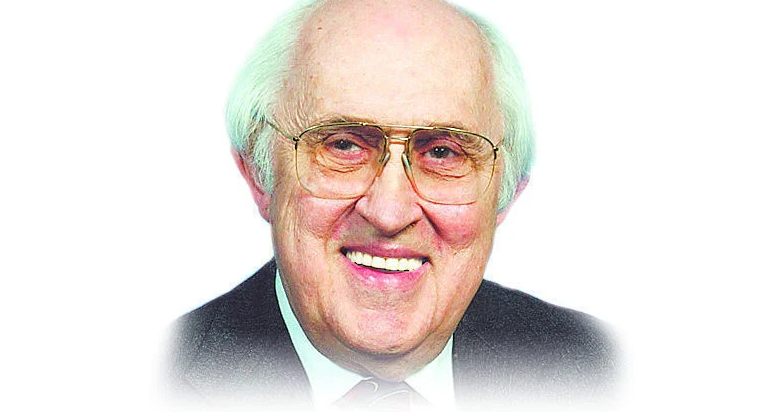
Don Wooten
Don Wooten: "And another thing ..." Democracy requires participation

With the election just two months away, with the national debt topping 40 trillion, with Congressional heroism in short supply, and with the president focused on monuments to himself, it's definitely politician-bashing time.
I know it looks bad. It's hard to imagine that anyone might have a kind word to say for anyone in political office just now, but I'm going to try. After all, I was in the political minor leagues (Springfield) for a while and enjoyed the friendship of some people in the majors (Washington), so I am in a position to be understanding, if not quite forgiving.
Our democracy is not a pretty sight just now. Congress has largely ceased to function. It's not a deliberative body in which members seek to reach a reasonable compromise, but rather one in which power politics predominates. The process has been seriously undermined by an obvious unwillingness to make unpleasant decisions. Why can't our representatives show more courage?
The first thing to remember in all this is that these are people we elected. As outrageous as it may seem, they actually reflect the public mind. If they didn't, they wouldn't be in office. The root of the problem truly is the ballot box.
In the past, it was an axiom of public life that the public was better served than it deserved to be. That's no longer true. The passion, caprice, and primal instincts of the voter are, for the most part, accurately reflected in legislative councils. Americans have been voting their dreams, prejudices, and wishes and the people they put in office are having a hard time reconciling that to reality.
Since 1980, we have been living through systemic changes. State and local party structure has weakened. The tax give-away of 1981, with the top rate cut from 70% to 28%, was "voodoo economics" (in George Bush's memorable phrase) and never had a chance of working in the real world.
As tax revenue declined, we borrowed billions and pretended that we were living in boom times. The "longest sustained economic recovery" happened only at the top; manufacturing jobs began to yield to robots or were moved overseas. Stock prices soared, no longer reflecting actual value. And the national debt began to rise (oddly enough, more sharply in Republican administrations rather than in Democratic ones.)
But voters did not object. Cheap, emotional appeals and negative campaigning won election after election. Voters were teaching politicians a strange lesson: don't talk about hard choices, just touch a few nerve endings.
Most people in public office want to keep their jobs, even as voters want to keep theirs. But they have to respond, not to a single boss, but to thousands who send conflicting signals. The majority of these signals in recent times have had to do with intangibles: racism, misogyny, religion, and class.
Among this cacophony there are a few loud and clear commands from people willing to finance campaigns. It's difficult for a politician not to respond to folks who know exactly what they want and will supply money to buy the commercials that beguile the rest of us.
I don't say this is correct or honorable, but that's the way it works.
Now, honestly, what would you do if you were in office? How bold would you be if making hard choices were almost certain to cost you your job, your power and prestige? It's a fair question and one which politicians ask themselves constantly.
There are a number of other questions to be asked. When "tax reform" laws served the wealthy, who objected? When mindless ideologues deregulated financial institutions, where was the outcry? When government watchdog agencies were silenced or gutted, who paid attention?
It's much easier to identify mistakes after the fact, when we are suffering from their effects. It's a lot harder to protest when the publicity mills of the administration are commanding the news. It's impossible to change the course of action without solid public support. And money.
And so we come to the heart of the matter. A democracy is a messy form of government unless everyone in it is knowledgeable and involved. That means, not just watching a few 30-second commercials; but learning about issues and making rational judgments.
It means attending political gatherings where you can question a candidate and listen to his or her response. It means voting in primaries (it's amazing how many people think participating in a party vote violates their integrity) in order to get the best candidate nominated. It means refusing to listen to character attacks, but rather judging a person on a voting record or, in the absence of one, a detailed and realistic set of aims.
Finally, it means supporting someone who will tell you the frozen truth. Such a person doesn't have to vote exactly the way you want on every issue (that's an impossible dream anyway), but should be able to tell you why a particular vote was cast.
The most irresponsible idea abroad today is to vote against all incumbents. There are excellent men and women in office who deserve to remain there. There are also some promising new candidates. The problem is to look past their campaigns to discover which will do the better job.
Damning them all is both futile and foolish. It weakens the system even more. Our representatives will never be able to make the hard choices in Washington if we don't make them first in the voting booth.
This coming election may prove to be the most consequential in my long lifetime. The voting process in the United States is open and honest at the local level, but there are people in higher office eager to corrupt it to their advantage.
Pay attention, get the facts, register, and cast your vote wisely.
Related Opinion
A note on cookies
Newshunt uses essential cookies to keep you signed in and to remember your language and country, so the site works the way you expect. With your permission, we'd also like to use analytics cookies to understand how people use Newshunt and improve it over time.
Accepting only affects analytics. To learn more, view our Privacy Policy or Terms & Conditions.
(0)Comments