


Jane Macdougall
The Bookless Club: What are you doing about the quality of air you breathe?

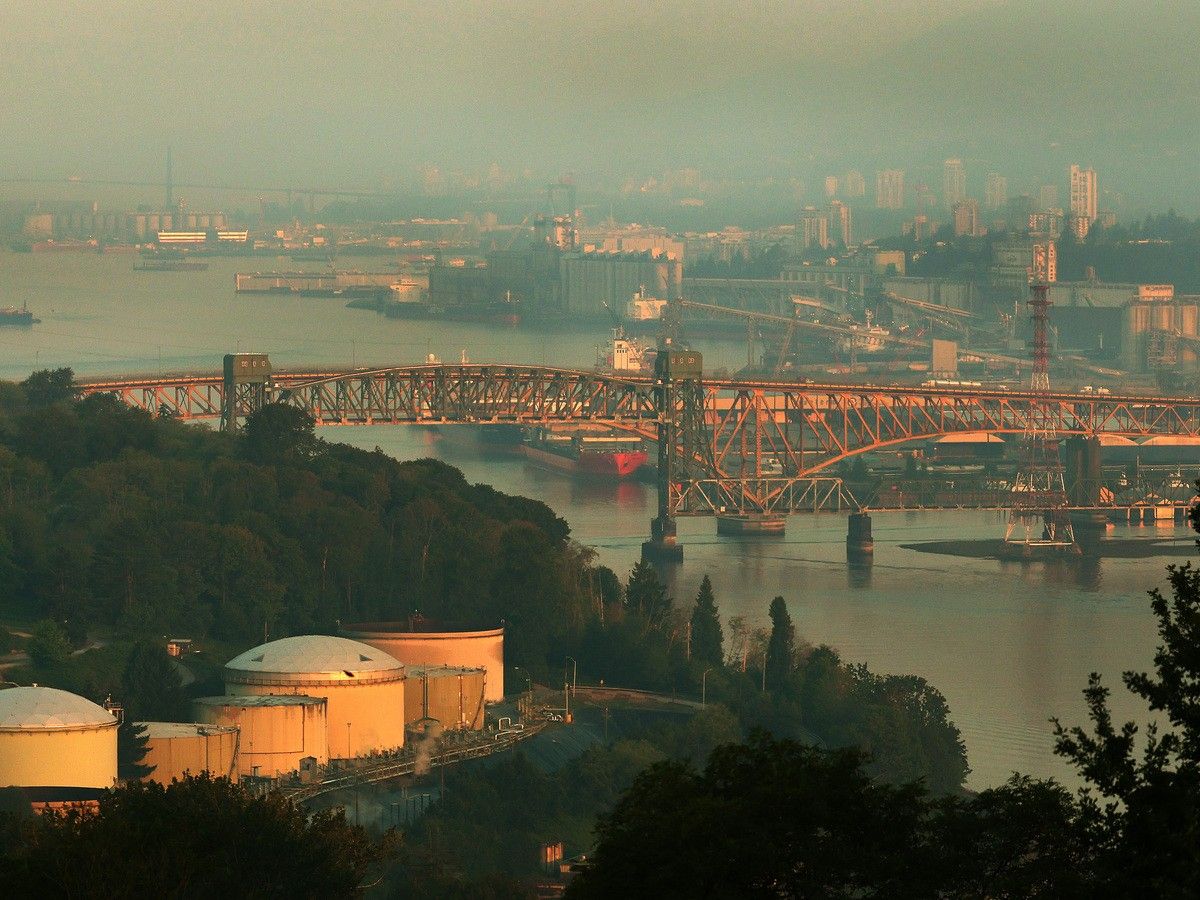
The Second Narrows Bridge in Vancouver seen during an air-quality warning early in August. Photo by NICK PROCAYLO / 10112383A
What do you think of when you think of Iceland?
This advertisement has not loaded yet, but your article continues below.
THIS CONTENT IS RESERVED FOR SUBSCRIBERS ONLY
Subscribe now to read the latest news in your city and across Canada. Exclusive articles by top sports columnists Patrick Johnston, Ben Kuzma, J.J. Abrams and others. Plus, Canucks Report, Sports and Headline News newsletters and events.
Unlimited online access to The Province and 15 news sites with one account.
The Province ePaper, an electronic replica of the print edition to view on any device, share and comment on.
Daily puzzles and comics, including the New York Times Crossword.
Support local journalism. SUBSCRIBE TO UNLOCK MORE ARTICLES
Subscribe now to read the latest news in your city and across Canada. Exclusive articles by top sports columnists Patrick Johnston, Ben Kuzma, J.J. Abrams and others. Plus, Canucks Report, Sports and Headline News newsletters and events.
Unlimited online access to The Province and 15 news sites with one account.
The Province ePaper, an electronic replica of the print edition to view on any device, share and comment on.
Daily puzzles and comics, including the New York Times Crossword.
Support local journalism. REGISTER / SIGN IN TO UNLOCK MORE ARTICLES
Create an account or sign in to continue with your reading experience. Access articles from across Canada with one account.
Share your thoughts and join the conversation in the comments.
Enjoy additional articles per month.
Get email updates from your favourite authors. THIS ARTICLE IS FREE TO READ REGISTER TO UNLOCK.
Create an account or sign in to continue with your reading experience. Access articles from across Canada with one account
Share your thoughts and join the conversation in the comments
Enjoy additional articles per month
Get email updates from your favourite authors
Waterfalls? Geothermal springs? But how about air quality?
I've recently returned from Iceland and I have come away hugely impressed with the island nation's air quality. Several times a day I found myself breathing like some sort of respiratory sommelier then making ecstatic pronouncements. Given how stupefying Iceland's scenery is, this is saying a great deal.
Iceland has some of the cleanest air in the entire world. It exceeds the World Health Organization's air quality guidelines. WHO doesn't come right out and say it, but the air in Iceland could even be considered therapeutic. That's distinctly different from what they're breathing in Kuching, Malaysia, which has some of the worst air in the world. Kuching's air quality index reading is often over 280, which is at the top end of the unhealthy zone — a rating of 300 is considered hazardous. Vancouver's rating is generally in the safe zone, but wildfire smoke causes our numbers to bounce around.
The sort of thing that gets measured in the air quality index is ground-level ozone, particle pollution, also known as particulate matter, carbon, sulfur and nitrogen dioxides. There is no official body that tracks air quality, but WHO sets the international guidelines and maintains a database compiled from various agencies and technology platforms. Many places in Canada were off the charts this summer due to wildfire smoke.
Essential reading for hockey fans who eat, sleep, Canucks, repeat.
By signing up you consent to receive the above newsletter from Postmedia Network Inc.
Please try again
This advertisement has not loaded yet, but your article continues below.
I couldn't help but think about Iceland's pristine air quality as I was flying home. Greenland dazzled below, blinding expanses of snow unsullied by industry or habitation. That gave way to a steady buildup of smog as the flight worked its way across wildfire-ravaged North America. From the perspective of 35,000 feet, the result of weeks of combustion were unavoidable. Also unavoidable was the thought: Is that what I'm breathing?
The alarming thing about poor air quality is that it doesn't take much for subtle changes to markers of cardiovascular disease or respiratory function, and there are a wide-ranging number of things that can have an adverse effect on air quality. Things such as cooking or cleaning, even. Factor in wildfire smoke and it's understandable why Health Canada advises people to identify potential contaminants and focus on remediation.
As air quality gets more attention, the air purifier market has been flooded with new entries. I've been happy with my Dyson appliances, so I'm giving a Dyson Hushjet air purifier a go. I figured I wouldn't be able to measure how well the device was doing as wildfire smoke hasn't been miserable of late, but I was in for a bit of an education. The device monitored my personal air quality and sent me real-time notices as it removed the pollutants from the air. I was surprised to see that, even under what appeared to be clear blue skies, the air I was breathing often nudged out of the 'good' zone into the 'fair' zone. I shuddered to think how wildfire smoke might have registered on the device.
This advertisement has not loaded yet, but your article continues below.
Air quality is going to become an even bigger health issue as we try to manage the effects of runaway wildfires. We can't all move to Iceland, so maybe running an air purifier is the next best thing.
Jane Macdougall is a freelance writer and former National Post columnist who lives in Vancouver. She writes The Bookless Club every Saturday online and in The Vancouver Sun. For more of what Jane's up to, check out her website, janemacdougall.com This week's question for readers:
Question: What are you doing about the quality of air you breathe?
Send your answers by email text, not an attachment, in 100 words or less, along with your full name to Jane at thebooklessclub@gmail.com. We will print some next week in this space. Previous question for readers:
Question: What are your experiences with extreme weather?
• When I was 12 years old, I was on a swing in a screened-in porch during a light rain. Without warning, a lightning bolt struck a tree a mere 30 metres from me. Being so close, the deafening thunder arrived at the same time. The tree was split in half. I was terrified and bolted into the house. My only ill effect was electrically charged hairs all over my body.
This advertisement has not loaded yet, but your article continues below.
Patricia (Pat) Shaw
• On Aug. 22, Vancouver experienced a record lightning storm. It was memorable, but not as memorable to me as one five years ago. At that time I had a small garden gnome in my flower beds that had a solar panel and a light that would come on at night. We were in bed during a lightning storm and suddenly there was an extremely bright bolt with immediate thunder. It sounded very close. The next morning I went out and saw a pile of dusty concrete where my gnome had been. Someone up there must not have liked my gnome.
Tom Balabanov
• On the afternoon of July 6, 1987, I was in St. Vital Public Library in Winnipeg when a severe thunderstorm dumped about 40mm of rain in two and a half hours. The runoff overflowed onto the sidewalk and overwhelmed the library's roof drains, resulting in water running down some inside walls. The clouds were a surreal jade green-grey colour. The storm generated at least two tornadoes in and near Winnipeg. After the storm subsided, I rode my bicycle back home.
Derek Wilson
• I have lived in North Vancouver all my 84 years and have never experienced a storm as violent and long-lasting as the one a few weeks ago. Global News' meteorologist claimed it was over six hours long. It was frightening. No one should dismiss the power of Mother Nature.
This advertisement has not loaded yet, but your article continues below.
Caroline Duncan
• People should be aware that electrical storms can be very dangerous. During this recent storm, a bolt came right through a slit in our window where the air conditioner was attached. Years ago, I was at a resort when a huge bolt came through an open door, hit the stove, and went right out again in a split second. Both events were very frightening.
Carollyne Haynes
• I remember being on night shift as a nurse's aide. A thunderstorm hit at 2:30 a.m. A huge thunder crack simultaneous with flash of lightning. Power went off and the fire alarm panel lit up. The fire department arrived quickly. No fire. Residents were all okay. The astounding thing was, immediately following the storm, many patients who had been non-verbal for years, talked to us when we came to their bedsides: 'Oh what a storm.' 'So happy to see you.' The next day, they fell back into silence.
Sheila Humphrey
• In 1967, I was cruising to Australia when we hit the tail end of a hurricane. Were we worried? Of course not. We were young and adventurous.
The dancing went on and while the ship rolled from side to side, everyone danced toward whichever side the ship was leaning.
This advertisement has not loaded yet, but your article continues below.
Once the dancing was done, a group of us decided to go out to watch the sea. We literally crawled out onto the deck until we reached the railing where we finally stood and watched the beautiful phosphorescence in the wake of the ship.
We learned the next day that about two-thirds of the passengers had required medical attention for seasickness. We were fine. Were we stupid? Yes. Would I do it again? Now, at the age of 80, I don't think I could get down on the floor to crawl across the deck, but I love to think that I would, if I could.
Cathy Holman
• A few years ago, in June in Nebraska, I was watching a tornado touch down about a mile from my house. Fascinating to watch because what do we know about tornadoes in Vancouver? I then found myself wondering if it was too late to insure this house that I hadn't thought was worth insuring. The tornado passed, wreaking destruction on the farms nearby, but missing me. Still haven't insured the house.
Jan Mansfield
News Vancouver Canucks News News News
Related Opinion
A note on cookies
Newshunt uses essential cookies to keep you signed in and to remember your language and country, so the site works the way you expect. With your permission, we'd also like to use analytics cookies to understand how people use Newshunt and improve it over time.
Accepting only affects analytics. To learn more, view our Privacy Policy or Terms & Conditions.
(0)Comments