


Border-Radius
Work as a Pilgrimage to Faith: The Sanctifying Work-Life Journey of St. Edith Stein

Gregory Pierce, author of Spirituality at Work, wrote, 'We spend so much time at work it would be a shame if we couldn't find God there!' I propose that we can find God at work and, more specifically, that our work life, when properly discerned and fully engaged, provides a unique road to discovery of the transcendent and that the quest to give meaning to our work is a deeply spiritual enterprise.
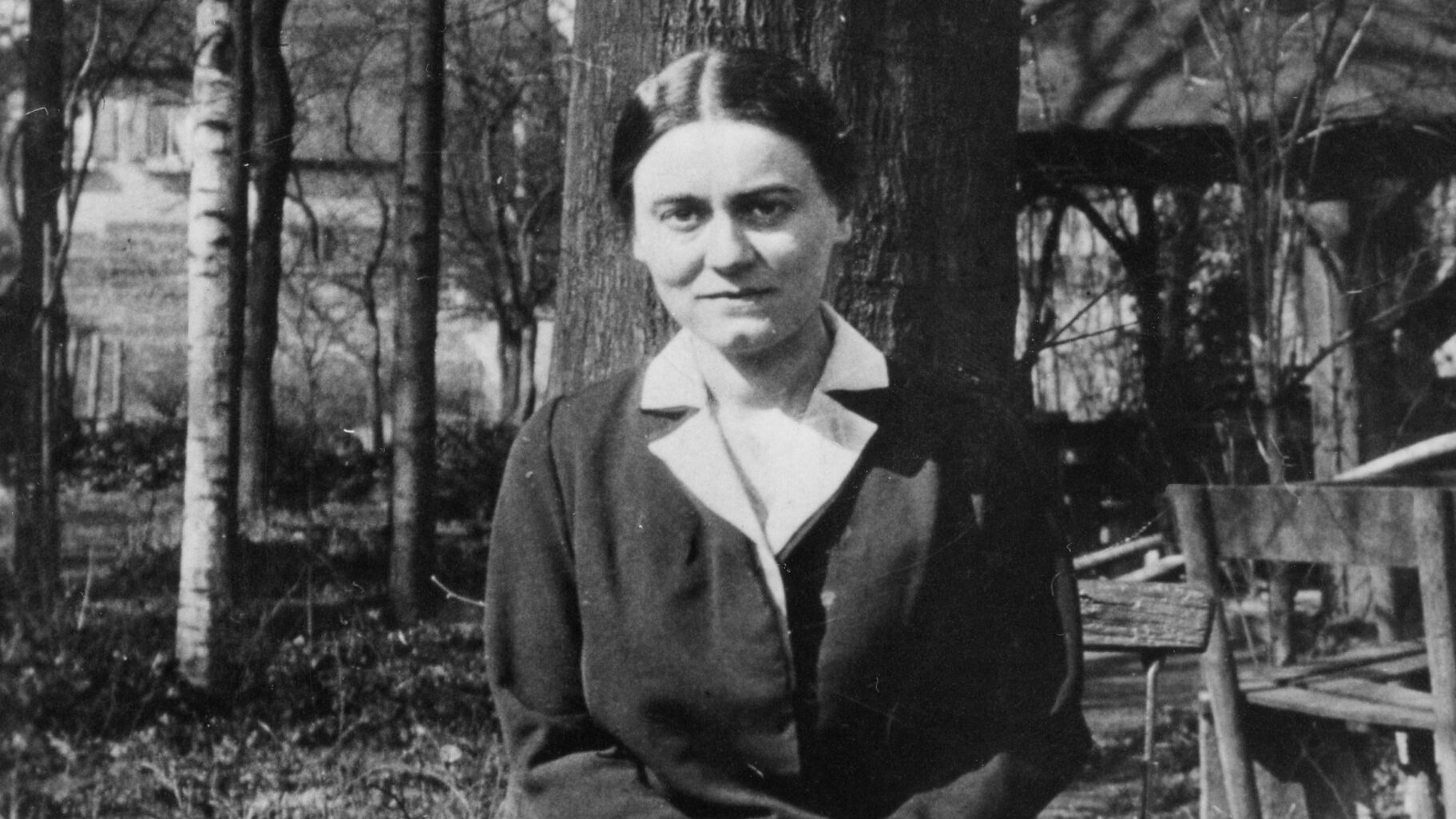
As a means of illustrating this hypothesis, a brief recounting of the work-life journey of Edith Stein, St. Teresa Benedicta of the Cross, will serve as a lens to illustrate this theory.
The quest to give meaning to our work is a deeply spiritual enterprise.
Tweet This
Edith Stein was born into a Jewish family in pre-World War II Germany. Later in life, she converted to Catholicism, eventually becoming a Carmelite nun who was later named a saint of the Church. Her journey to the Catholic Faith may appropriately be termed a pilgrimage (a sacred journey, moving a person from everyday life toward deeper truth) to the shrine of belief, the place where her long quest for truth was finally satisfied. This journey is all the more spectacular given that Edith once declared herself a nonbeliever. She, along with several of her family, gave little consideration to religious belief.
From an early age, one thing Edith did give a great deal of consideration to was her choice of career. She pondered the choices carefully, often standing firm against the advice of well-meaning family members. She had an innate desire to utilize her talents in the service of others. At the age of 20, she declared, 'We are in the world to serve humanity…this is best accomplished when doing that for which one has the requisite talents.'
By profession, Edith Stein was a philosopher/teacher immersed in a branch of philosophy known as phenomenology, founded by the 'Master' Edmund Husserl (1859-1938), an Austrian-German mathematician and philosopher whose ideas had a substantial impact on 20th-century philosophy. Phenomenology seeks to analyze and describe the world as we experience it. It asks the question: How can we know things outside of ourselves and how does that knowledge become our own? Given Edith's early profession of her quest for 'truth,' it is not surprising that she would be drawn to phenomenology—though she was decidedly not drawn to find that truth in God or religion, at least not for many years.
Edith's philosophic study in the subfield of empathy was the engine of her search. In her dissertation, On the problem of Empathy, she explored how one can connect with the disposition or feelings of another, or 'the knowing experience shared by two persons, i.e., intersubjectivity,' as defined by Husserl. Indeed, it was her observation of and friendship with both peers and colleagues at the University of Göttingen, several of whom were converts to Christianity, as well as the philosophical method, that greatly influenced her own conversion.
Edith finally found her 'truth' while reading St. Teresa of Avila's biography, after which, at the age of 30, she declared, 'This is truth.' When questioned as to the reason for such a proclamation, her answer was and would always remain, 'This secret belongs to me.' Some 25 years later, Edith wrote, 'God is truth, and whoever seeks the truth is seeking God, whether he knows it or not.'
Edith finally found her 'truth' while reading St. Teresa of Avila's biography, after which, at the age of 30, she declared, 'This is truth.'
Tweet This
Edith's early intuitiveness of work as an expression of her deepest core, her philosophical studies, and the colleagues she met provided the way of her pilgrimage to faith. It has been said that without phenomenology Edith would have been incapable of opening herself to the thought of God with the absolute objectivity of judgment so characteristic of her.
Work can be as much a vehicle for spiritual growth and understanding as going to a synagogue or church or taking a walk in the woods. In fact, work may be among the most potent vehicles for fulfilling our spiritual life because, for many of us, it presents the best opportunity to meld community, social, and economic productivity with personal belief and individual talent. This is possible for all types of work: mental or physical, regardless of compensation level. This philosophy of 'work as holy ground' eliminates the divide between the sacred and the mundane.
In Justified by Work: Identity and the Meaning of Faith in Chicago's Working-Class Churches, author Robert Anthony Bruno has as his focus this intersection of faith and work. He interviewed dozens of blue-collar workers, many performing menial jobs, often working long hours, sometimes in two jobs. Their stories are perhaps not as complex as Edith's, and their journeys to faith not always as lengthy, but the result is often the same: they found God in and through the daily activities and circumstances of their work.
Even work that is difficult and long-suffering can lead one to God. One individual put it this way: 'unless you go through something traumatic, the inner strength of a person is never realized, and it is precisely ordinary people enduring extraordinary pain that proves the existence of a higher power.' There are many stories worth repeating: the high school custodian who sees his work of keeping the school clean so that students have a better environment in which to learn as 'godly'; the woman who views her ability to pay the bills through her work as 'little miracles';the plumber who has come to see God as the giver of his talent; and so many more.
All of these individuals, like Edith Stein, were on a pilgrimage to ever-deepening faith, the way there having been greatly illuminated by their work.
Now, let's briefly consider some of the characteristics of Edith Stein's work journey that can help us recognize the transcendent nature of our own work.
The Importance of the Discernment Process in Deciding One's Lifework
As was the case with young Edith, we are presented with a myriad of career choices. Today, career discernment is no longer a topic limited to those just starting out in a career. Midlife and later career transitions, necessitated by economic, social, or personal factors, are common. How to determine which profession will bring satisfaction and fulfillment is the same question young Edith had. After much consideration, she pursued the great love of her life, philosophy. It seemed that philosophy most fully engaged her interest and utilized her talents for study, research, and contemplation while offering her both personal satisfaction and a way of making a contribution to society.
Discernment requires a great deal of introspection, an objective 'knowing' of oneself. It requires an interiority that digs down deep to discover what work brings joy and satisfaction. It is a discovery of one's spiritual self, the place where one makes the connection between the contributions of a singular life and the rest of humanity, past and present. It is where one finds meaning for living out daily life.
The Exercise of Our Particular Gifts and Talents Through Our Work Is an Expression of Our Deepest Core, Our Spiritual Selves
A result of the discernment process is also a knowing of one's particular giftedness: the specific talents one has to offer through one's work. These talents are determined by means of our own introspection along with the assistance of others—relatives and friends who know and observe us over a period of time.
Our giftedness forms an important part of our makeup as unique persons; it is an expression of the very core of who we are. Our gifts are our divine spark; we are fully ourselves when they are employed. Edith gave testament to this spark when she wrote of the profound personal pleasure she experienced in engaging in the work of writing: 'The writing would bring a rosy glow to my face, an unfamiliar feeling of happiness surged through me…every day I felt that the ability to continue my work was like a new gift.'
Recognition of the Innate Dignity of All Work and Workers
The late Martin Luther King Jr. gives us a profound comment on this theme:
If a man is called to be a street sweeper, he should sweep streets even as Michelangelo painted, or Beethoven composed music, or Shakespeare wrote poetry. He should sweep streets so well that all the host of heaven and earth will pause to say, 'There lived a great street sweeper who did his job well.'
When both work and the worker are regarded in this way, we affirm the uniqueness of all human beings and the work they do, a realization that may well lead to a contemplation of one's role in the overall scheme of creation and the consideration of a Creator God. In Christian theology, the dignity of every person is a consequence of humanity having been formed in the image and likeness of God. While most of Edith's lifework focused on her role as an academic/philosopher, she recognized and valued the dignity of all work. This was certainly due to the hard labor necessitated by her parents' lumber business, a business her mother took over after her father's sudden passing. It was during those early childhood years that Edith developed her exceptional work ethic; she also observed her mother taking on a role that was then largely unheard of for a woman.
Openness to Others
A state of openness enables one to more readily grasp the feelings and experiences of others—and, perhaps, even to identify or empathize with those feelings; but this process is not the whole story. The reality is that there is a consequence that follows from opening oneself to another: one either accepts or rejects the feelings and/or experiences of the other as having validity for oneself.
In her dissertation on empathy, Edith Stein maintains that our self-understanding is, to a great extent, a result of our relations with others. The fact is that the people whom we come in contact with can have a significant impact on us. In Edith's life journey, there are many instances when her vulnerability allowed her to be open to considering the thoughts and experiences of others, many of whom greatly influenced the choices she made. She had this to say about Max Scheler:
His influence, beyond the bounds of philosophy, was of great importance during those years [first semester at University of Göttingen]…this was the time when he was overflowing with Catholic ideas and when he was pleading them with all the brilliance of his intellect and his eloquence. This was my first contact with a world that had so far remained entirely unknown to me, and even though it did not lead me to the faith, it did open up a whole range of 'phenomena' that I could no longer blindly pass by.
It is through our work, then, that we become more of who we are meant to be. And when we recognize that destiny at its deepest level, we can find ourselves in communion with the divine.
This is how work itself can be a pilgrimage to the sacred place of belief.
Related Opinion
A note on cookies
Newshunt uses essential cookies to keep you signed in and to remember your language and country, so the site works the way you expect. With your permission, we'd also like to use analytics cookies to understand how people use Newshunt and improve it over time.
Accepting only affects analytics. To learn more, view our Privacy Policy or Terms & Conditions.
(0)Comments