


Layton Colbert
Commentary: There's more to petroleum than gasoline

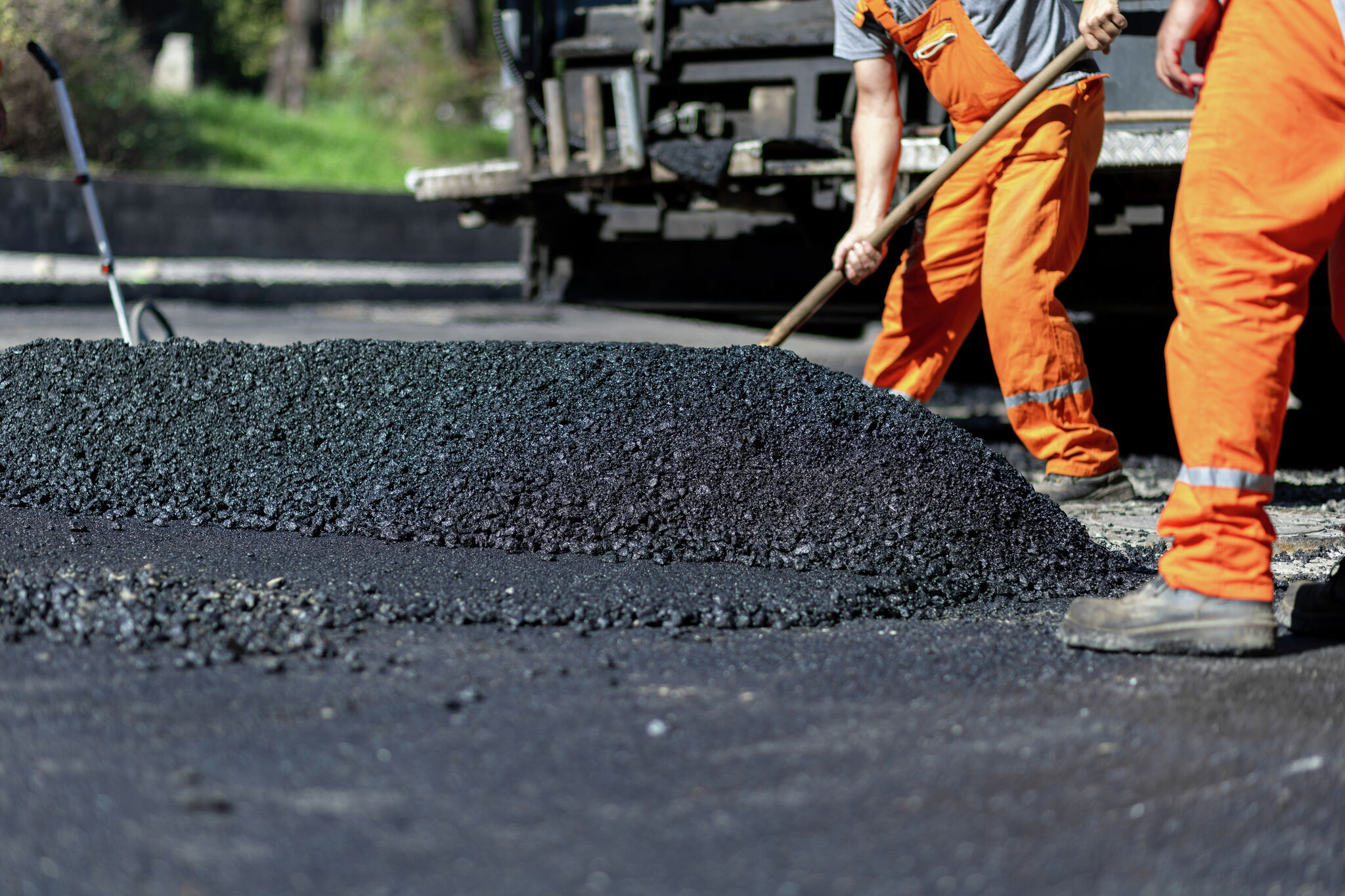
The bitumen in asphalt is a byproduct of petroleum production.
zoff-photo/Getty Images
But that fight obscures a deeper problem.
Advertisement
Article continues below this ad
The Climate Act does not ban petroleum outright. Yet its direction is unmistakable: achieving deep emissions cuts requires New York to drive fossil-fuel use sharply downward. Before the state decides how quickly that can happen, it must understand the system it is trying to shrink.
Crude oil is a mixture of hydrocarbons. Refineries separate and rearrange them into more valuable products. These processes provide flexibility, but not unlimited freedom.
Jet fuel illustrates the problem. Refining crude oil to produce jet fuel ordinarily also yields gasoline and other products, including naphtha and, depending on the refinery, asphalt. Refineries cannot order only the desirable slice of the barrel.
Advertisement
Article continues below this ad
If gasoline demand collapses while demand for jet fuel, diesel, naphtha, asphalt and lubricants remains, crude-oil processing cannot necessarily fall at the same rate. The gasoline produced alongside those harder-to-replace products will still be sold, exported or converted where feasible. It does not simply disappear because New York replaced a gasoline-powered car with an electric one.
That does not make electric vehicles or electrified heating pointless. They can substantially reduce emissions. But reducing demand for one petroleum product is not the same as replacing the petroleum system.
New York risks measuring oil's replaceability by the sectors in which alternatives are most visible. Passenger vehicles and building heat may have credible substitutes, but those are not necessarily the uses that will determine future crude demand. As more easily shifted applications are phased out, aviation, heavy freight, petrochemicals, asphalt, lubricants and specialized industrial uses will increasingly set the floor.
A credible climate policy must therefore evaluate petroleum across the whole barrel. Policymakers need to ask not only whether gasoline or heating oil can be replaced, but which products will still require crude production after those products are made obsolete, and where those accompanying products will go.
Advertisement
Article continues below this ad
Sign up for the Observation Deck newsletter
Keep up with the latest editorials, commentary and letters to the editor about the issues that matter to you.
Sign up here
This is not an argument for delaying every transition until a perfect substitute exists. New York should pursue practical reductions now. But it should not assume that progress in the easiest sectors establishes the reduction rate possible everywhere else.
Until the least replaceable uses are addressed, the state cannot credibly say how far, or how quickly, petroleum consumption can fall. The path away from oil must be built by replacing all of oil's functions, not by treating progress in one part of it as progress in the whole.
Layton Colbert of Potsdam is a mechanical engineer.
Advertisement
Article continues below this ad
Related Opinion
A note on cookies
Newshunt uses essential cookies to keep you signed in and to remember your language and country, so the site works the way you expect. With your permission, we'd also like to use analytics cookies to understand how people use Newshunt and improve it over time.
Accepting only affects analytics. To learn more, view our Privacy Policy or Terms & Conditions.
(0)Comments